
100-Ton Weight Error Caused LATAM 777 Tail Strike in Milan

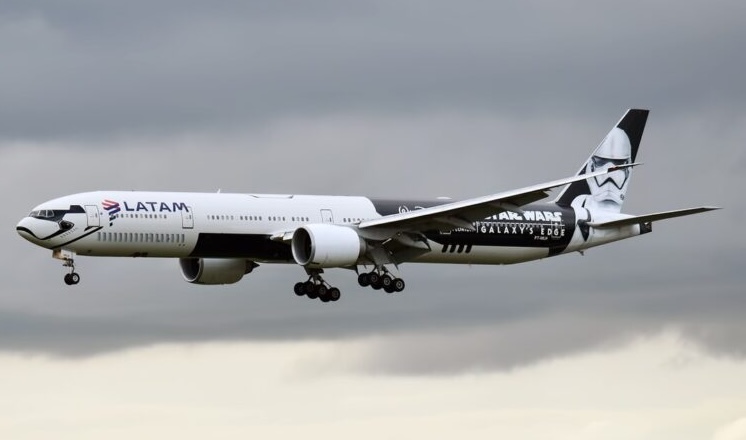
Italian aviation authorities have concluded that a serious take-off weight miscalculation caused a tail strike involving a LATAM Airlines Boeing 777-300ER during departure from Milan Malpensa in July 2024. Although the aircraft returned safely and no injuries were reported, investigators later classified the event as an accident due to the extent of structural damage sustained during rotation.
The findings were published by Italy’s National Agency for the Safety of Flight, which determined that the incident stemmed from human and procedural errors rather than any technical malfunction. The aircraft had been operating a scheduled long-haul service from Milan to São Paulo when incorrect performance calculations led to an early and aggressive rotation, resulting in the tail contacting the runway.
According to the final report, the aircraft departed on July 9, 2024, from Milan Malpensa Airport with its gross take-off weight underestimated by approximately 100 tonnes. The captain mistakenly subtracted expected taxi fuel from the aircraft’s take-off weight, producing a figure that was dramatically lower than the actual mass. That incorrect value, 228.8 tonnes instead of the correct 328.4 tonnes, was verbally shared in the cockpit and entered into both pilots’ electronic flight bags.
Because the same erroneous data was used in both performance calculations, the standard cross-check process failed to detect the discrepancy. As a result, thrust settings and take-off speeds were computed using invalid assumptions. Investigators found that the calculated rotation speed was more than 30 knots below what was required for the aircraft’s true weight, significantly increasing the pitch rate at rotation and the likelihood of a tail strike.
The aircraft’s flight management system displayed a “V-speeds unavailable” message prior to departure, but the crew did not fully assess its significance or consult the applicable abnormal procedures. The take-off was continued using manually derived speeds, which proved insufficient for the heavily loaded aircraft.
After lift-off, the crew observed abnormal indications consistent with an unusual take-off profile and possible structural damage. They stopped the climb, coordinated with air traffic control, and elected to return to Milan. To land within structural limits, the aircraft jettisoned approximately 72 tonnes of fuel before conducting an uneventful approach and landing.
Post-flight inspections revealed damage to the rear fuselage, tail skid assembly, drain mast, and surrounding structural elements. The aircraft, registered PT-MUG, remained grounded for several months and only returned to service in February 2025 following extensive repairs and regulatory approval.
Investigators highlighted breakdowns in cockpit coordination and procedural discipline, noting that critical weight figures were not cross-checked against the official load sheet or aircraft systems. The report concludes that multiple safety barriers failed simultaneously, allowing a major performance-planning error to propagate unchecked.
The Milan incident has renewed industry discussion around enhanced take-off performance monitoring and tail-strike prevention systems. Safety specialists stress that while modern aircraft are highly automated, they remain fundamentally dependent on accurate human inputs and rigorous procedural compliance.
Related News: https://airguide.info/?s=latam, https://airguide.info/?s=boeing+777, https://airguide.info/category/air-travel-business/travel-health-security/
Sources: AirGuide Business airguide.info, bing.com, simpleflying.com, aviationa2z.com