
737 Max Fuselage Deliveries Slow in December, Raising Output Risks

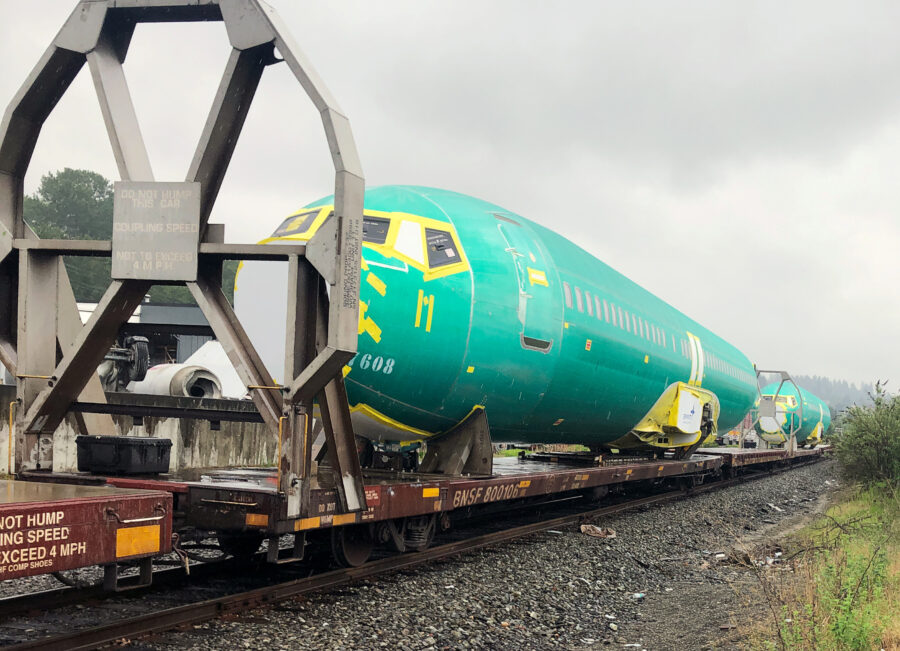
Deliveries of Boeing 737 Max fuselages slowed in December, signalling that Boeing may have fallen short of its monthly production target for the narrowbody jet as the year closed.
According to a research note from BNP Paribas Equity Research, the number of 737 fuselages transported by rail from Spirit AeroSystems’ facility in Wichita to Boeing’s assembly site in Everett fell to the low 30s during the month. That volume is below current production goal of 42 Boeing 737 Max aircraft per month, suggesting the manufacturer may be running behind plan.
Analysts cautioned that the slowdown may partly reflect seasonal factors, noting that a similar dip in fuselage movements was observed in January 2025. The year-end holiday period typically affects both manufacturing output and logistics flows across the aerospace supply chain. Fuselages shipped in December are expected to be delivered as completed aircraft early in 2026.
BNP Paribas also assessed Boeing’s widebody production by tracking flights of the Boeing Dreamlifter, which transports major components for the Boeing 787 Dreamliner program. The analysts counted around 70 Dreamlifter flights in December, implying a production rate of approximately six 787s per month. While slightly below Boeing’s stated target of seven per month, the figure suggests relatively stable output for the widebody line.
The 737 Max program remains under close regulatory scrutiny. In October, the Federal Aviation Administration approved Boeing’s request to raise 737 production from 38 to 42 aircraft per month. That cap had been imposed earlier in the year following a mid-air door plug blowout on a Boeing 737 MAX 9 operated by Alaska Airlines, which resulted in an uncontrolled decompression shortly after departure.
The FAA has said it will continue to closely monitor Boeing’s manufacturing processes and quality controls as production ramps up. Any sustained shortfall in fuselage deliveries could complicate the manufacturer’s efforts to stabilize output, clear inventory, and meet delivery commitments to airline customers.
For Boeing, maintaining a consistent flow of fuselages from Spirit AeroSystems is critical to achieving higher production rates on the 737 line, which underpins much of the company’s near-term recovery. Whether the December slowdown proves to be a temporary seasonal dip or a sign of deeper supply-chain constraints will become clearer in the first quarter of 2026.
Related News: https://airguide.info/?s=boeing+737
Sources: AirGuide Business airguide.info, bing.com, yahoo.com