
How Black Boxes Reveal the Truth Behind Airplane Crashes

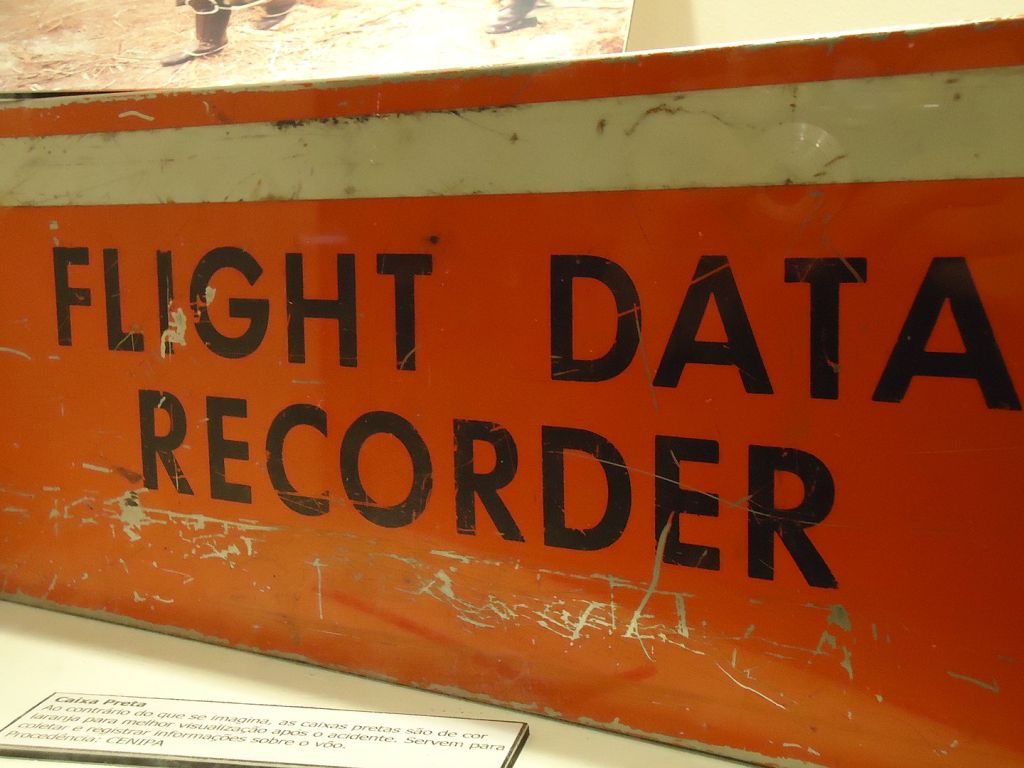
Black boxes are among the most important tools in modern aviation safety, helping investigators determine what happened in the moments leading up to an air disaster. After the urgent search for survivors and recovery of victims—such as the recent UPS cargo jet crash near Louisville—investigators turn their attention to two critical devices: the flight data recorder (FDR) and the cockpit voice recorder (CVR). Together, they are widely known as the “black box,” even though both units are bright orange to aid recovery.
Every commercial aircraft is equipped with these nearly indestructible recorders, built by companies such as GE Aerospace and Honeywell. They are engineered to survive extreme conditions: impacts of up to 3,400 Gs, temperatures exceeding 1,100°C (2,012°F), deep-sea submersion for 30 days, and prolonged exposure to fire. Their durability is essential because they often provide the only detailed evidence of what transpired during the final moments of a flight.
“They’re very crucial because it’s one of the few sources of information that tells us what happened leading up to the accident,” said Chris Babcock, chief of the Vehicle Recorder Division at the National Transportation Safety Board (NTSB). “We can get a lot of information from parts and from the airplane, but the recorders give a direct window into the aircraft’s performance.”
The Origins of “Black Boxes”
Black boxes, formally known as flight data recorders (FDR) and cockpit voice recorders (CVR), are among the most critical tools in aviation safety, revealing the truth behind airplane crashes by capturing the final moments of a flight. Despite their nickname, these devices are actually painted bright orange to aid recovery after accidents. They are designed to withstand extreme conditions—intense heat, deep water pressure, and violent impacts—so investigators can retrieve vital information even from catastrophic wrecks. By analyzing flight parameters and cockpit conversations, black boxes allow accident investigators to reconstruct events, identify causes, and recommend safety improvements that prevent future tragedies.
The history of black boxes dates back to the 1950s, when Australian scientist David Warren first proposed recording cockpit sounds after studying a series of unexplained crashes. His invention evolved into the dual‑system recorders now mandated on all commercial aircraft worldwide. Over the decades, black boxes have been central to solving major aviation mysteries, from the crash of Air France Flight 447 in 2009 to more recent cargo and passenger accidents. Their role has not only advanced accident investigation but also reshaped aviation regulations, leading to safer skies. Today, researchers are exploring next‑generation systems, including real‑time data streaming, which could one day reduce reliance on physical recovery and provide immediate insights during emergencies.
The Critical Role of Flight Data in Revealing Crash Causes
Modern aircraft generate enormous amounts of data. A Boeing 787 Dreamliner, for example, records thousands of parameters—from engine thrust to autopilot inputs. In the Air India crash in June, investigators reviewing FDR data discovered that both engine fuel cutoff switches were moved to the off position within one second. CVR audio also captured the crew discussing the shutdowns moments before impact. “All of those parameters today can have a very huge impact on the investigation,” said former NTSB member John Goglia. “It’s our goal to provide information back to our investigators as quickly as possible to help move the investigation forward.”
The information recovered from black boxes does more than explain why a specific accident occurred. It helps aviation authorities, aircraft manufacturers, and airlines prevent similar tragedies in the future. Whether the issue involves mechanical failure, software glitches, crew error, or environmental hazards, the FDR and CVR provide insights that often lead to safety improvements and regulatory changes.
But the system is not perfect. In rare cases, black boxes have been destroyed, lost at sea, or never recovered—such as Malaysia Airlines Flight MH370 in 2014. Aviation experts say the next major leap in crash investigation will likely involve real-time data streaming, transmitting key flight parameters to secure ground servers so information is never lost.
Another debated enhancement is cockpit video recording. “The technology is there. Crash-worthy cockpit video recorders are already being installed in helicopters and other types of airplanes, but they’re not required,” noted Jeff Guzzetti, former FAA and NTSB accident investigator. Privacy concerns and installation costs have slowed adoption, but the NTSB has repeatedly urged regulators to mandate them, arguing they could dramatically accelerate investigations.
As aircraft become increasingly automated and complex, black boxes remain essential to understanding—and preventing—the next aviation tragedy. From near-indestructible construction to ever-expanding data capabilities, these devices are the silent witnesses that help uncover the truth when the unthinkable happens.
Related News: https://airguide.info/category/air-travel-business/travel-health-security/
Sources: AirGuide Business airguide.info, bing.com, cnbc.com