
Aircraft Deliveries Hit Seven-Year High as Airbus and Boeing Surge in 2025

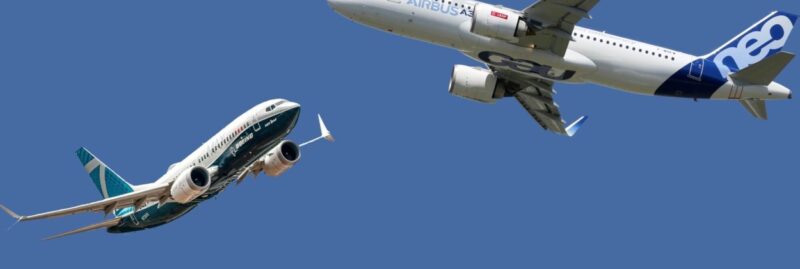
Global aircraft deliveries climbed to their highest October level in seven years, marking a major milestone for an industry still working through supply chain pressures, engine shortages, and a historic order backlog. According to new data released by ADS, manufacturers delivered 132 commercial aircraft in October—up 67% from the same month last year and the strongest October performance since 2018.
Although October’s total narrowly fell short of the all-time October delivery record of 138 aircraft set in 2018, it still represents a substantial rebound for the sector. The result reinforces a clear upward trend as Airbus and Boeing push aggressively toward ambitious 2025 production and delivery targets.
While deliveries surged, new aircraft orders softened. ADS recorded 127 orders in October, a 12% decline year on year and the quietest October for new orders since 2021. Widebody orders were particularly weak at just nine aircraft, down 47% from the previous year. ADS noted that some customers appeared to be holding announcements ahead of the Dubai Airshow, traditionally a major platform for widebody deals.
Despite slower ordering activity, the broader commercial aircraft backlog remains extraordinarily deep. ADS data shows the global backlog stands at 16,133 aircraft—equivalent to more than 16 years of production at current output rates. Narrowbody aircraft dominate the pipeline with 13,314 jets on order, while the widebody backlog has risen 19% year on year to 2,819 aircraft. ADS estimates the backlog is worth between £225 billion and £260 billion to the UK economy alone.
Airbus and Boeing Deliver Over 1,000 Aircraft as 2025 Targets Near
Although ADS does not break out manufacturer-specific totals, industry data indicates that Airbus again dominated single-aisle deliveries in October, while Boeing delivered a higher proportion of widebodies including the 787 Dreamliner, 777F, and the A350 from Airbus’s side.
Both manufacturer portfolios showed strong momentum. Widebody deliveries jumped 109% year on year, driven by sustained demand for long-haul capacity as international travel continues to rebound. Single-aisle deliveries were also robust—up 60%—as production of the A320neo family and 737 MAX continued to stabilize.
By the end of October, Airbus and Boeing had jointly delivered 1,092 aircraft in 2025, a 25% increase over the same period in 2024. The year-to-date performance tracks closely with ADS’s high-growth scenario of approximately 1,340 deliveries by year-end, though achieving that number will depend on the industry maintaining its historical pattern of fourth-quarter delivery surges.
Airbus is continuing its phased plan to raise A320neo production rates, though engine availability—especially Pratt & Whitney GTF supply constraints—remains a limiting factor. Boeing has benefited from stable 787 production and consistent demand for the 777F, while the 777X program remains focused on flight testing, certification milestones, and production readiness in the lead-up to its planned entry into service.
| Manufacturer | Narrowbody | Widebody | 2025 Deliveries (YTD) | Key Models |
|---|---|---|---|---|
| Boeing | 737 Max | 787, 777, 767 | ~493 (Nov 2025) | 737 Max, 787, 777, 767 |
| Airbus | A320neo Family | A350 | ~585 (Oct 2025) | A320neo, A321neo, A220, A350 |
By the end of 2025, Airbus maintained a lead over Boeing in total aircraft deliveries, reflecting strong momentum across both narrowbody and widebody programs. Airbus’s performance was driven primarily by the high‑volume A320neo family and solid output of the A350, resulting in approximately 585 aircraft delivered through October. Boeing, meanwhile, continued its recovery with the 737 Max at the center of its production ramp‑up, supported by steady Dreamliner deliveries, bringing its total to about 493 aircraft by November. Despite ongoing supply chain pressures, both manufacturers have significantly surpassed their 2024 delivery levels, underscoring the resilience of the aerospace sector.
Why Engine Orders Lag Behind Airframe Orders
Engines are the most vital part of any new aircraft because they drive fuel savings and efficiency. Modern designs like geared turbofans and high bypass ratios deliver major performance gains, making engines the key factor in reducing costs, cutting emissions, and ensuring long‑range capability.
One of the more notable insights from the ADS dataset is the widening gap between new aircraft orders and engine selections. In October, ADS recorded 232 engine orders—significantly more than the 127 aircraft ordered that month. This reflects a growing trend throughout 2025: customers, especially lessors, are increasingly deferring their engine choices.
Engine supply remains the tightest constraint in the aerospace manufacturing system. Deliveries of both CFM LEAP and Pratt & Whitney GTF engines continue to lag behind airframe production, while engine overhaul turnaround times remain extended. By delaying engine selection, customers can choose the more reliable or more readily available option closer to their aircraft’s delivery date.
Long-term reliability concerns also play a major role. Airlines continue to assess the impact of Pratt & Whitney’s PW1100G powder-metal inspection regime and early durability issues affecting some LEAP engines. Since engines represent one of the largest cost drivers over an aircraft’s 20-year lifecycle, carriers are reluctant to commit before reliability stabilizes.
Leasing companies are most actively using this strategy. Major lessors often place aircraft orders before placing them with customers, and final engine selection can significantly influence lease rates and long-term asset value. Deferring the decision allows lessors to configure each aircraft to match the needs of a future operator.
Industry analysts expect this gap between airframe orders and engine selections to persist through at least 2026, until global engine reliability improves and supply chains demonstrate sustained stability across the single-aisle segment.
A Crucial Turning Point for the Industry
October’s performance signals a crucial step toward restoring pre-pandemic production rates, even as manufacturers continue to navigate supply chain bottlenecks. With more than 16 years of backlog demand and rising widebody interest, Airbus and Boeing are accelerating efforts to hit their ambitious 2025 and 2026 targets.
If momentum continues into the fourth quarter, 2025 could become the strongest year for aircraft deliveries since before the pandemic—marking a significant milestone in the industry’s long-awaited recovery.
Related News: https://airguide.info/?s=airbus, https://airguide.info/?s=boeing
Sources: AirGuide Business airguide.info, bing.com, aerospaceglobalnews.com, airbus.com, boeing.com, ADS is the UK trade association advancing leadership in aerospace, defense, security and space, to enable prosperity and clean, secure growth for our nation.