
Boeing vs. Airbus Safety: What U.S. Accident Data Really Shows

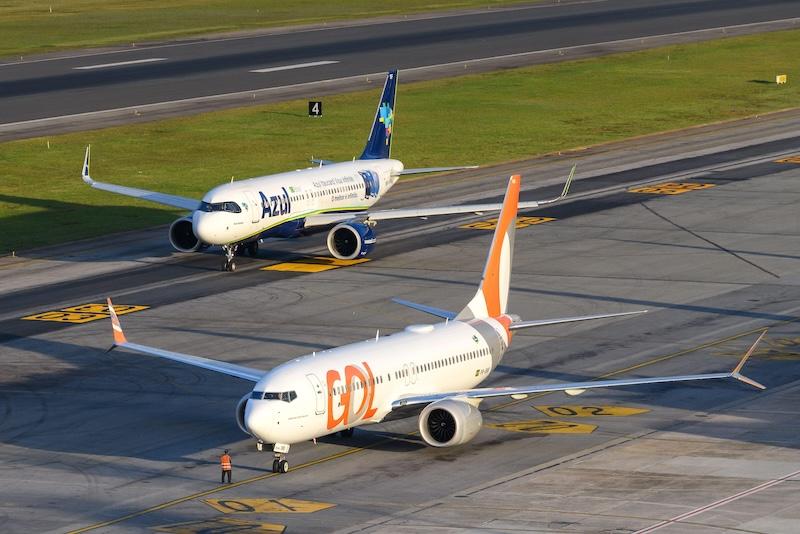
Boeing has been under intense public scrutiny in recent years, largely due to high-profile issues involving the 737 Max and ongoing quality-control concerns with the 787 Dreamliner. These headlines have fueled a perception that Boeing aircraft may be less safe than Airbus jets. However, a closer look at hard data from the U.S. National Transportation Safety Board (NTSB) tells a very different story—one where both manufacturers operate at extremely low accident rates.
Between 2014 and 2024, the NTSB recorded only two to six mechanical-related aviation accidents per year in the United States. These events involved engine malfunctions, landing-gear issues, or minor component failures—none of which resulted in fatalities. Considering that more than six million flights occur annually in U.S. airspace, the rate of true aircraft-related failures is remarkably low.
When these incidents are weighted by the number of flights operated, Boeing and Airbus show nearly identical safety performance. Raw numbers may make Boeing appear worse at first glance, but that imbalance stems from one simple fact: roughly three times more Boeing aircraft fly in U.S. airspace compared to Airbus. In other words, Boeing appears more frequently in U.S. accident logs because it dominates the American fleet, not because its aircraft are inherently less safe.
Why Boeing’s Safety Reputation Appears Worse
Public perception began shifting after the two tragic 737 Max crashes in 2018 and 2019, followed by widespread reporting on issues such as loose bolts, missing fasteners, and manufacturing problems at both Boeing and its supplier Spirit AeroSystems. These concerns are legitimate and have sparked major regulatory action, but they also create a psychological effect where rare events feel more common.
A good example is a chart that circulated widely online, comparing Boeing and Airbus “accidents” from the NTSB database. The problem? It included every Boeing-built airframe ever logged, including World War II bombers, 1950s cargo aircraft, and trainer jets that haven’t flown passengers in decades. Airbus, founded in 1970, had no similar historical entries—instantly skewing the comparison.
Even within modern commercial aviation, NTSB data is incomplete for Airbus. Because the NTSB primarily investigates U.S. events, many Airbus incidents overseas are handled by European agencies and never appear alongside Boeing data. This creates a distorted, U.S.-centric picture.
Once obsolete aircraft, military jets, and non-commercial flights are removed, the numbers change dramatically: Boeing’s valid incidents drop to about 165, and Airbus to roughly 80. When adjusted for departures, both manufacturers’ safety rates effectively align.
What the Verified Data Actually Shows
Independent analysts reviewing two decades of NTSB reports found that from 2005 to 2024, both Boeing and Airbus reduced accident rates to historic lows. Fatal hull-losses averaged just one to two per year globally for each manufacturer—a tiny number considering the millions of flights operated annually.
Importantly, around 80% of all reported incidents were linked not to mechanical problems but to human or environmental factors. Turbulence, minor cabin injuries, pilot deviations, and weather-related events dominate the logs. True aircraft-related failures—those tied directly to design, construction, or engineering—represent fewer than 20% of NTSB-reported events. Almost none involved manufacturing defects.
When analysts filtered out maintenance-related issues and focused only on verifiable aircraft faults, Boeing and Airbus registered nearly identical numbers: approximately 0.39 versus 0.38 true aircraft incidents per million departures. Statistically, that margin is indistinguishable.
The Reality: Flying Has Never Been Safer
Modern aviation is operating at the highest safety levels in history. The International Air Transport Association (IATA) reported that 2023 saw just one major accident per 1.26 million flights—a record-low rate. MIT research suggests the global risk of death in a commercial flight is about 1 in 13.7 million. For perspective, you are far more likely to be struck by lightning or win a lottery jackpot.
As aviation-safety professor Anthony Brickhouse told CNN, “You’re more at risk driving to the airport than flying at 38,000 feet.” Airline Ratings editor Geoffrey Thomas echoed this, noting that safety improves every year as Boeing and Airbus learn from every incident and implement new safeguards.
Data—not headlines—gives the clearest picture: Boeing and Airbus aircraft are among the safest machines ever engineered. Regardless of whether your next flight is on a Boeing 737 or an Airbus A320, the statistical risk remains extraordinarily low.
In aviation, perception may shift with every news cycle—but the numbers haven’t changed: flying is safer today than at any point in history.
Related News: https://airguide.info/?s=airbus, https://airguide.info/?s=boeing, https://airguide.info/category/air-travel-business/travel-health-security/
Sources: AirGuide Business airguide.info, bing.com, ntsb.gov, flightsafety.org, faasafety.gov/