
Experts Urge Mandatory AEDs on All Commercial Flights

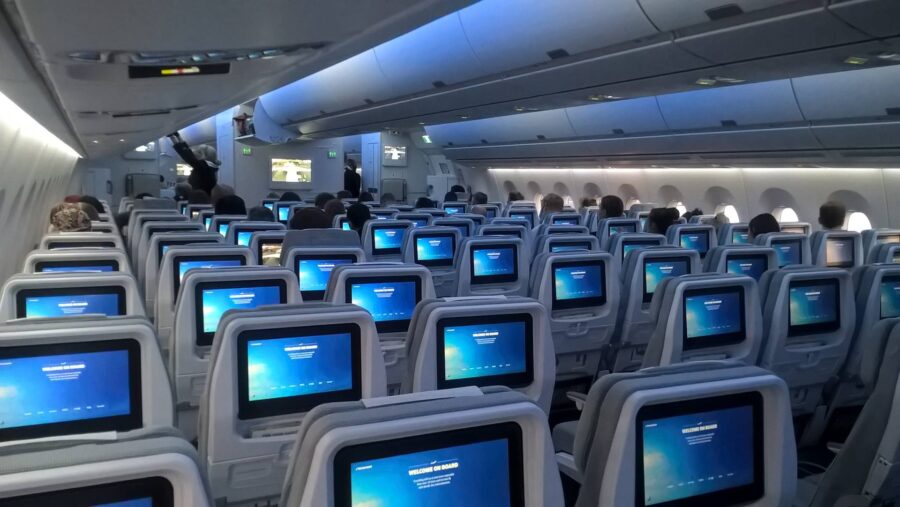
A new review of aviation safety standards is calling for automated external defibrillators (AEDs) and trained flight crews on all commercial aircraft to improve survival rates from sudden cardiac arrest in the air. Although in-flight cardiac arrest (IFCA) accounts for less than 1% of medical emergencies, it remains the leading cause of in-flight fatalities, highlighting the urgent need for standardized equipment and training across airlines.
Researchers found that rapid recognition, CPR, and AED use are the most effective interventions for improving survival during IFCA. The authors argue that airlines should adopt universal AED access, specialized in-flight CPR training, and clearer legal protections for responders. The study was published on December 3 in the Canadian Journal of Cardiology.
The review examined the incidence of IFCA, the effectiveness of AEDs, current training practices, and legal considerations. According to lead author Mario Bassi, MD, his own experience on a flight prompted him to explore in-flight preparedness. The data shows AEDs significantly improve survival: without an AED, only 6% of passengers experiencing IFCA survived to hospital admission, compared with 21%–70% when an AED was used. IFCA represents just 0.3% of in-flight emergencies but is responsible for 86% of in-flight deaths. Age, male sex, long-haul flights, and cardiac history were key risk factors.
Good Samaritan protections have increased willingness among healthcare professionals to assist, but survival still depends heavily on rapid CPR. Experts note that even when a physician is on board, they may not have experience using an AED in an aviation setting, making trained crew essential. Large airlines typically carry AEDs, but smaller carriers may not, and there are no universal standards requiring them.
Emergency physician Mitchell Shulman, MDCM, emphasized that only the United States mandates AEDs and CPR training for airline crews. FAA regulations require AEDs on aircraft with payloads over 7,500 pounds—roughly 30 passengers—and require crew training in first aid, CPR, and defibrillator use. Globally, no other country has implemented comparable rules, leaving a gap in international aviation safety standards.
Experts say mandatory AEDs and trained crews on every flight worldwide could significantly improve survival from cardiac arrest in the skies.
Related News: https://airguide.info/category/air-travel-business/travel-health-security/
Sources: AirGuide Business airguide.info, bing.com, medscape.com