
South Korea Boosts Aviation Safety With AI Accident Prevention Plan

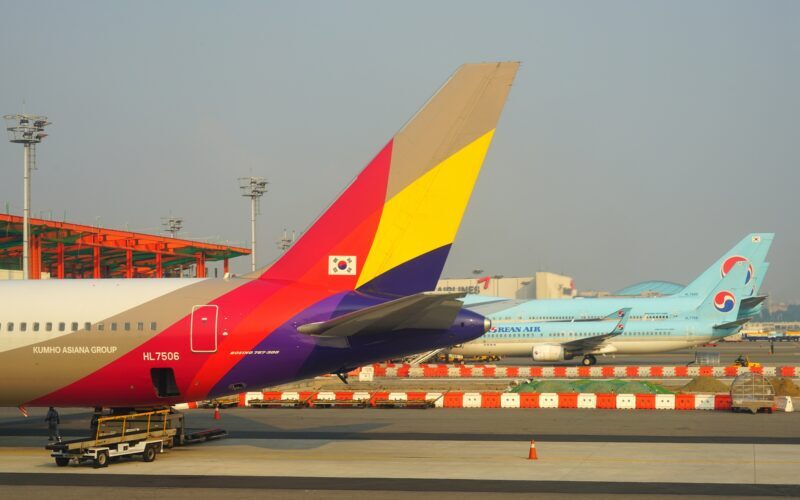
South Korea is elevating aviation safety as its top national priority, unveiling a comprehensive five-year roadmap that includes AI-powered accident prevention, strengthened runway inspections, and measures to address airline market concentration. The Ministry of Land, Infrastructure and Transport (MOLIT) announced the Fourth Basic Aviation Policy Plan on the 10th, marking the first major aviation strategy update since the Jeju Air crash at Muan Airport on December 29 last year.
The new policy blueprint outlines sweeping improvements across airport operations, air traffic management, flight allocation, and safety oversight. At its core is a full-scale overhaul of aviation safety systems. MOLIT will reinforce bird-strike prevention equipment at major airports and establish continuous monitoring of runway risk factors. A key initiative is the introduction of an artificial intelligence system capable of analyzing national aviation safety data in real time to detect early warning signals that could indicate potential accidents. The ministry will also revise pilot and aviation-worker qualification standards to align with international requirements.
South Korea’s air traffic operation system will undergo major upgrades to prepare for rising traffic volumes and upcoming airport openings. MOLIT will re-segment national airspace to improve efficiency and deploy additional Korean Augmentation Satellite System (KASS) satellites—numbers 3, 4, and 5—to enhance navigation accuracy. A new integrated platform will also be developed to unify aircraft arrival and departure time management with real-time weather information.
The government is also moving to reshape airline market competitiveness. Following the integration of Korean Air and Asiana Airlines, regulators will encourage new or alternative carriers to enter the market and closely monitor competitive conditions to prevent monopolistic behavior. For financially fragile domestic airlines, the ministry will implement measures to ensure safety investments and consumer protections are not compromised.
Regional airport policy will shift as well. New airport development will involve greater participation by local companies, and authorities will explore pathways to attract duty-free retail, logistics, and MRO industries. Regional airports will expand charter and domestic flight operations to improve accessibility, while evolving into multi-functional hubs supporting urban air mobility (UAM), maintenance, and training activities.
Passenger protection rules will also be strengthened. MOLIT will revise standards for managing flight delays, enhance mobility access for travelers with transportation challenges, and overhaul support systems for aviation accident victims. In alignment with global climate goals, the government will pursue a roadmap to mandate sustainable aviation fuel (SAF) in the coming years.
The plan also prioritizes the expansion of future aviation technologies, including drones and UAM. The government will localize key drone technologies and broaden their use across industries such as delivery, infrastructure, and leisure. For UAM, operating standards and safety frameworks will be established ahead of expected commercial launch in 2028.
“Aviation safety is the foundation of the entire industry,” Minister Kim Yun-duk said. “If safety falters, the sector contracts. We will place the highest priority on advancing safety management.”
Related News: https://airguide.info/?s=Jeju+Air, https://airguide.info/category/air-travel-business/travel-health-security/
Sources: AirGuide Business airguide.info, bing.com