
United Airlines Provides Update on Its Historic First Boeing 777

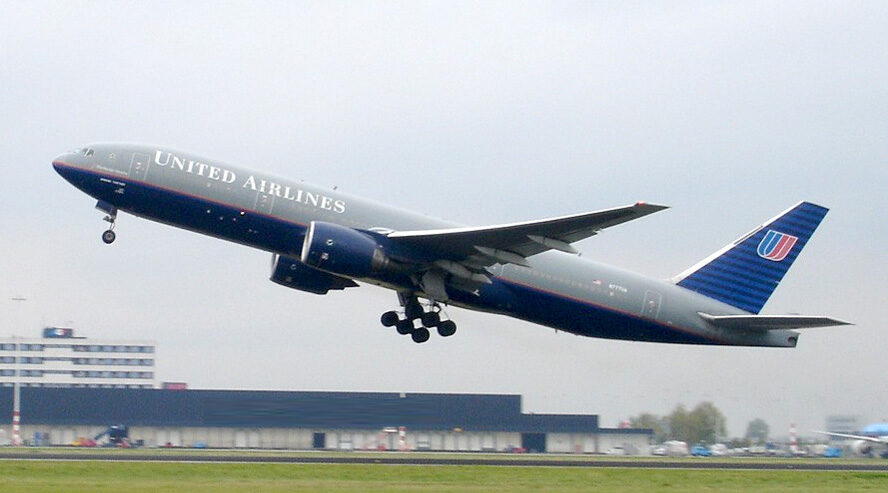
United Airlines, one of the world’s largest commercial carriers, once operated the very first production Boeing 777-200 ever delivered. That airplane, registered N777UA, is now reportedly stored — and the carrier has moved to clarify its status as aviation fans express concern.
The Boeing 777 program traces its commercial debut to May 15, 1995, when United Airlines took delivery of N777UA — the first 777-200 delivered to an airline. One month later, on June 7, 1995, N777UA operated the first commercial 777 flight, from London Heathrow (LHR) to Washington Dulles (IAD). Powered originally by Pratt & Whitney PW4084 engines, the 777-200 was also the first widebody airliner certified under ETOPS-180 rules, allowing long overwater flights that helped shape modern long-haul aviation.
N777UA was also one of the original test aircraft used during Boeing’s certification program, making it a crucial part of the 777’s development. As United Airlines became the launch customer for the type, N777UA earned its place in history as the very first 777 to enter scheduled passenger service. While Boeing retained several prototypes strictly for testing purposes, N777UA is historically significant because it uniquely bridged the gap between prototype and commercial service, symbolizing the transition from experimental trials to full-scale airline operations.
Over 30 years of service, the 777 family has become a workhorse for global airlines — carrying almost four billion passengers over billions of miles.
United Airlines has operated roughly 74 Boeing 777s since becoming the launch customer in 1995, and as of 2025 the fleet size remains about the same, split between the 777‑200/200ER and the larger 777‑300ER. While the airline is gradually phasing out its older 777‑200s in favor of more fuel‑efficient Boeing 787-10s, the 777‑300ER continues to serve as a backbone of United’s long‑haul network, anchoring high‑demand international routes and complementing the newer Dreamliners.
First-Generation Boeing 777-200
The first-generation Boeing 777-200 marked a major milestone in commercial aviation when it entered service in 1995. As the launch customer, United Airlines introduced the world’s first 777 on scheduled flights, showcasing a widebody jet designed entirely with computer-aided engineering—an industry first. Powered by early Pratt & Whitney PW4000-series engines, the 777-200 offered a blend of long-range capability, high passenger capacity, and exceptional fuel efficiency for its time. Its spacious twin-aisle cabin, advanced fly-by-wire controls, and ETOPS-180 approval helped redefine long-haul twin-engine reliability, making the 777-200 the foundation of one of Boeing’s most successful aircraft families.
Who Else Bought the Early 777-200?
The original Boeing 777 delivered to United Airlines in 1995 was the baseline 777-200, the first production model of the series. Soon after, Boeing developed the 777-200IGW (Increased Gross Weight), a higher-weight version designed for longer missions; this internal designation eventually evolved into the 777-200ER (Extended Range). While the standard 777-200 was optimized for medium- to long-haul flights, the 777-200ER featured significantly greater fuel capacity, higher maximum takeoff weight, and longer range, enabling airlines to operate true intercontinental routes. The IGW and ER variants built upon the original airframe but offered the endurance and performance that made the 777 a dominant long-haul twinjet for decades.
After United, several major carriers joined as early adopters of the first-generation 777-200, including:
- All Nippon Airways (ANA)
- Japan Airlines (JAL)
- British Airways
- Cathay Pacific
- Korean Air
- Malaysia Airlines
- American Airlines
- Air France
- Singapore Airlines
- Thai Airways
These airlines were among the initial customers who helped the 777 program take off and expand globally.
What’s Going On With N777UA Now?
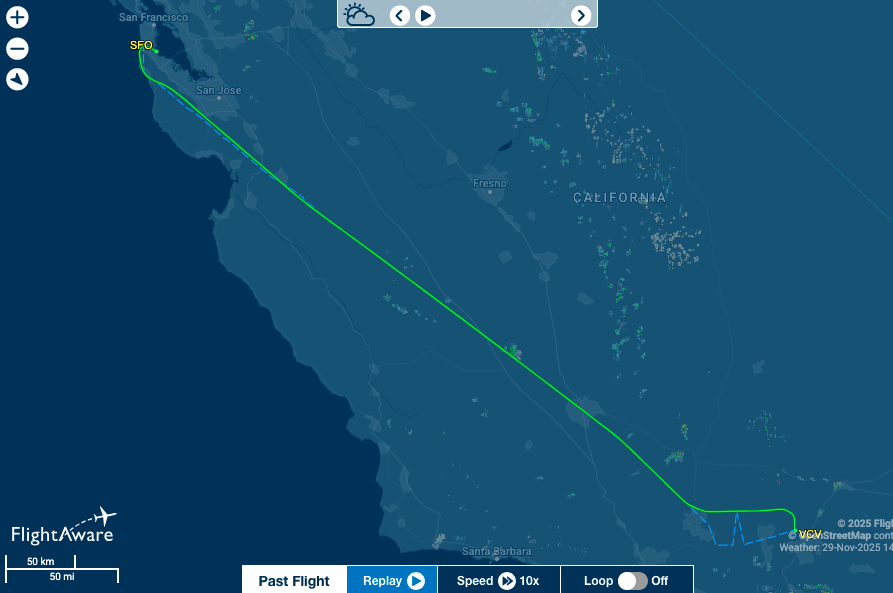
Recent aviation-spotter reports tracked N777UA flying on November 29, 2025, to Victorville Southern California Logistics Airport (VCV), a known storage and “boneyard” facility. This triggered widespread concern that the storied jet was being retired permanently.
However, a spokesperson for United clarified to SB Media that the aircraft has been temporarily parked — not retired. According to United: “We’ve temporarily parked the aircraft and plan to return it to service.” In other words: no final curtain — at least not yet.
FlightAware tracking: https://www.flightaware.com/live/flight/N777UA

Why Is the Aircraft Parked?
United officials attribute the storage to supply‑chain constraints affecting the PW4000‑series engines that power many older 777‑200s. As a result, the airline is reorganizing its widebody fleet and prioritizing newer, more efficient aircraft — but N777UA is apparently being preserved for a potential future return to service. The more recent models of the 777, such as the 777‑300ER, are significantly more fuel‑efficient. All of the legacy 777‑200s will eventually be replaced by Boeing 787‑10s or the forthcoming 777‑8 and 777‑9 by U.S. and international airlines.
What This Means for the Boeing 777 Legacy
N777UA is more than a plane: it symbolizes the beginning of a generation-defining aircraft family. The 777 was the first widebody jet developed entirely with computer-aided design and introduced innovations that reshaped long-haul air travel.
That this flagship airframe survives — even parked — suggests the 777’s legacy isn’t done just yet. If United returns it to active service, the jet will continue as a bridge between aviation’s past and future. If not, it may become a symbolic monument to three decades of commercial flight.
Related News: https://airguide.info/?s=united+airlines, https://airguide.info/?s=boeing+777
Sources: AirGuide Business airguide.info, bing.com, yahoo.com, AeroTime, Aviation A2Z