
NTSB: Proposed Defense Bill Could Undermine ADS-B Safety Rules

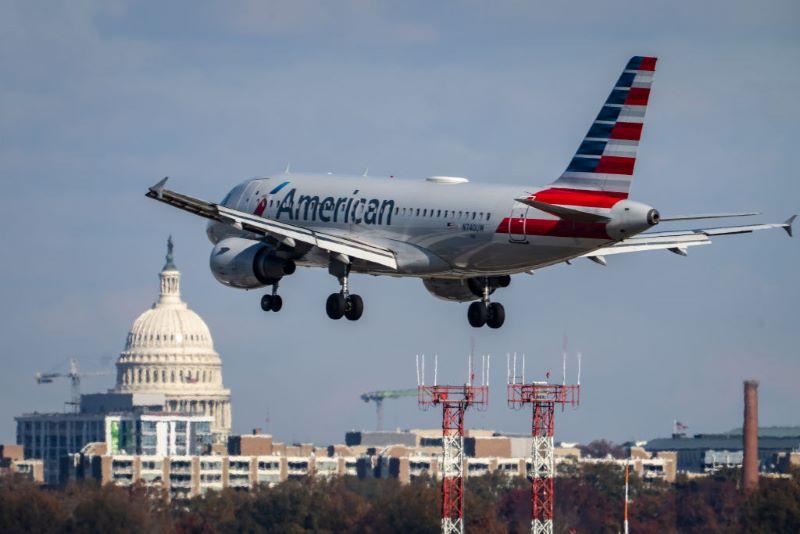
In an unusually sharp rebuke, the nation’s top safety investigator raised alarm over a provision in the defense policy bill before Congress on Wednesday Dec. 10, warning that it would undermine critical aviation safety reforms implemented after a deadly midair collision in January 2025.
NTSB Chair Jennifer Homendy said the agency “vehemently” opposes a section of the National Defense Authorization Act (NDAA) that would roll back post-accident safety measures recommended after a U.S. Army Black Hawk helicopter collided with an American Airlines regional jet near Ronald Reagan Washington National Airport earlier this year, killing all 67 people onboard.
“It’s a safety whitewash,” Homendy told reporters. “If it sounds like I’m mad, I am mad. This is shameful.”
Following the crash, the Department of Defense agreed to require military aircraft operating in civilian airspace to broadcast their position using ADS-B technology — a key tool that enhances situational awareness for pilots and air traffic controllers. But the NTSB warns that the NDAA provision would allow broad exemptions, effectively recreating the same conditions that contributed to the nation’s deadliest aviation disaster in more than 20 years.
“We should be working together to prevent the next accident — not inviting history to repeat itself,” Homendy said. She outlined the NTSB’s concerns in a letter to leaders of the House and Senate Armed Services Committees, noting that no lawmakers consulted the agency during the drafting process. She added she does not know who added the controversial language.
Committee leaders defended the provision.
“We are fully committed to ensuring aviation safety,” said Senate Armed Services Committee Chairman Sen. Roger Wicker (R-Miss.), Ranking Member Jack Reed (D-R.I.), House Armed Services Chairman Mike Rogers (R-Ala.), and Ranking Member Adam Smith (D-Wash.) in a joint statement. They argued the bill would still require helicopters conducting training missions around Washington, D.C., to provide positional warnings — though ADS-B would not be explicitly mandated — and that any waiver would need approval from the Secretary of Transportation.
Still, several lawmakers share the NTSB’s concern.
“As drafted, the NDAA protects the status quo, allowing military aircraft to keep flying in D.C. airspace under different rules and outdated transmission requirements,” said Senators Ted Cruz (R-Texas), Maria Cantwell (D-Wash.), Jerry Moran (R-Kan.), and Tammy Duckworth (D-Ill.), who lead the Senate Committee on Commerce, Science, and Transportation. “This comes as Pentagon data shows a spike in military aircraft accidents since 2020. The families of the victims deserve accountability.”
The senators urged Congress to instead pass the bipartisan ROTOR Act, which would require aircraft operators — including military units — to equip their fleets with ADS-B technology and strictly limit exemptions for helicopters.
Families of those killed in American Airlines Flight 5342 also condemned the NDAA provision.
“The flying public and all who use our airspace deserve better than what this bill provides,” said Tim and Sheri Lilley, whose son, Sam, was the first officer on Flight 5342. “Congress now has a choice: strengthen this provision and protect the traveling public, or leave in place the same vulnerabilities that have already cost too many people their lives.”
Related News: https://airguide.info/?s=NTSB, https://airguide.info/?s=american+airlines, https://airguide.info/category/air-travel-business/travel-health-security/
Sources: AirGuide Business airguide.info, bing.com