
Central Asia Becomes Fastest-Growing Aviation Market Worldwide

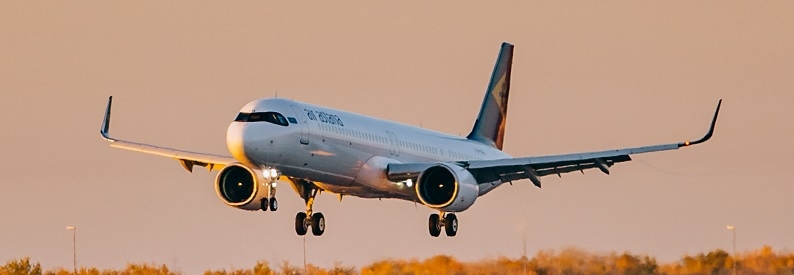
Central Asia has emerged as the world’s fastest-growing aviation market, recording nearly 500% capacity growth over the past two decades as air travel demand accelerates across the region. Once considered peripheral to global air networks, Central Asia is now becoming an increasingly important aviation corridor linking Europe, the Middle East, South Asia, and East Asia.
Rising household incomes, a young and mobile population, and gradual economic liberalization have been key drivers behind the surge in passenger traffic. Governments across the region have also implemented aviation-friendly reforms, including market liberalization, airport modernization programs, and more open bilateral air service agreements, helping stimulate competition and attract new airline entrants.
Kazakhstan dominates the Central Asian aviation market, accounting for more than half of the region’s total capacity. The country’s strategic location and sustained investment in airport infrastructure have supported the expansion of both domestic and international routes. Flag carrier Air Astana and low-cost subsidiary FlyArystan have played a central role in expanding connectivity, particularly to Europe, the Middle East, and key Asian markets.
Uzbekistan has also emerged as a major growth engine, supported by sweeping economic reforms and a rapid opening of its aviation sector. Tashkent has positioned itself as a regional hub, while the government’s push to modernize airports and encourage foreign carriers has resulted in a sharp rise in international services. Uzbekistan Airways and emerging low-cost operators have expanded networks to meet growing outbound and inbound travel demand.
Low-cost carriers have been a significant catalyst for growth across Central Asia, stimulating price-sensitive demand and opening new city-pair routes that were previously underserved or unviable. Budget airlines have made air travel more accessible to first-time flyers while also driving increased tourism flows into the region.
International connectivity has expanded rapidly, with new routes linking Central Asian cities to destinations across Europe, the Gulf, Southeast Asia, and China. These connections are strengthening the region’s role as a transit and tourism market while also supporting trade, investment, and labor mobility.
Despite strong growth, challenges remain, including infrastructure capacity constraints, fleet modernization needs, and regulatory harmonization. However, continued investment, favorable demographics, and strategic geography suggest Central Asia’s aviation market is well positioned to sustain above-average growth, reinforcing its status as one of the most dynamic emerging regions in global aviation.
Related News: https://airguide.info/category/air-travel-business/aircraft-finance/, https://airguide.info/category/air-travel-business/airline-finance/
Sources: AirGuide Business airguide.info, bing.com