
Cosmic Radiation Poses Rising Threat to Modern Aircraft Electronics

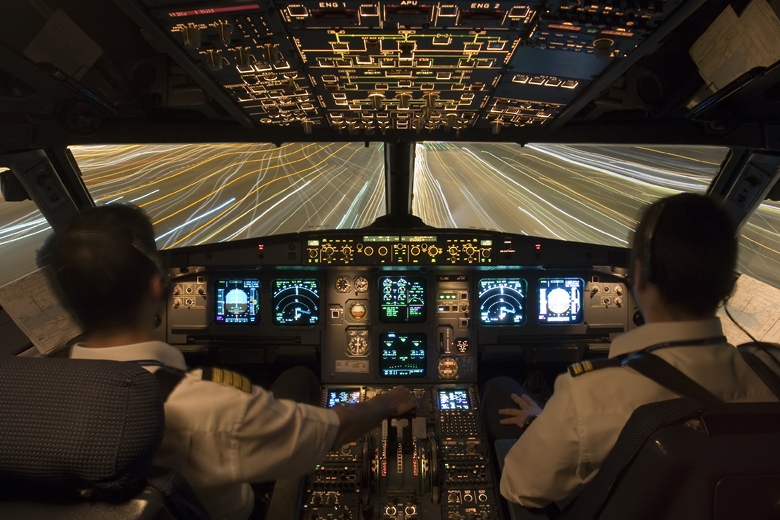
A recent aviation incident has put a spotlight on a growing but often overlooked risk: cosmic radiation interfering with aircraft electronics. In late November, thousands of Airbus aircraft were temporarily grounded after investigators linked a digital flight-control malfunction to high-energy particles from space. Although operations resumed after software updates, the episode underscored how modern aircraft—packed with compact, highly digital systems—are becoming more vulnerable to radiation that has long challenged satellites and spacecraft.
An invisible threat at cruising altitude
“Cosmic radiation is invisible and always present,” explains Jasper Dijks, avionics systems researcher at the Netherlands Aerospace Centre (NLR). “At cruising altitude, aircraft are struck by millions of high-energy particles every second. A single particle hitting the wrong component with enough energy can disrupt a flight computer, with potentially serious consequences.”
While radiation-induced faults have been known in aviation for decades, they were far less common in older aircraft that relied on analog avionics and larger, more robust semiconductors. Today’s digital cockpits, however, depend on ultraminiaturized transistors measured in nanometres. As chips shrink, the energy required to cause a “single-event upset” drops dramatically, making modern electronics substantially more susceptible.
Spacecraft regularly encounter this problem, which is why satellites use radiation-hardened chips, redundant systems and error-correcting software. Commercial aviation has not traditionally required such protections—but that may be changing.
What exactly is cosmic radiation?
Cosmic radiation consists of high-energy particles—mostly electrons, protons and heavy ions—originating from solar flares, solar storms and distant supernovae. On Earth’s surface, the atmosphere and magnetic field shield us. But at 10–12 km altitude, radiation intensity is roughly 40 times higher than at sea level.
For passengers, the exposure during a long-haul flight is comparable to a medical X-ray. For electronics, the risk is much more acute: a single particle can trigger data corruption, system resets or even permanent damage depending on where and how it strikes a microchip.
Prediction and prevention
Mitigating these risks requires two things: accurate space-weather forecasting and system-level testing.
Global organisations such as NOAA and the European Space Agency monitor solar activity and issue radiation alerts. However, what makes the recent Airbus incident unusual is that it occurred during a period of relatively quiet space weather.
“This suggests that even normal background radiation or narrow streams of solar particles can affect sensitive electronics,” says Dijks. “That makes prediction even more important—and more difficult.”
The second challenge is assessing how vulnerable individual chips and avionics systems are. “The only reliable way to know a system’s sensitivity is by testing it under realistic radiation conditions,” Dijks notes. Such tests are complex and costly but increasingly necessary as technology evolves.
A growing concern for critical infrastructure
As semiconductor technology advances, the smallest transistors now measure just a few nanometres—nearly 10,000 times thinner than a human hair. These ultradense, energy-efficient chips power everything from aircraft avionics to data centers, but their microscopic scale also makes them more prone to radiation-induced errors.
Airlines, manufacturers and regulators are now exploring mitigation strategies: using redundant or radiation-tolerant hardware, adjusting flight routes during high-radiation events, or enabling systems to automatically detect and correct anomalies.
“The same technology that allows us to achieve incredible performance also makes systems more sensitive,” Dijks says. “To keep aviation safe, we need to understand these effects, predict them and protect against them—both in the air and on the ground.”
Related News: https://airguide.info/?s=radiation, https://airguide.info/category/air-travel-business/travel-health-security/
Sources: AirGuide Business airguide.info, bing.com, asdnews.com