
NASA and Boeing Test Longer, Thinner Wings to Boost Aircraft Efficiency

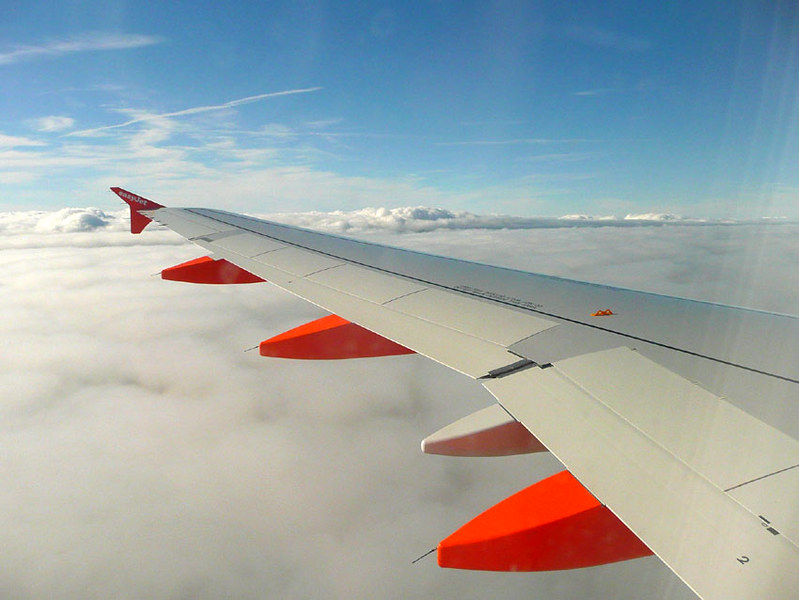
The commercial airliner of the future could look markedly different from today’s aircraft, featuring longer, thinner wings designed to deliver smoother flights while significantly improving fuel efficiency.
These high-aspect-ratio wings represent a major shift in commercial aircraft design. While their extended, slender shape reduces aerodynamic drag and improves efficiency, it also introduces complex engineering challenges. Longer wings are more flexible in flight, making them more sensitive to turbulence, maneuvers, and structural vibrations. To address these challenges, NASA and Boeing are working together to advance technologies that allow airlines to benefit from the efficiency gains without compromising safety or performance.
As part of their Integrated Adaptive Wing Technology Maturation collaboration, NASA and Boeing recently completed a series of wind tunnel tests on a high-aspect-ratio wing model. The goal was to better understand how to control the aerodynamic and structural behavior of these flexible wings under real-world flight conditions.
“When you have a very flexible wing, you’re getting into greater motions,” said Jennifer Pinkerton, a NASA aerospace engineer at NASA Langley Research Center in Virginia. She noted that gust loads and maneuver forces can excite wing motion more than on traditional designs, increasing the need for active control solutions. Higher aspect ratio wings, she added, offer clear fuel-efficiency advantages, making it critical to manage their aeroelastic behavior effectively.
Without proper engineering, long, thin wings can experience excessive bending or a dangerous phenomenon known as flutter. Flutter occurs when airflow interacts with the wing’s natural vibration frequencies, potentially causing oscillations to grow rapidly and lead to structural failure. Preventing such instabilities is a key focus of NASA’s testing efforts.
To study these effects, researchers focused on reducing the impact of wind gusts, easing structural loads during turns and maneuvers, and suppressing flutter. Managing these factors can significantly enhance aircraft efficiency, structural durability, and passenger comfort.
Because full-size aircraft cannot be tested in wind tunnels, NASA and Boeing relied on NASA Langley’s Transonic Dynamics Tunnel, a facility with a 16-foot-by-16-foot test section capable of accommodating large-scale models. Working with NextGen Aeronautics, the teams developed a sophisticated model featuring a 13-foot wing mounted to the tunnel wall.
The model included ten movable control surfaces along the trailing edge of the wing. By adjusting these surfaces in real time, researchers were able to manage airflow and reduce vibration forces. Sensors embedded throughout the model measured aerodynamic loads and structural responses with high precision.
This model represented a major advancement over earlier NASA-Boeing research, including the Subsonic Ultra Green Aircraft Research program, which used only two active control surfaces. The expanded configuration allowed researchers to test more complex control strategies.
Initial tests conducted in 2024 established baseline data, which were compared with computational simulations. Follow-on testing in 2025 demonstrated that the enhanced control systems significantly reduced wing motion during gust conditions.
With testing now complete, NASA and Boeing are analyzing the results and preparing to share findings with aircraft manufacturers and airlines. The data could play a key role in shaping the next generation of more efficient, comfortable, and environmentally friendly commercial aircraft.
Related News: https://airguide.info/?s=NASA, https://airguide.info/category/air-travel-business/aircraft-finance/
Sources: AirGuide Business airguide.info, bing.com, nasa.gov