
Things to Do in Verona: What to See Beyond Juliet’s Balcony

Things to Do in Verona: What to See Beyond Juliet’s Balcony
Verona is often introduced to the world through a single love story. Shakespeare’s Romeo and Juliet placed the city firmly on the romantic map, and today, thousands of visitors crowd into a small courtyard to glimpse Juliet’s Balcony. While this famous stop has its charm, reducing Verona to one attraction does a disservice to a city layered with history, culture, and everyday Italian life.
For travelers willing to look beyond the obvious, Verona reveals itself as one of northern Italy’s most rewarding destinations. From Roman ruins and Renaissance art to quiet neighborhoods and food traditions, this is a city best explored slowly. Here’s a closer look at the most meaningful things to do in Verona, and what truly defines its character.
Start With Verona’s Historic Heart
Any first-time visit should begin in the historic center, a UNESCO World Heritage Site where centuries overlap within walkable streets. Piazza Bra, the city’s largest square, sets the tone with cafés, wide-open space, and views of the Arena.
The Arena di Verona, a Roman amphitheater built in the 1st century, remains one of the best-preserved in the world. Unlike many ancient ruins, this one is still alive—hosting concerts and opera performances that draw audiences from across Europe. Even without attending a show, stepping inside offers a powerful reminder of Verona’s ancient roots.
From here, wander toward Piazza delle Erbe, once the Roman forum and now a lively square filled with market stalls, frescoed buildings, and local life. This area captures what many travelers are really searching for when deciding what to see in Verona: a blend of history and everyday rhythm.
Look Past Juliet’s Balcony—But Don’t Skip It Entirely
Yes, Juliet’s Balcony is crowded, commercial, and often chaotic. But it’s also part of Verona’s modern identity. Visiting early in the morning or late in the evening allows you to experience it without the crush of tour groups.
That said, the real value lies just a few streets away. Casa di Romeo, lesser-known churches, and residential lanes offer a quieter, more authentic atmosphere. These overlooked corners are often what people mean when searching for hidden gems in Italy—places that feel discovered rather than packaged.
Explore Verona’s Churches and Art
Verona’s churches are among its most underrated attractions. The Basilica di San Zeno Maggiore, located slightly outside the tourist core, is a masterpiece of Romanesque architecture and houses important Renaissance artworks. It’s also deeply connected to local life, making it a meaningful cultural stop.
Closer to the center, the Verona Cathedral complex showcases a mix of Romanesque and Gothic styles. Inside, the art tells stories not only of religion but of the city’s evolving identity. These spaces provide a quieter counterbalance to busier landmarks and deepen your understanding of what to see in Verona beyond headline attractions.
Cross the River for a Different Perspective
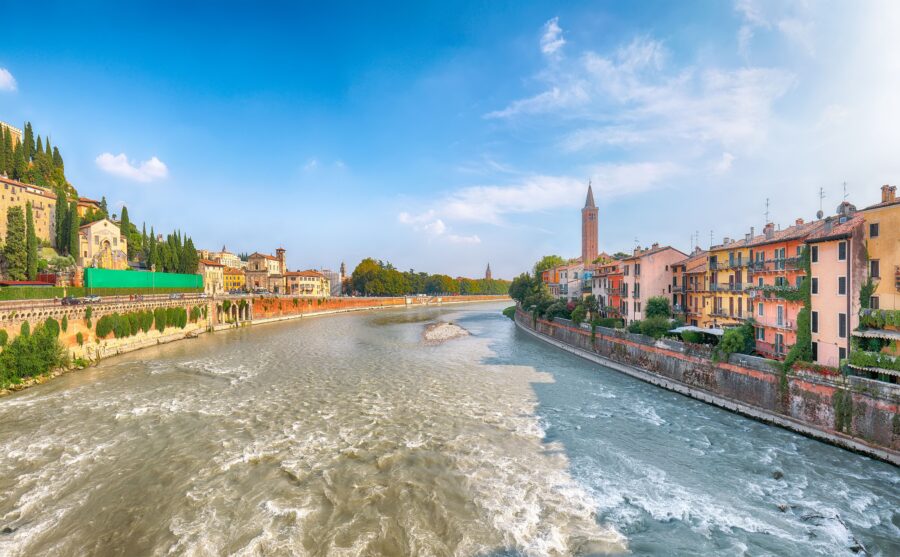
The Adige River curves around Verona, and crossing it opens up a different side of the city. The Veronetta neighborhood feels more residential, creative, and relaxed. Here, you’ll find small cafés, independent shops, and streets where daily life unfolds away from tour itineraries.
From this side of the river, head up to Castel San Pietro for one of the best views in the city. The walk or funicular ride rewards visitors with panoramic views of rooftops, bridges, and bell towers—a moment that often becomes a highlight among the many things to do in Verona.
Eat Like a Local
Verona’s food culture reflects its location between northern Italy and the Veneto countryside. Traditional dishes lean toward hearty comfort foods rather than coastal lightness. Look for risotto all’Amarone, pastissada de caval (a slow-cooked meat dish), and local cheeses paired with Valpolicella wines.
Avoid restaurants clustered around major landmarks and instead explore side streets where menus are shorter and more seasonal. Dining in these places often becomes an unexpected highlight, reinforcing why Verona appeals to travelers seeking substance, not just scenery.
Slow Travel and Everyday Moments
One of Verona’s greatest strengths is how livable it feels. Sitting in a piazza with an espresso, browsing local markets, or watching evening passeggiata reveals the city’s rhythm. These small moments rarely appear on must-see lists, yet they define the experience.
For travelers interested in hidden gems in Italy, Verona offers something rare: a famous city that still feels personal when approached with patience.
Why Verona Deserves More Time
Verona is not a destination to rush. While Juliet’s Balcony may bring visitors in, the city’s depth keeps them engaged. Its manageable size, rich history, and authentic daily life make it ideal for travelers who want more than surface-level sightseeing.
Whether you’re planning a short stop or a longer stay, understanding what to see in Verona means looking past the postcard image and into the layers beneath. Do that, and Verona becomes not just a romantic symbol, but one of Italy’s most rewarding cities to explore.
Related content: Italy Villas More Flexible and Affordable in 2025
Subscribe to our newsletter!