
Jets Avoid Collision After Parallel Runway Takeoff at Houston IAH
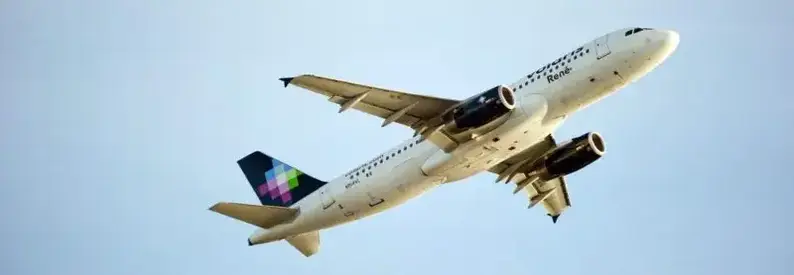
Two commercial aircraft narrowly avoided a midair collision shortly after takeoff at George Bush Intercontinental Airport in Houston on December 18, highlighting the critical role of onboard safety systems during complex parallel runway operations, according to air traffic control recordings and aviation experts.
The incident occurred on December 18 during routine parallel runway departures at one of the busiest international gateways in the United States. An Volaris Airbus A320neo and a United Express Embraer E145 operated by CommuteAir came into close proximity moments after becoming airborne.
Houston IAH routinely conducts simultaneous departures from parallel runways to manage high volumes of domestic and international traffic. On the day of the incident, the two aircraft departed from Runways 33L and 33R, which share a heading of approximately 330 degrees. The departures were spaced by about 20 seconds, a standard interval under normal operating conditions.
The Volaris aircraft, operating a flight to San Salvador, El Salvador, was instructed to execute a left turn to a heading of 110 degrees after takeoff. The United Express flight, bound for Jackson, Mississippi, was assigned a slight right turn to a heading of 340 degrees. These diverging headings were designed to ensure immediate lateral separation.
Both flight crews correctly read back the instructions. However, after liftoff, the Volaris aircraft initiated a right turn instead of the assigned left turn, placing it on a converging flight path with the United Express jet during the critical initial climb phase.
The geometry of the situation significantly increased risk. The Volaris aircraft was required to make a turn exceeding 180 degrees to the left, while the Embraer E145 needed only a minor right turn. As a result, the incorrect maneuver rapidly eliminated the planned separation.
As the situation developed, the Volaris pilots contacted air traffic control to clarify whether the turn to 110 degrees should be made to the right. The controller reiterated the instruction for a left turn, without immediate awareness that the aircraft had already turned in the wrong direction. Radar systems began generating collision alerts as both aircraft closed distance vertically and laterally.
The first explicit warning transmitted over the radio came from the United Express flight crew, who reported receiving a Resolution Advisory from the Traffic Alert and Collision Avoidance System (TCAS). The automated system, which operates independently of ground-based control, issued commands directing vertical maneuvers to restore safe separation.
The TCAS alert ultimately prevented a collision. No injuries were reported, in part because the incident occurred shortly after departure, when passengers and crew were still seated with seatbelts fastened.
Aviation analysts reviewing the event have pointed to execution error rather than faulty communication. Air traffic control instructions were correct, and readbacks were accurate. The failure occurred during maneuver execution, underscoring the importance of crew cross-checking and situational awareness during high-workload phases of flight.
Former investigators have noted that large heading changes immediately after takeoff can increase cognitive workload, particularly when multiple aircraft are departing simultaneously. While not excusing the error, the incident has renewed attention on crew resource management and the challenges of parallel runway operations at major hubs.
The Federal Aviation Administration has not confirmed whether a formal investigation will be launched, though incidents involving loss of separation are typically subject to internal safety reviews.
While serious, the event also demonstrated the effectiveness of aviation’s layered safety framework. For passengers traveling through major hubs such as Houston—and for international routes linking the United States with Central America and beyond—the incident served as a reminder that modern commercial aviation relies on multiple safeguards to prevent accidents when human error occurs.
Related News: https://airguide.info/?s=volaris, https://airguide.info/?s=united+airlines, https://airguide.info/category/air-travel-business/travel-health-security/
Sources: AirGuide Business airguide.info, bing.com, travelandtourworld.com , abc7chicago.com