
New Caledonia Audit Flags High Subsidy Costs in Air Transport

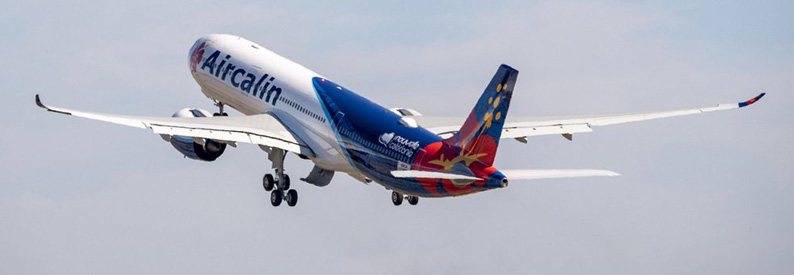
The territorial auditor of New Caledonia has raised concerns over the cost, governance, and effectiveness of air transport subsidies in the archipelago, warning that current arrangements are financially inefficient and insufficiently transparent. In a report released on December 22, 2025, the Chambre Territoriale des Comptes de Nouvelle-Calédonie (CTC) highlighted high per-passenger subsidy costs on low-traffic routes and shortcomings in the management of territorial continuity assistance schemes.
According to the audit, public subsidies designed to support connectivity between New Caledonia and external destinations have, in several cases, resulted in disproportionately high costs relative to passenger volumes. The watchdog also identified repeated instances of misuse of territorial continuity aid, alongside opaque mechanisms for distributing fleet renewal support. Particular scrutiny was directed at Aircalin, which is 99% state-owned and a major recipient of public assistance.
The CTC concluded that the absence of a clearly defined, long-term strategic framework for air transport policy is the root cause of many of the issues identified. Without such a framework, subsidy programmes, public service obligations (PSOs), and fleet investment decisions have been implemented in a fragmented manner, limiting their overall effectiveness and accountability.
To address these weaknesses, the auditor recommended stronger financial oversight, improved transparency in the allocation of public funds, and tighter eligibility criteria for territorial continuity assistance. It also called for the introduction of revised, multi-year PSOs to replace short-term arrangements that fail to provide predictability for operators or value for money for taxpayers. The report stressed that clearer performance benchmarks should be attached to any future public support.
Despite its critical findings, the CTC acknowledged recent efforts by local authorities to address structural issues in the sector. These include the drafting of new policy resolutions aimed at clarifying the objectives of air transport subsidies and improving coordination between stakeholders. The auditor also noted the planned transfer of Air Calédonie’s commercial operations from Nouméa Magenta Airport to Nouméa La Tontouta International Airport, a move intended to rationalise infrastructure use and reduce operating complexity.
The findings come as New Caledonia continues to balance the need for reliable air connectivity—essential for economic activity, tourism, and social cohesion—with mounting pressure on public finances. With air transport playing a critical role in linking the remote territory to regional and global markets, the CTC warned that reforms are increasingly urgent.
The audit is expected to inform upcoming policy debates on aviation funding and governance in New Caledonia, with authorities now under pressure to demonstrate that future subsidies deliver measurable benefits while ensuring fair competition, financial discipline, and long-term sustainability of the territory’s air transport system.
Related News: https://airguide.info/category/air-travel-business/airline-finance/
Sources: AirGuide Business airguide.info, bing.com, ch-aviation.com