
Campaigners Claim Safety Defects on Air India 787 That Crashed

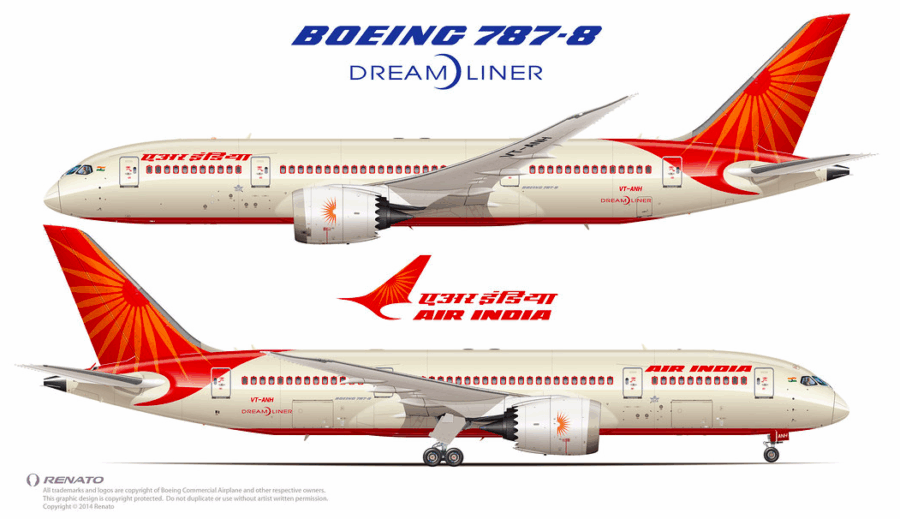
Aviation safety campaigners in the United States claim that the Air India Boeing 787 Dreamliner that crashed shortly after take-off from Ahmedabad last year had a documented history of technical problems, including an in-flight electrical fire.
The aircraft, a Boeing 787 registered VT-ANB, crashed on June 12 while operating a flight from Ahmedabad to London, killing 260 people. The official investigation remains ongoing, but the allegations have added a new layer of controversy to one of India’s deadliest aviation disasters.
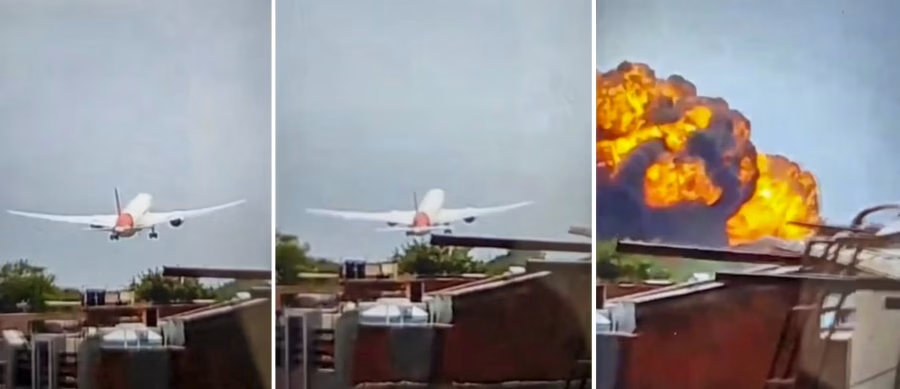
The Foundation for Aviation Safety (FAS), a US-based advocacy group, said it has obtained internal documents showing the aircraft experienced repeated system failures from its first day in service. The group has submitted a detailed presentation outlining its claims to the US Senate Permanent Subcommittee on Investigations.
According to FAS, the aircraft suffered a “wide and confusing variety of engineering, manufacturing, quality, and maintenance problems” over its operational life. Alleged issues include recurring electronics and software faults, circuit breakers tripping repeatedly, wiring damage, short circuits, loss of electrical power, and overheating of power system components.
The aircraft involved was among the earliest 787s built, first flying in late 2013 before entering service with Air India in early 2014. FAS claims that in January 2022 the aircraft experienced a fire in one of its P100 power distribution panels during a descent into Frankfurt. The damage was reportedly severe enough that the entire panel had to be replaced. The P100 panel is a critical component that distributes high-voltage electrical power generated by the engines throughout the aircraft.
The 787 relies more heavily on electrical systems than previous generations of airliners, replacing many mechanical and pneumatic systems with lighter electrical alternatives to improve efficiency. However, this design philosophy has faced scrutiny in the past, most notably after lithium-ion battery fires grounded the global 787 fleet in 2013. The P100 panel itself was redesigned in 2010 following a fire on a test aircraft.
The crash investigation is being led by India’s Aircraft Accident Investigation Bureau (AAIB), with participation from US authorities because the aircraft and its engines were designed and built in the United States. A preliminary AAIB report published a month after the accident generated controversy by noting that both engines appeared to have been deprived of fuel shortly after take-off, after fuel control switches were found in the “cut-off” position.
That finding led to speculation that pilot action may have played a role. However, lawyers for victims’ families, pilot groups, and safety campaigners argue that focusing on cockpit actions risks overlooking a potential technical failure.
Boeing has consistently stated that the 787 Dreamliner has a strong safety record and declined to comment on the allegations, citing the ongoing investigation. Prior to the Ahmedabad crash, the 787 had flown for nearly 15 years without a fatal accident.
The BBC said it has not independently verified the documents cited by FAS. Both Air India and the AAIB have been approached for comment as the investigation continues.
Related News: https://airguide.info/?s=air+india, https://airguide.info/category/air-travel-business/travel-health-security/
Sources: AirGuide Business airguide.info, bing.com, yahoo.com