
Above the Skyline: Concorde’s First Commercial Flight, 50 Years On

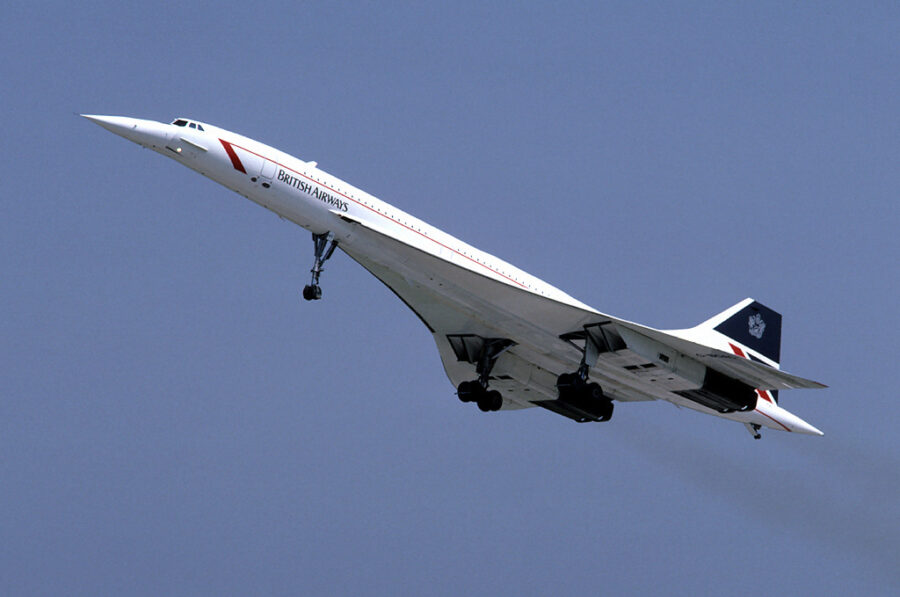
Half a century after Concorde first sliced through the sky on commercial service, the aircraft remains an unmatched symbol of ambition, elegance, and technological audacity. It was not merely a faster way to travel, but a bold assertion of what civil aviation could be when politics, engineering, and imagination aligned. Among those who flew it most often, pilots, crew, and elite frequent flyers, Concorde earned an affectionate nickname: “the Sled.”
The name captured both its raw power and its precision. Like a high-speed runner on rails, Concorde accelerated relentlessly, cleanly, and with purpose, transforming long-haul travel into something closer to performance than transportation.
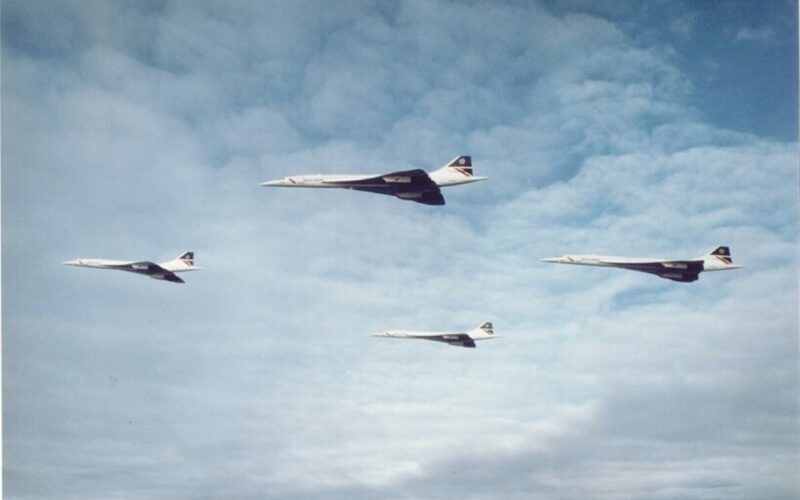
On January 21, 1976, the era of commercial supersonic passenger travel officially began when British Airways and Air France launched their first scheduled Concorde services. On that historic day, two Concorde aircraft took off almost simultaneously—one from London Heathrow to Bahrain and the other from Paris to Rio de Janeiro via Dakar, ushering in a new chapter in aviation history. At 11:40 a.m. GMT, Concorde F-BVFA departed Paris-Charles de Gaulle for Rio de Janeiro, stopping in Dakar for refuelling, while Concorde G-BOAA left London-Heathrow for Bahrain in the Persian Gulf.
These flights were more than routine scheduling; they symbolised the deep Anglo-French cooperation that brought the aircraft from concept to commercial reality.
Flying on Concorde
I had the rare pleasure of flying on the Anglo-French SST from JFK to London, including one unforgettable departure from the cockpit jump seat on Runway 31L, with afterburners engaged. Unlike subsonic jets, Concorde remained in reheat after liftoff, and it felt immediately different. The aircraft (G-BOAC) accelerated like a fighter, not a transport.
In a matter of minutes, we went from a standing start to Mach 1 at around 33,000 feet (FL330), the moment pilots called “going through the gate.” By approximately Mach 1.7, between FL330 and FL450, the reheats were shut down, not because they were no longer effective, but because Concorde’s variable-geometry inlet ramps and extraordinary aerodynamic efficiency took over.
With reheat off, the faster Concorde flew, the more efficient it became. This was one of its great paradoxes: it climbed by accelerating. From Mach 1.7 to Mach 2.02, the aircraft continued its cruise climb from roughly 45,000 to 50,000 feet, and as fuel burned off, it naturally rose to 58,000–60,000 feet during supersonic cruise.
The sensation was unlike anything before or since, calm, controlled, and almost unreal in its effortless speed. From brakes released to Mach 2 at 50,000 feet took roughly 20 to 25 minutes, something no other commercial aircraft has ever achieved.
I truly miss it today. Even decades after its final flight, no other commercial aircraft has come close to matching the blend of speed, presence, champagne, caviar, and prestige that made Concorde unforgettable.
Incredible Passenger Experience
For passengers, the experience bordered on surreal. Champagne was served while the aircraft accelerated through twice the speed of sound. The flight deck monitored skin temperatures exceeding 120°C (250°F) due to aerodynamic heating, causing the airframe to subtly expand in flight. Outside the windows, the sun appeared to linger unnaturally in the sky, sometimes setting twice during a single journey.
For business travelers, Concorde rewrote the rules of time. It made breakfast in London and lunch in New York not a slogan but a practical reality. Executives could cross the Atlantic, attend meetings, and return the same day, something unimaginable in the jet age before Concorde. For governments and industries, it symbolized technological leadership and national prestige.
For the wider world, Concorde represented a future that arrived early. It proved that supersonic passenger flight was not science fiction but operational reality, sustained, safe, and astonishingly routine. Even decades after its retirement, Concorde remains unmatched in commercial aviation, a reminder that there was once a moment when speed, ambition, and elegance converged at twice the speed of sound.
Explore the sleek design, exclusive cabin and luxury of flying aboard the world’s first supersonic passenger airliner with JETLINER CABINS Evolution & Innovation: https://jetlinercabins.com/concorde/
The First Flights
The choice of early routes was influenced by both politics and technical considerations. Long-range flights like London–Bahrain and Paris–Rio allowed the aircraft to demonstrate Concorde’s impressive range and speed, while navigating international airspace and airport restrictions. Concorde was designed to fly at more than twice the speed of sound, about Mach 2.0, cutting travel times dramatically compared with conventional jets.
Concorde’s entry into revenue service came nearly seven years after its maiden flight in 1969, reflecting the extended development and certification process. The aircraft had to meet stringent safety and performance standards before carrying paying passengers at supersonic speeds over commercial routes.
Following its inaugural flights, Concorde’s commercial network expanded to include more ambitious destinations. While political and environmental restrictions initially limited access to the most coveted markets, both airlines worked to secure North Atlantic routes. By May 1976, Concorde was cleared to fly to Washington-Dulles, and later in November 1977 both British Airways and Air France commenced regular service to New York’s John F. Kennedy International Airport once noise and community concerns were resolved.
Concorde’s early years were marked by experimentation with varied long-distance services, seasonal routing, and even special charters. However, high operating costs and limited demand meant that many of these flights were short-lived. Over time, both carriers focused on the most commercially viable transatlantic routes, where travellers were willing to pay a premium for significantly reduced journey times.
Engineering at the Edge: A Leap Into the Future
Concorde was never just an airplane. It was a statement, a declaration that engineering could bend the limits of physics, that rival nations could collaborate on a project so ambitious it bordered on the impossible, and that the future of travel could be faster, sleeker, and more glamorous than anyone had dared imagine.
Cruising at Mach 2.04, roughly 1,350 mph (2,180 km/h) at altitude, Concorde routinely flew at 60,000 feet, twice as high as conventional jetliners and above most weather systems. At that height, the sky darkened to a deep indigo and the curvature of the Earth became visible, a quiet reminder that this was no ordinary flight. The aircraft moved so quickly that eastbound journeys could arrive before they departed by local time, effectively outrunning the rotation of the planet.
On its flagship transatlantic route, Concorde redefined distance. A typical subsonic flight between London and New York took seven to eight hours; Concorde completed the same journey in about three hours and 30 minutes, sometimes less with favorable winds. After acceleration over the Atlantic, passengers would feel a smooth, deliberate surge as the aircraft passed through Mach 1 and continued accelerating beyond the sound barrier, an event invisible to those onboard, yet monumental in meaning.
Even today, Concorde’s technical achievements remain staggering, not just for what it did, but for how elegantly it did it.
Its slender ogival delta wing, refined through thousands of hours of wind-tunnel testing, featured no flaps or slats. Instead, Concorde relied on high angles of attack and vortex lift, remaining stable and controllable at Mach 2.04 while still able to land safely at around 170 knots. The wing’s precision at supersonic speed was such that even minor deviations in weight or balance were immediately apparent to the crew.
The aircraft’s iconic droop-nose was not a stylistic flourish but an operational necessity. At takeoff and landing attitudes, forward visibility would otherwise have been severely limited. Hydraulically actuated, the nose lowered by five degrees for taxi and takeoff and by 12.5 degrees for landing, before locking seamlessly into its streamlined position for supersonic cruise.
Power came from four Olympus 593 afterburning turbojet engines, each delivering more than 38,000 pounds of thrust with reheat. Unlike military aircraft, Concorde used afterburners not only for takeoff but to push through the transonic drag rise, accelerating beyond Mach 1.7 before throttling back to dry power for sustained cruise, a rare balance of brute force and aerodynamic efficiency.
At cruise altitude, where air density is roughly a quarter of that at sea level, aerodynamic heating raised the aircraft’s skin temperature beyond 120°C (250°F). The aluminum airframe expanded by up to 10 inches (25 centimeters) in flight, a change so dramatic that engineers designed sliding joints into the structure and left visible expansion gaps on the flight deck floor.
Fuel management was itself a performance system. Concorde actively pumped fuel between tanks to shift the center of gravity aft during cruise, reducing trim drag and improving efficiency, then forward again for descent and landing. It was an analog solution to a supersonic challenge, executed with extraordinary precision.
This was not an aircraft that tolerated casual operation. Concorde demanded discipline, foresight, and absolute respect for its limits. Pilots trained intensively in energy management, systems integration, and contingency handling, knowing that at twice the speed of sound, margins were unforgiving.
Those who flew it still speak of Concorde with reverence, not merely as a machine, but as something almost alive. It had moods, rhythms, and unmistakable presence. And when it accelerated cleanly through Mach 2, it reminded everyone on board that they were riding the sharpest edge commercial aviation has ever known.
Fifty Years Later: A Legacy That Endures
Despite its technical brilliance, Concorde faced persistent challenges. Noise concerns limited where it could fly supersonically over land, and its operating economics were strained by high fuel consumption and ticket prices. These factors, along with a tragic 2000 crash of an Air France Concorde and a downturn in global air travel after the September 11, 2001 attacks, ultimately led to the retirement of the fleet in 2003.
The 50th anniversary has sparked celebrations across Europe and beyond.
- Air France released commemorative merchandise and premiered a documentary tracing Concorde’s journey.
- Royal Mail issued a special stamp collection honoring the aircraft’s cultural impact.
- Museums such as Brooklands, Manchester, and Le Bourget hosted events featuring former pilots, engineers, and passengers.
Visitors still line up to step inside the preserved Concordes on display, marveling at the cockpit’s analog complexity and the cabin’s understated luxury.
A Vision That Still Shapes the Future
Though Concorde bowed out of service in 2003, its shadow still stretches across modern aviation. Engineers, designers, and dreamers continue to chase the promise it made real: that the world could be smaller, faster, and infinitely more thrilling to traverse. Many have tried to revive supersonic travel since, but none has yet captured the same blend of elegance, speed, and mystique that defined the original.
Concorde proved that supersonic passenger flight was not just feasible, it was transcendent. It showed what happens when nations dare to look beyond the horizon, when engineers refuse to accept conventional limits, and when travel becomes more than logistics. It becomes an experience, a statement, a glimpse of the future made tangible.
Half a Century Later, Still Unmatched
Fifty years on, Concorde endures as a symbol of what humanity can achieve when ambition outweighs caution and engineering dares to outrun convention. Its first commercial flight was more than an aviation milestone; it was a cultural moment. The future did not arrive quietly, it roared overhead at Mach 2, compressing oceans, time zones, and expectations in a single sweep.
For nearly three decades, Concorde demonstrated that supersonic travel could be real, routine, and remarkably reliable. Its retirement left an absence as profound as its sonic boom had once been. The skies grew quieter, slower, but not necessarily resigned to that fate.
Today, a new generation of aerospace innovators is attempting to pick up where Concorde left off, armed with advanced materials, digital design tools, and a sharper awareness of sustainability and community impact. Foremost among them is Boom Supersonic, which is developing Overture, a Mach 1.7 airliner intended to cut transatlantic travel times nearly in half. Its XB-1 demonstrator has already flown, validating aerodynamic concepts that aim to deliver speed with far less noise and fuel burn than Concorde ever could.
Unlike its predecessor, the next wave of supersonic aircraft is being designed to soften, or even eliminate, disruptive sonic booms over land, potentially unlocking far broader route networks. Advances in aerodynamics, propulsion, and sustainable aviation fuels promise aircraft that are not only fast, but economically viable and environmentally defensible, the two frontiers Concorde ultimately could not conquer.
Whether Boom or another contender succeeds remains to be seen. But the trajectory is unmistakable: speed is returning to the civil aviation agenda. The next era of supersonic travel may look different, less aristocratic, more pragmatic, yet it is driven by the same enduring belief that powered the original SST: distance should never dictate possibility.
Concorde showed the world what was possible. The next generation may finally show how to make it endure.
Explore the sleek design, exclusive cabin and luxury of flying aboard the world’s first supersonic passenger airliner with JETLINER CABINS Evolution & Innovation: https://jetlinercabins.com/concorde/
Related News: https://airguide.info/?s=Concorde, https://airguide.info/?s=boom+supersonic, https://airguide.info/?s=supersonic
Sources: AirGuide Business airguide.info, bing.com
Above the Skyline by Aram Gesar
Observations on how we travel now—and why it feels the way it does.
Above the Skyline is a reimagining of the Skyline Editorial previously published in AirGuide Destinations (formerly Frequent Flyer Destinations) magazine. It offers a measured look at how modern travel actually feels. Aram Gesar observes the small frictions, unspoken rules, and design choices that shape journeys in the air and on the ground—often unnoticed, occasionally absurd, and always familiar.