
Delta to Invest $250M in Austin Airport Terminal Expansion

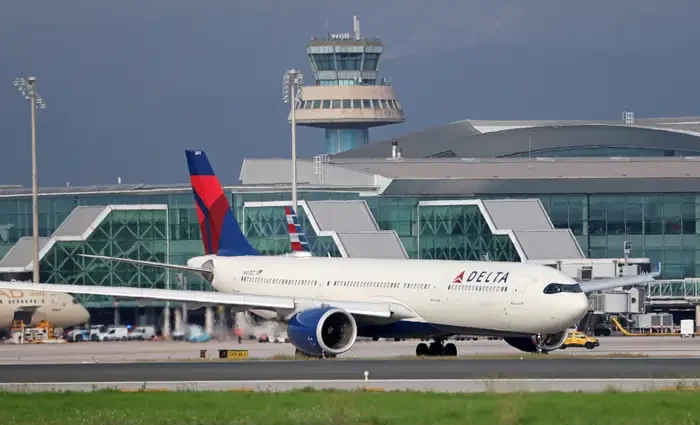
Delta Air Lines has earmarked USD 250 million for a major investment at Austin-Bergstrom International Airport, underscoring the airline’s long-term commitment to one of the fastest-growing aviation markets in the United States. The funding will support a comprehensive revamp of the airport’s main terminal, positioning Delta as the anchor carrier once a wide-ranging expansion programme is completed.
The investment follows the finalisation of new 10-year use and lease agreements between the City of Austin and the airport’s key airline partners. City officials confirmed the agreements on January 7, 2026, marking a critical step forward for Austin-Bergstrom’s ambitious USD 5 billion redevelopment plan. The expansion is designed to accommodate sustained passenger growth and strengthen the airport’s role as a major gateway for both domestic and international travel.
At the centre of the redevelopment is a significant increase in gate capacity. Austin-Bergstrom is set to add 32 new gates, nearly doubling its current total of 34. The expansion will reshape airline operations at the airport, with Delta emerging as the anchor carrier at the modernised main terminal. The enhanced facilities are expected to improve passenger flow, expand concessions, and support Delta’s plans to grow connectivity from Austin across its domestic and international network.
While Delta will anchor the main terminal, Southwest Airlines, currently the dominant carrier at Austin-Bergstrom, will become the key operator at a new terminal developed as part of the broader expansion. This dual-terminal strategy reflects the airport’s effort to balance the needs of multiple major carriers while creating room for future growth and competition.
Both Delta and Southwest have signaled increasing strategic focus on Austin in recent years. The two airlines announced base openings at the airport in 2025, with Southwest unveiling its plans in August and Delta following in December. These moves have intensified competition while also reinforcing Austin’s status as a critical aviation hub in Texas, alongside Dallas-Fort Worth and Houston.
For Delta, the USD 250 million commitment aligns with its broader strategy of investing in key focus cities where demand is growing rapidly and corporate travel remains resilient. Austin’s booming technology sector, expanding population, and strong inbound tourism have driven consistent increases in passenger volumes, making long-term infrastructure investment increasingly attractive for airlines.
Airport officials expect the expansion to deliver not only additional capacity but also a more seamless passenger experience, with upgraded terminal spaces, improved airside operations, and enhanced flexibility to support future aircraft types and route development. As construction progresses, Austin-Bergstrom is positioning itself to handle the next phase of growth, with Delta’s investment playing a central role in shaping the airport’s future competitive landscape.
Related News: https://airguide.info/category/air-travel-business/airline-finance/
Sources: AirGuide Business airguide.info, bing.com, ch-aviation.com