
U.S. Senators Push Mandatory ADS-B to Prevent Midair Collisions

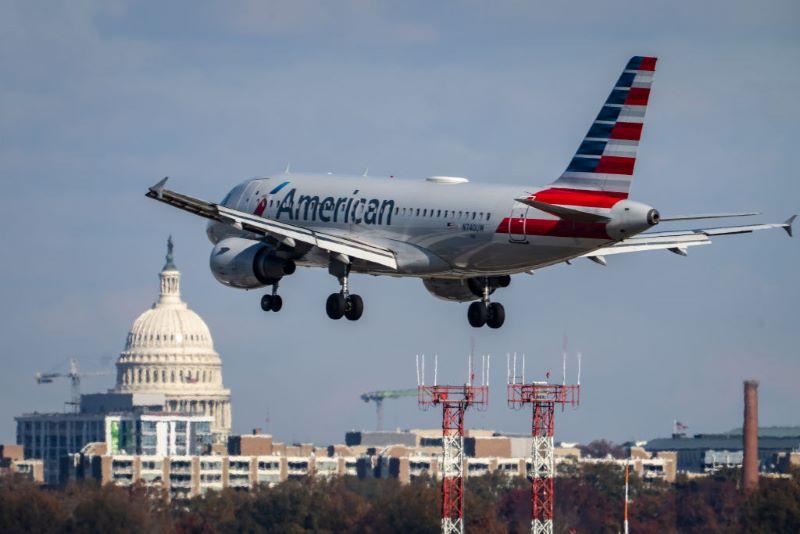
U.S. senators renewed calls for sweeping air safety reforms during a February 12 hearing in Washington, D.C., reviewing last year’s fatal midair collision near Ronald Reagan Washington National Airport that killed 67 people.
Lawmakers argued the January 29, 2025 crash between an American Airlines regional jet and a U.S. Army Black Hawk helicopter could have been prevented if the Federal Aviation Administration had required more advanced collision avoidance systems on all aircraft operating in U.S. airspace.
In response to the accident, the Senate unanimously passed the Rotorcraft Operations Transparency and Oversight Reform (ROTOR) Act on December 17. The proposed legislation would mandate enhanced Automatic Dependent Surveillance-Broadcast (ADS-B) technology on nearly all aircraft. ADS-B systems broadcast precise location data and receive real-time traffic information, giving pilots earlier warnings of potential conflicts.
National Transportation Safety Board Chair Jennifer Homendy told the Senate Commerce, Science and Transportation Committee that stronger ADS-B requirements could have prevented the Reagan Airport collision.
“The accident wouldn’t have happened,” Homendy said, adding that the NTSB has urged broader ADS-B adoption for nearly two decades.
Investigators determined that the aircraft involved in the crash were equipped with incompatible or limited location technology that did not represent the most advanced ADS-B standards. Current rules require ADS-B Out — which transmits an aircraft’s position — for most commercial airliners, but not universal ADS-B In capability, which allows pilots to receive detailed traffic alerts. Many private and military aircraft are not required to carry the most advanced systems.
Homendy warned that without a single nationwide standard, further tragedies are likely. She cited the May 2019 midair collision near Ketchikan, Alaska, involving two sightseeing floatplanes that killed six people. In that case, reliance on the traditional “see-and-avoid” method — visually scanning for other aircraft — proved insufficient. Investigators concluded that more effective ADS-B traffic alerts might have prevented the crash.
According to NTSB findings, ADS-B systems could have provided nearly a minute of warning in the Reagan Airport collision. Instead, pilots had roughly one second to react.
While the Senate has advanced the ROTOR Act, the House version remains stalled amid concerns over retrofit costs and potential aircraft downtime. Homendy estimated retrofits could cost about $50,000 per aircraft, while portable ADS-B units for private pilots may cost as little as $400.
Senators from both parties criticized what they described as inconsistent safety standards across the aviation sector, arguing that unified ADS-B requirements are essential to modern airspace safety.
Related News: https://airguide.info/?s=NTSB, https://airguide.info/?s=FAA, https://airguide.info/category/air-travel-business/travel-health-security/
Sources: AirGuide Business airguide.info, bing.com, thewellnews.com