
LATAM Boeing 787 Seat Incident Report Highlights Cockpit Safety Risk

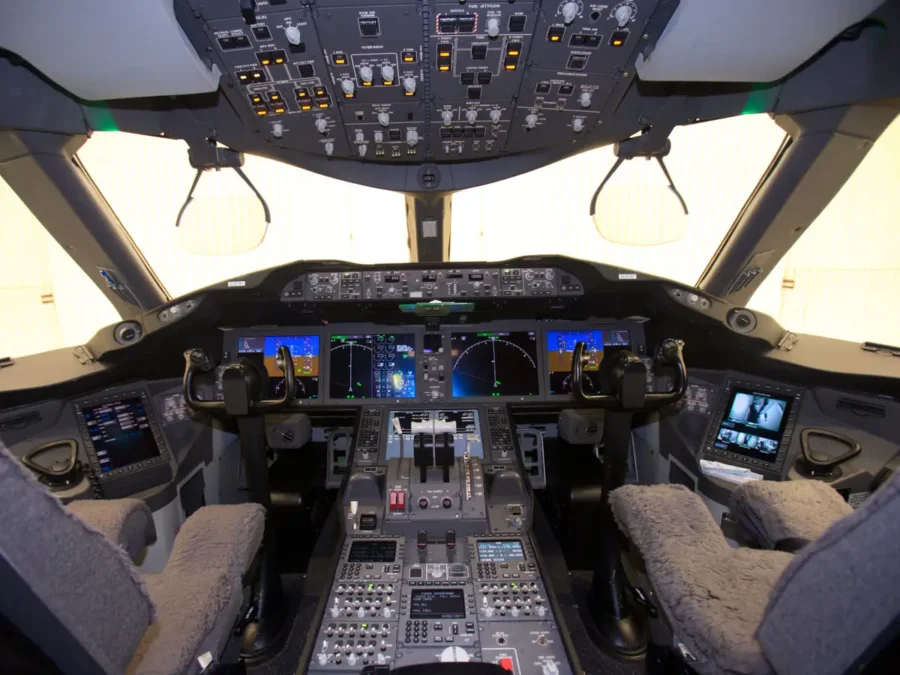
A final investigation report into a LATAM Airlines Boeing 787 incident over the Tasman Sea has revealed how a sudden captain’s seat movement triggered a serious in-flight upset, underscoring a little-known cockpit safety vulnerability.
The incident involved a Boeing 787 Dreamliner operating a trans-Tasman service when the captain’s seat unexpectedly shifted forward, forcing the pilot into the control column and causing an abrupt pitch-down event. The aircraft, operated by LATAM Airlines, was cruising at altitude when the upset occurred, leading to injuries among passengers and cabin crew. The preliminary report published on April 23, 2024.
According to the report released by aviation authorities, the seat movement was likely triggered by inadvertent activation of the electric seat adjustment switch. Investigators found that contact between loose objects or external pressure and the seat control panel may have caused the unintended motion. When the seat surged forward, it pushed the captain into the flight controls, resulting in a temporary but significant loss of stable pitch attitude.
The aircraft’s flight crew quickly regained control, and the flight continued to its destination without further incident. However, the event prompted a detailed review of cockpit seat design, control placement and crew procedures.
The investigation concluded that while no structural or avionics failures occurred, the design of electrically powered cockpit seats—common in modern long-haul aircraft—can pose a risk if activation switches are not adequately protected against inadvertent input.
Regulators have recommended enhanced awareness training for flight crews, reinforced guidance on securing loose items in the cockpit, and further evaluation of seat control protection mechanisms. The report also noted that similar seat-related incidents have occurred in other aircraft types, though rarely resulting in serious flight upsets.
Aviation safety analysts say the findings highlight how even minor ergonomic or design features can carry significant operational consequences in highly automated aircraft. While engines, navigation systems and flight computers are rigorously monitored, cockpit furniture and control interfaces can present overlooked risk pathways.
The report stops short of mandating immediate design changes but encourages manufacturers and operators to assess safeguards to prevent unintended seat movements.
The Tasman Sea incident serves as a reminder that aviation safety depends not only on advanced technology but also on human-machine interaction inside the cockpit—where even a seemingly routine component like a pilot’s seat can become a critical factor in flight stability.
Related News: https://airguide.info/?s=LatAm, https://airguide.info/?s=boeing+787, https://airguide.info/category/air-travel-business/travel-health-security/
Sources: AirGuide Business airguide.info, bing.com