
Middle East Drone Strikes Disrupt Air Travel Across Gulf

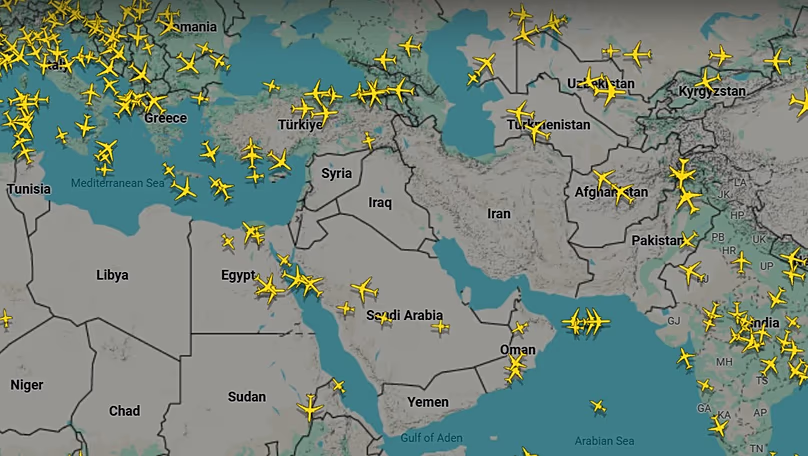
Drone strikes and escalating regional tensions in the Gulf have triggered significant air travel disruptions across the Middle East, forcing airlines to reroute flights, suspend services and warn passengers of delays.
Officials at Dubai International Airport, the largest in the United Arab Emirates, said four people were injured in a drone strike, while Zayed International Airport in Abu Dhabi reported one fatality and seven injuries. Strikes were also reported near Kuwait International Airport. Although Iran did not publicly claim responsibility, Gulf nations attributed the retaliatory attacks to Tehran, and the scope extended beyond previously declared U.S. military targets.
Airlines crossing Middle Eastern airspace are now rerouting many flights south over Saudi Arabia to avoid potential conflict zones. The diversions are adding hours to long-haul journeys between Europe, Asia and North America, increasing fuel consumption and operational costs. Analysts warn that if the conflict lingers, airlines may pass some of those higher costs on to passengers through rising ticket prices.
The sudden shift in flight paths is also placing additional pressure on Saudi Arabian air traffic controllers, who must manage heavier volumes of traffic through narrower corridors. Meanwhile, countries that temporarily closed portions of their airspace are losing overflight revenue fees normally paid by airlines.
At least 145 aircraft en route to destinations such as Tel Aviv and Dubai were diverted in a single day, according to flight tracking data. Some flights turned around mid-journey, including one transatlantic service that flew nearly to Spain before returning to the United States.
Major international carriers, including Air India, Turkish Airlines, Lufthansa, Air France, British Airways, Delta Air Lines, United Airlines and others, suspended or canceled flights to destinations across Israel, Lebanon, Syria, Iraq, Iran, Jordan, Qatar, Kuwait, Bahrain and the UAE. Several airlines issued travel waivers, allowing affected passengers to rebook without change fees.
Aviation experts say airspace closures may begin to ease once military authorities clarify safe corridors and assess ongoing missile capabilities. However, uncertainty remains high, and airlines are urging travelers to check flight status before heading to the airport.
Industry analysts warn disruptions could last days or longer, depending on how the security situation evolves. For now, travelers should expect delays, cancellations and complex rerouting across one of the world’s most critical aviation crossroads.
Related News: Live Tracker: Airport and Flight Delays – Middle East Air Travel Chaos as Iran Attacks
Sources: AirGuide Business airguide.info, bing.com, jpost.com, apnews.com