
ATR Revives Assembly Line as Supply Issues Persist

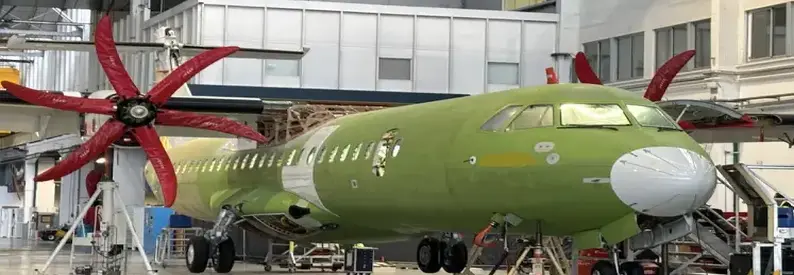
ATR reported €1.2 billion in revenue for 2025 as the turboprop manufacturer prepares to ramp up production in 2026, even as supply chain constraints continue to weigh on output.
Speaking at a press conference in Toulouse on February 18, 2026, CEO Nathalie Tarnaud Laude said she was satisfied with the company’s performance, despite deliveries totaling 32 aircraft, down slightly from 35 in 2024. She attributed the lower output primarily to ongoing supply chain bottlenecks, particularly affecting landing gear and engines.
Demand, however, remains robust. ATR recorded 50 net orders in 2025, comprising 60 new aircraft orders and 10 cancellations linked to an undisclosed customer undergoing internal restructuring. The year included ATR’s largest single orders since 2017, with Uni Air of Taiwan ordering 19 aircraft and Air Algérie committing to 16. It also marked the second consecutive year ATR surpassed 50 new orders, following 51 in 2024.
Confident in market demand, ATR is reactivating a second final assembly line at its Blagnac facility in Toulouse. The line, which operated until 2018, is scheduled to resume activity by May 2026. This move is expected to boost deliveries by around 20% in 2026, with a long-term target of reaching 60 aircraft annually.
Marion Smeyers, SVP Procurement and Operations, said supply chain stabilization was a key focus throughout 2025. ATR worked closely with Tier 1 suppliers to optimize production flows and provided support to financially fragile Tier 2 and Tier 3 suppliers. The company aims to cut production lead times by 40% from sub-assembly arrival to aircraft delivery; so far, it has achieved a 20% reduction.
Commercial Director Alexis Vidal highlighted growth opportunities in North America, where approximately 300 regional jets will require replacement over the next decade. He argued that ATR’s turboprops offer a more efficient solution for many of the short-haul missions currently flown by aging regional jets. Vidal also pointed to route reductions in the US, from about 1,400 to 800 city pairs in recent years, suggesting that smaller, more economical aircraft could help revive underserved routes.
India is another priority market, with projected demand for 200 regional aircraft over the next 20 years.
ATR is also advancing clean propulsion initiatives, including participation in the HERACLES and DEMETRA hybrid-electric programs under the European Clean Aviation framework. These efforts support development of the low-emissions EVO aircraft, targeted to fly by 2029 with potential entry into service by 2035, pending a final program decision.
Related News: https://airguide.info/category/air-travel-business/airline-finance/