
How Airlines and Airports Navigate War Zones and Safety Priorities

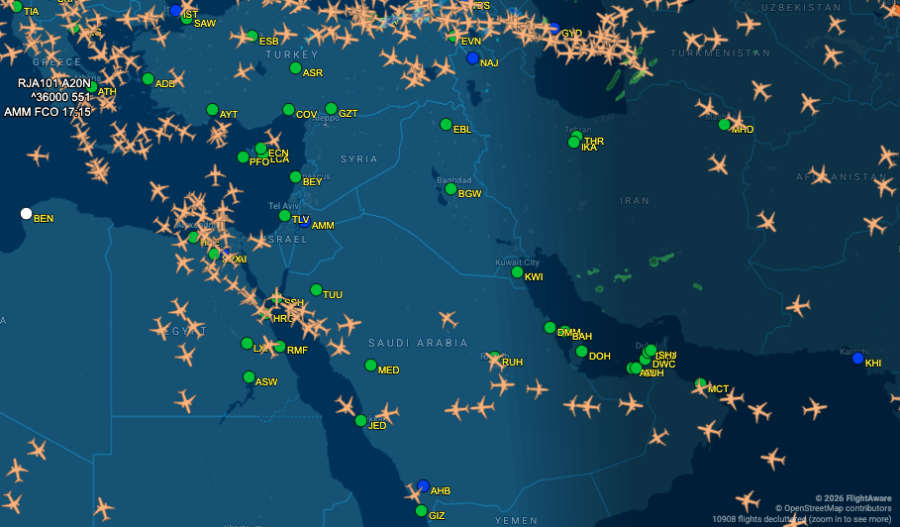
As the conflict involving the United States, Israel and Iran continues to disrupt global air travel, aviation experts are highlighting the critical priorities for airlines and airports operating amid expanding war-affected airspace. An aviation risk management and conflict zone overflight expert spoke with Karen Walker about how carriers must adapt safety, routing and operational strategies in real time.
The ongoing crisis has already prompted closures and restrictions across much of the Middle East’s airspace, forcing carriers to reroute flights, cancel services and redesign network flows. Vast sections of Iranian, Iraqi and Gulf states’ skies have become effectively off limits, pushing aircraft into narrower corridors and reshaping transcontinental flight paths between Europe, Asia and beyond.
Prioritizing Safety and Risk Assessment
The foremost priority for airlines is safety. When geopolitical tensions escalate, carriers must continuously monitor military developments, aviation advisories and Notices to Air Missions (NOTAMs) to avoid zones with active hostilities or elevated missile and drone threats. For airports near conflict areas, expanding risk assessments are essential to ensure ground operations and passenger movements are protected as far as possible from direct or collateral impacts.
Dynamic Airspace Management
Rapidly changing airspace closures demand flexibility. Airlines have shifted to alternate routes, sometimes significantly lengthening flights to avoid dangerous regions, which increases fuel costs, crew hours and logistical complexity. Coordination with air navigation service providers and regulators has never been more critical to maintain safe and efficient corridors through relatively stable skies.
Operational Continuity and Communication
During conflict-driven disruptions, timely communication with passengers and regulatory authorities helps maintain trust and operational continuity. Airlines often have to provide frequent rebooking options, arrange alternative travel plans and keep travelers apprised of evolving conditions at departure and arrival airports. In some cases, carriers work with governments to organize evacuation or repatriation flights as commercial services remain constrained.
Insurance and Asset Protection
Another priority is financial risk management. With conflict zones potentially affecting aircraft operations, insurers may reassess coverage or impose restrictions. Airlines and lessors must review war-risk policies, notify insurers promptly of exposure and plan for scenarios where airframes or ground assets are in volatile locations. In a landscape where global flights can be upended by geopolitical events, aviation professionals emphasize that proactive preparation, real-time risk monitoring and robust contingency plans are essential to safeguard passengers, crew and airline assets.
Related News: https://airguide.info/category/air-travel-business/travel-health-security/
Sources: AirGuide Business airguide.info, bing.com, aviationweek.com, thetraveler.org, businessinsider.com/