
Ex-CIA Agents Share Travel Safety Tips as Iran Conflict Escalates

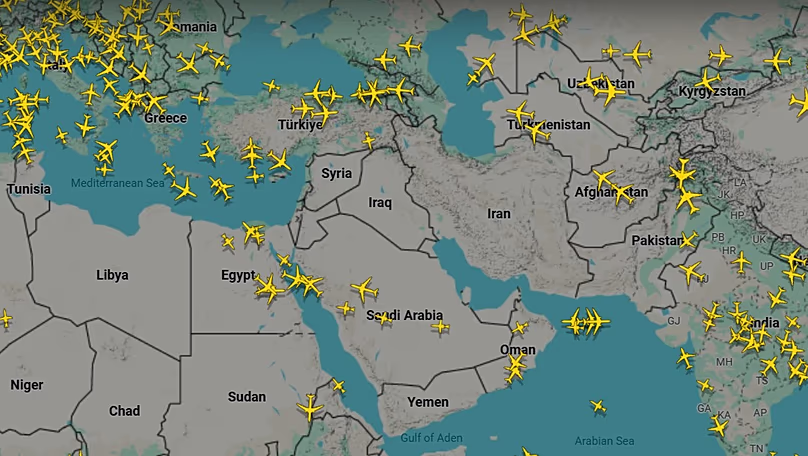
As geopolitical tensions rise following U.S. and Israeli combat operations in Iran, travel security experts say ordinary travelers should adopt a more cautious mindset when traveling abroad. Two former CIA officers are sharing practical advice drawn from intelligence training to help people stay safe in uncertain environments.
Their guidance emphasizes situational awareness, emergency planning and risk avoidance, including familiarizing yourself with local security conditions before departure, registering with your embassy for real-time alerts, and avoiding public disclosure of travel plans.
Experts also recommend minimizing your profile in unfamiliar destinations, being alert to red flags in your surroundings, and preparing clear contingency plans, such as knowing evacuation routes, keeping crucial documents and contacts accessible, and maintaining access to backup funds, to help you respond effectively if local conditions deteriorate suddenly.
Travelers should stay alert in public spaces, particularly crowded areas where pickpocketing and scams are common. Avoid distractions such as headphones when walking in unfamiliar places and remain aware of who and what is happening around you.
Another key recommendation is to avoid standing out as an obvious tourist. Former CIA officers advise dressing in a way that blends in with local residents rather than wearing clothing or accessories that attract attention. Looking confident and purposeful can reduce the likelihood of being targeted by criminals or opportunists.
Security planning before departure is also essential. Travelers should share their itinerary with trusted friends or family members and keep copies of important documents such as passports and identification. In the event of an emergency, these contacts can help coordinate assistance or notify authorities if something goes wrong.
Hotel security is another area where intelligence professionals recommend simple precautions. Former CIA officers suggest requesting rooms on middle floors, typically between the third and sixth levels. Lower floors can be easier for intruders to access, while higher floors may complicate evacuation during emergencies. Locking all door latches and using portable doorstops can provide an additional layer of protection while sleeping.
Experts also emphasize protecting personal data and electronic devices while traveling. Sensitive information stored on phones or laptops can be vulnerable to theft or surveillance in some countries. Intelligence professionals recommend limiting the number of devices travelers carry and backing up important data before leaving home.
Money management is another practical tip. Instead of carrying all cash in one place, travelers should divide it between different locations such as wallets, bags, or hidden compartments. This reduces the impact if a wallet is lost or stolen during a trip.
These recommendations come as international tensions create additional uncertainty for travelers. Governments sometimes issue travel advisories during periods of conflict to warn citizens about potential security risks abroad.
Former intelligence officers say the goal is not to avoid travel but to approach it with preparation and awareness. By thinking ahead and staying alert, travelers can continue exploring the world while reducing the risks that come with an increasingly unpredictable global environment.
Related News: https://airguide.info/category/air-travel-business/travel-health-security/
Sources: AirGuide Business airguide.info, bing.com, govcondigest.com