
FAA Tightens Airspace Rules After Deadly Midair Collision

The Federal Aviation Administration (FAA) is tightening safety rules in congested airspace around major U.S. airports, limiting the use of visual separation between aircraft and helicopters following recent incidents and a deadly midair collision.
The new policy, announced Wednesday, directs air traffic controllers to reduce reliance on visual separation—a procedure in which pilots are instructed to maintain distance from other aircraft using direct observation. Instead, controllers will increasingly use radar-based separation to actively manage safe distances between aircraft operating in busy airspace.
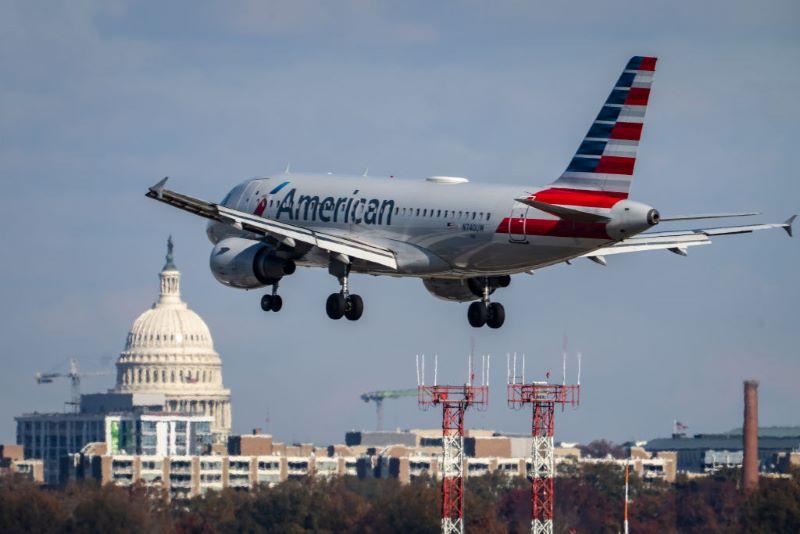
The move comes more than a year after a fatal collision near Ronald Reagan Washington National Airport involving an American Airlines regional jet and a U.S. Army Black Hawk helicopter, which killed 67 people. The accident marked one of the deadliest aviation disasters in the United States in recent decades.
A final investigation by the National Transportation Safety Board (NTSB) identified systemic issues in the air traffic system, including an overreliance on visual separation procedures. Investigators found that the helicopter crew likely never saw the approaching aircraft, highlighting the limitations of “see and avoid” practices in complex and high-traffic environments.
The FAA said additional recent close calls further underscored the need for change. These included an incident in February involving a commercial aircraft and a police helicopter near San Antonio International Airport, and another in March involving a Beechcraft 99 and a helicopter near Hollywood Burbank Airport.
FAA Administrator Bryan Bedford said the agency is taking proactive steps to reduce risk before it impacts the traveling public. The agency’s internal analysis concluded that visual separation alone is insufficient in congested airspace, particularly where multiple aircraft types operate at varying speeds and altitudes.
Under the revised approach, controllers will rely more heavily on radar systems to ensure consistent and measurable separation standards. This is expected to improve situational awareness and reduce the likelihood of conflicts between aircraft and helicopters operating near major airports.
The changes reflect a broader shift toward data-driven safety management in U.S. aviation. As airspace becomes increasingly complex, particularly with the addition of helicopters and emerging aircraft types, regulators are moving to strengthen procedural safeguards.
The FAA’s updated rules aim to enhance safety margins and restore confidence in air traffic operations, particularly in high-density environments where precision and coordination are critical.
Related News: https://airguide.info/?s=FAA, https://airguide.info/?s=NTSB, https://airguide.info/category/air-travel-business/travel-health-security/