
NASA X-59 Supersonic Jet Test Cut Short by Glitch

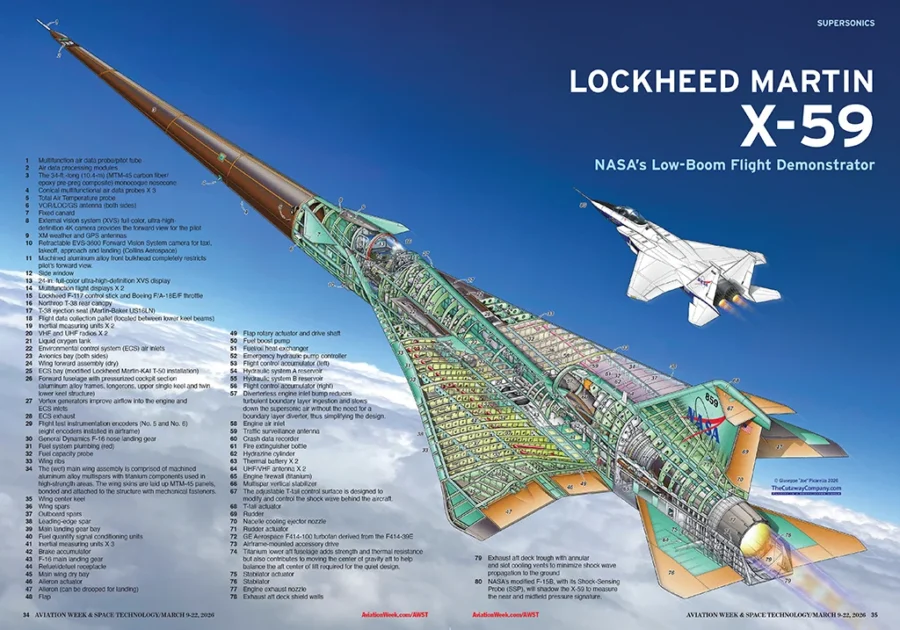
NASA’s experimental X-59 supersonic jet completed its second test flight on March 20, 2026, but the mission was cut short after a cockpit warning forced an early return, highlighting the challenges of developing next-generation aviation technology.
The X-59, part of NASA’s Quiet Supersonic Technology (Quesst) program, took off from Edwards Air Force Base in California but landed safely just nine minutes later after engineers detected a warning light during the initial climb. Despite the shortened flight, NASA officials described the test as a success, noting that valuable data was collected and all systems performed safely under the circumstances.
The aircraft is designed to revolutionize supersonic travel by dramatically reducing the sonic boom that has historically limited commercial supersonic flights over land. Since 1973, such flights have been banned in the United States due to the disruptive noise caused by traditional supersonic aircraft.
Unlike earlier jets such as Concorde, the X-59 features a long, slender nose and carefully engineered fuselage that disperses shockwaves, producing a quieter “sonic thump” instead of a loud boom. This innovation is central to NASA’s goal of enabling faster-than-sound travel over populated areas.
The March 20 flight was intended to expand the aircraft’s flight envelope, building on its successful first flight in October 2025, which lasted 67 minutes and reached an altitude of 12,000 feet. During the second test, the pilot was expected to reach higher speeds and altitudes, but the mission was halted shortly after takeoff due to the warning signal.
NASA engineers are now analyzing the issue, which remains under review. Officials emphasized that early-stage test programs often encounter such challenges and that the data gathered will support further development.
The X-59 is a joint project between NASA and Lockheed Martin, aimed at providing data to regulators such as the Federal Aviation Administration to help establish new noise standards for supersonic flight. If successful, the program could lead to regulatory changes that reopen the door to commercial supersonic travel over land.
Future phases of the program will include community overflight tests, where the X-59 will fly over selected U.S. cities to measure public response to its reduced noise signature.
As testing continues, the X-59 represents a critical step toward a new era of aviation—one that could combine high-speed travel with reduced environmental and community impact, potentially reshaping global air travel in the decades ahead.
Related News: https://airguide.info/?s=NASA, https://airguide.info/?s=X-59
Sources: AirGuide Business airguide.info, bing.com