
Europe Moves to Tighten Counter-Drone Rules at Airports

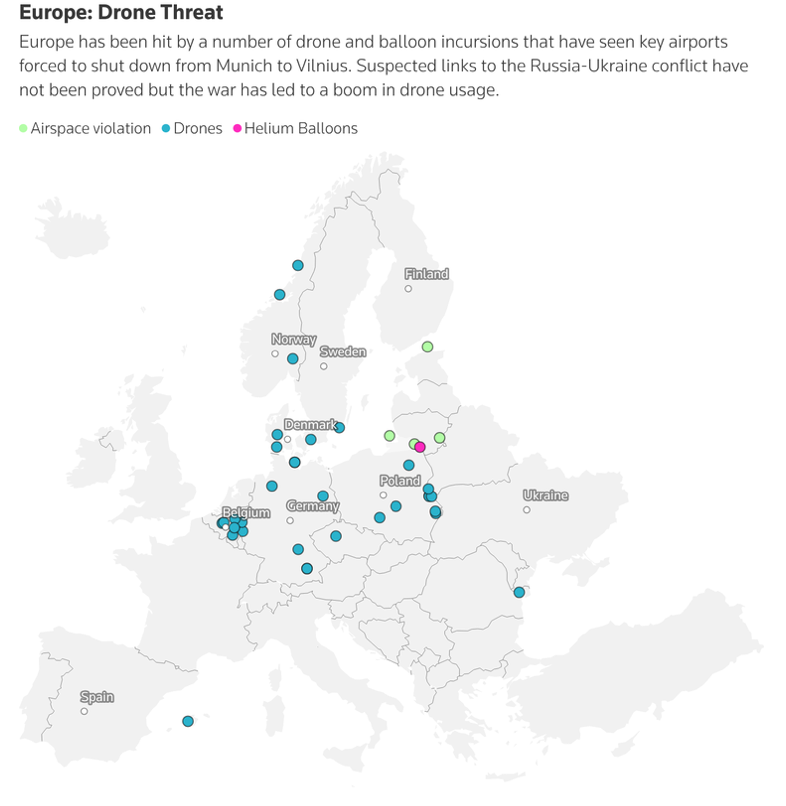
The European Union Aviation Safety Agency (EASA) is developing clearer rules on counter-drone operations as European airports face a growing wave of unauthorized drone activity, increasingly linked to geopolitical tensions and hybrid warfare tactics.
EASA Executive Director Florian Guillermet said the agency is reassessing what measures authorities can legally and safely deploy to detect, track, and neutralize rogue drones near civil airports. The move comes as incidents continue to disrupt operations at major European hubs, from Stockholm to Munich.
Security experts have warned that some drone activity may be connected to broader “hybrid warfare” strategies—combining military, cyber, and unconventional tactics—particularly in the wake of the Russia-Ukraine conflict. While direct attribution remains difficult, the frequency and sophistication of these disruptions have raised concern across the aviation sector.
“We are facing a very different landscape today,” Guillermet said. “The situation is increasingly aligned with hybrid warfare dynamics, and existing frameworks are no longer sufficient.”
EASA is now examining technical and regulatory standards for counter-drone systems deployed around airports. This includes defining acceptable ranges of power and operational capabilities for equipment used to mitigate threats, such as signal jamming, detection systems, and interception technologies.
The goal is to establish clear, harmonized guidelines across Europe that balance security needs with safety requirements, ensuring that counter-drone measures do not interfere with critical aviation systems or create unintended risks for aircraft operations.
Airports across Europe have experienced repeated disruptions in recent years due to drone sightings, leading to flight delays, diversions, and temporary closures. These incidents highlight vulnerabilities in airspace security, particularly as drones become more accessible and technologically advanced.
EASA’s initiative forms part of a broader review of aviation safety in an increasingly complex threat environment, where traditional risks are now compounded by emerging technologies and geopolitical instability.
As drone usage continues to expand—both commercially and militarily—regulators are under growing pressure to establish clear rules that allow for effective threat response while maintaining the highest standards of aviation safety.
Related News: https://airguide.info/?s=ukraine, https://airguide.info/?s=EASA, https://airguide.info/category/air-travel-business/travel-health-security/
Sources: AirGuide Business airguide.info, bing.com, reuters.com