
Airbus A220-500 Gains Momentum Among Airlines and Lessors

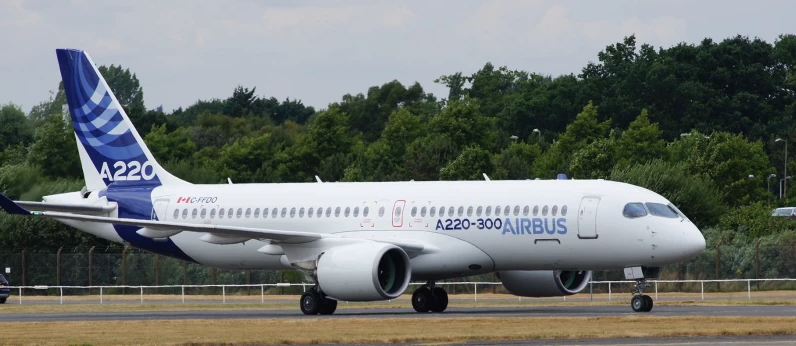
Momentum is building behind a potential launch of the stretched Airbus A220-500, as major airline customers and aircraft lessors signal growing interest in the larger variant of Airbus’ smallest narrowbody family. How the A220‑500 stacks up against the A320neo and Boeing 737‑7 Max.
Speaking at the ISTAT Americas conference in San Diego, executives from Air Canada and leasing firm Azorra expressed support for the proposed aircraft, which could seat around 180 passengers in a single-class configuration.
“The A220-500 would be very interesting, it could be a good aircraft,” said Air Canada CFO John Di Bert, adding to mounting industry pressure on Airbus to move forward with the program. Azorra President Ron Baur echoed that sentiment, stating, “I think they should launch it and I think they will,” citing increasing momentum and Airbus’ willingness to invest.
Both companies are already major A220 customers. Air Canada currently operates 42 A220 aircraft and has 23 more on order, while Azorra has built a portfolio focused on next-generation small narrowbodies, including the A220 and the Embraer E2 family.
Airbus has been evaluating a stretched version of the A220 for years, dating back to its origins as the Bombardier CSeries. Airbus Americas CEO Robin Hayes confirmed the manufacturer is dedicating significant resources to studying the A220-500, alongside other potential developments such as an A350 stretch.
The proposed aircraft would sit between the existing A220-300 and larger narrowbodies like the A320neo and Boeing 737-8, offering airlines a more efficient option for mid-capacity routes. However, one of the key design trade-offs remains range.
The current A220-300 offers a range of approximately 3,400 nautical miles (3,900 miles), but a simple fuselage stretch without major wing or fuel modifications would likely reduce that figure. Airbus is still assessing whether maintaining full range is necessary, particularly given differing requirements between U.S. and European operators.
“I am a big believer in stretches, they have really good economics,” Baur said, noting that even with slightly reduced range, the A220-500 could deliver strong operating efficiency and open new market opportunities.
Airbus A220-500 vs A320neo vs Boeing 737-7 Max
Passenger Experience
- A220-500 (best cabin comfort)
- Wider seats (2–3 layout)
- Larger windows
- Less middle seats
- Likely be passenger-favorite.
- A320neo / 737-7
- Standard 3–3 layout
- More seats → higher density
Capacity & Airline Economics
- A220-500
- ~180 seats → bridges gap between regional and mainline
- Lower trip cost, strong per-seat economics
- A320neo
- Industry workhorse
- Best balance of capacity + range
- 737-7
- Smaller, niche
- Less demand vs 737-8
- A320neo = most versatile
- A220-500 = most efficient in its size class
Range & Network Flexibility
- 737-7 → longest range (~3,850 nm)
- A320neo → strong global flexibility (~3,400 nm)
- A220-500 → slightly reduced range expected
- 737-7 & A320neo can do transcontinental / longer routes
- A220-500 optimized for short–medium haul efficiency
Weight & Efficiency
- A220 family is lighter and more fuel-efficient per seat
- A320neo and 737 are heavier but more powerful
- A220-500 = lower operating cost per trip
- A320neo/737 = better for longer, higher-demand routes
Strategic Positioning
- A220-500
- “Right-sized” aircraft
- Replaces A319 / 737-700 segment
- Could cannibalize lower-end A320 sales
- A320neo
- Global backbone aircraft
- Most ordered narrowbody worldwide
- 737-7
- Smallest 737 Max variant
- Struggling with demand vs 737-8
The A320neo remains the most versatile and proven platform, the A220-500 is poised to lead in efficiency and passenger comfort, and the 737-7 offers the longest range in this segment. If launched, the Airbus A220-500 could emerge as a major disruptor in the narrowbody market, putting direct pressure on the Boeing 737-7 while also encroaching on the lower end of the Airbus A320neo segment. With strong fuel efficiency, lower trip costs, and a more passenger-friendly cabin, the aircraft has the potential to reshape airline fleet strategies in the 150–180 seat category.
The real disruption lies in the A220-500’s positioning. By offering comparable capacity with improved economics and cabin appeal, it could simultaneously challenge the 737-7 directly and pressure the A320neo from below, redefining competition in the lower narrowbody market.
For lessors and airlines alike, the A220-500 represents a strategic opportunity to expand fleet flexibility. If launched, the aircraft could attract operators seeking a right-sized, fuel-efficient jet for routes that fall between regional and mainline narrowbody operations.
While Airbus has not yet made a formal launch decision, growing customer interest suggests that the A220-500 is moving closer to reality—potentially becoming a key addition to the global narrowbody fleet later this decade.
Related News: https://airguide.info/?s=A220, https://airguide.info/category/air-travel-business/aircraft-finance/
Sources: AirGuide Business airguide.info, bing.com, airbus.com, boeing.com