
ATC Stops Saudia 777 From Landing on Closed Runway as Similar Incident Probed

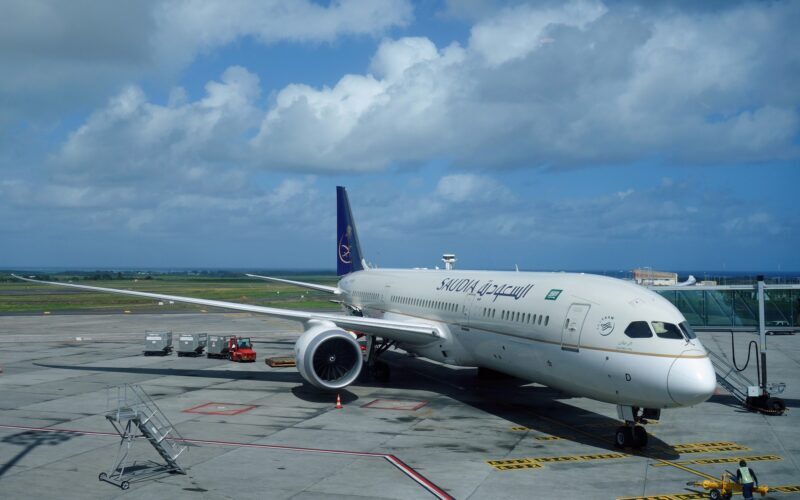
Air traffic controllers at Islamabad International Airport (ISB) prevented a potentially catastrophic runway incident after stopping a Saudi Airlines Boeing 777-300ER moments before it attempted to land on a runway closed for maintenance. The near miss comes as Pakistan and India both investigate separate runway-misalignment incidents involving foreign carriers, raising renewed concerns over pilot situational awareness and adherence to NOTAMs across the region.
Saudi Airlines Flight SV728 from Jeddah was on final approach to Islamabad on Runway 28L, which had been closed under an active NOTAM due to repair work. Maintenance personnel and vehicles were present on the surface when the aircraft descended toward the wrong runway.
Runway 28R was the only operational runway, but despite the closure notice, the crew continued lining up with 28L. The air traffic controller monitoring the approach swiftly recognized the misalignment and radioed the flight deck, informing the pilots that they were approaching the closed runway. The pilots initially insisted they were lined up with the correct surface, creating a brief communications challenge during critical final moments of the approach.
The controller immediately instructed the crew to discontinue the approach and execute a go-around. On the second attempt, the 777-300ER correctly aligned with Runway 28R and landed safely. The aircraft, carrying several hundred passengers, taxied to the terminal without further issues.
The Pakistan Airports Authority has acknowledged the incident and is reviewing the sequence of events to determine whether standard procedures, NOTAM compliance, and ATC protocols were followed. The NOTAM had clearly stated that Runway 28L was closed for repairs, and investigators will examine whether the crew properly reviewed and briefed these notices before the descent into Islamabad.
Runway misidentification is a known global safety concern, especially at airports with parallel runways. ATC intervention is often the final layer of protection when a crew deviates from assigned positions, relying on radar surveillance, visual monitoring, and procedural oversight. The incident underscores the importance of effective crew-controller communication during approach, especially when visibility or lighting conditions may contribute to misalignment.
This is the second serious runway-alignment event in the region in recent days. In New Delhi, an Ariana Afghan Airlines Airbus A310 operating Flight FG 311 from Kabul landed on the wrong runway, narrowly avoiding a collision with an aircraft already accelerating for takeoff. The Afghan jet was cleared to land on Runway 29L but instead touched down on Runway 29R during low visibility, where an Air India flight had just departed seconds earlier.
According to India’s DGCA, both Instrument Landing System receivers on the A310 reportedly failed about four nautical miles from the runway. The crew said the loss of ILS guidance forced them into a visual approach at close range, during which they unintentionally drifted toward the parallel runway. Investigators say the crew did not receive a warning from ATC regarding the misalignment, although the flight had acknowledged clearance for 29L.
ATC recordings, flight-data logs, and navigation-system diagnostics are now under examination to determine whether the ILS malfunction was caused by onboard failure, interference, or an external anomaly. The DGCA is also reviewing controller monitoring during the final approach, as well as cockpit decision-making in low-visibility conditions.
ILS plays a critical role in providing precise lateral and vertical guidance during approach, making it indispensable at major airports like Delhi, where traffic density leaves little margin for error. Navigation-system failures close to landing increase risk significantly and require heightened ATC support.
Authorities in Pakistan and India are now conducting separate reviews to determine whether additional safeguards, training updates, or procedural changes are needed. Both incidents highlight the ongoing importance of strict NOTAM adherence, proactive ATC intervention, and reliable navigation systems to ensure safe runway operations in South Asia’s busiest aviation hubs.
Related News: https://airguide.info/?s=Saudia, https://airguide.info/category/air-travel-business/travel-health-security/
Sources: AirGuide Business airguide.info, bing.com, aviationa2z.com