
BMW Designworks: Why Airline Cabins Feel Like Homes

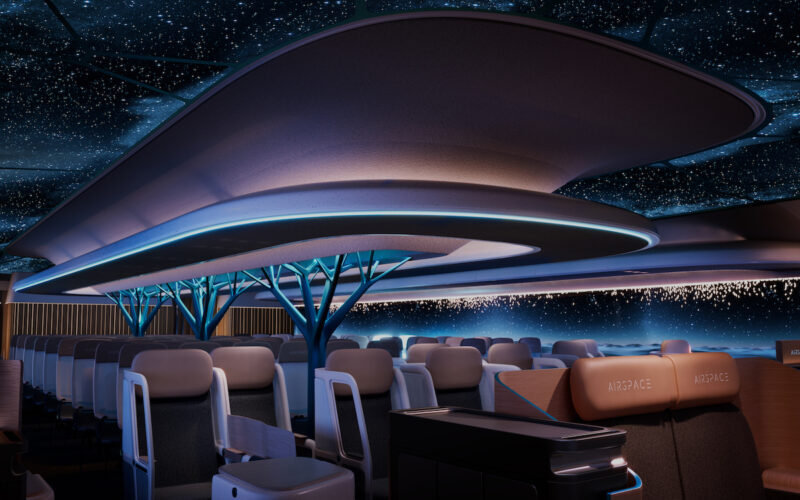
Aviation journalist Andreas Spaeth spoke with Johannes Lampela, Director of Industrial Design at BMW Designworks’ Los Angeles studio, about how aircraft cabins are increasingly designed as living spaces rather than purely technical environments.
Lampela, originally from Finland, began his career in furniture design after studying in Lahti and Milan. He joined BMW Designworks in 2005 and became Director of Industrial Design in 2015, leading a multidisciplinary team focused on transportation. Over the years, his team has shaped premium airline interiors, including First Class suites for Singapore Airlines’ Boeing 777-300ER, and complete cabin concepts for STARLUX Airlines’ Airbus A321, A330 and A350 fleets. The studio has also collaborated with Delta Air Lines and EVA Air, alongside projects for BMW Group brands and mobility systems such as Bay Area Rapid Transit.
Lampela credits his furniture background for influencing his approach to aviation design. Rather than focusing solely on engineering and performance, he emphasizes the psychological dimension of space: how to make passengers feel at ease. Modern cabins, he explains, are increasingly conceived as personal living environments, blending Scandinavian sensibilities with progressive automotive design principles.
Airline briefs have evolved significantly over the past 15 years. Today’s passengers travel with multiple personal electronic devices, creating greater demand for charging ports, horizontal surfaces and smart storage. Designers must consider real-life scenarios: where a laptop goes when a meal arrives, how devices are secured during takeoff and landing, and whether a passenger can move freely without disrupting their workspace. Physical mock-ups play a crucial role in identifying friction points that digital models may miss.
Lampela highlights the importance of layered horizontal surfaces and clearly organized storage zones, particularly in premium cabins. Thoughtful placement of side consoles, secondary shelves and service areas allows passengers to spread out personal items without interfering with onboard service.
Privacy has also become central to cabin design. Sliding doors in long-haul business class are now closely associated with improved rest and a sense of security. According to Lampela, passengers increasingly value cocoon-like spaces that support sleep and personal comfort.
Looking ahead 15 years, Lampela envisions potential changes driven by new airframe configurations and electrification. Future aircraft may require ultralightweight seating concepts and different design priorities. Even within tight fuselage constraints, he sees opportunity: small refinements, he argues, often make the greatest difference in enhancing the passenger experience.
Related News: https://airguide.info/category/air-travel-business/airline-finance/