
Can X-59 and Boom Overture Revive Supersonic Travel?

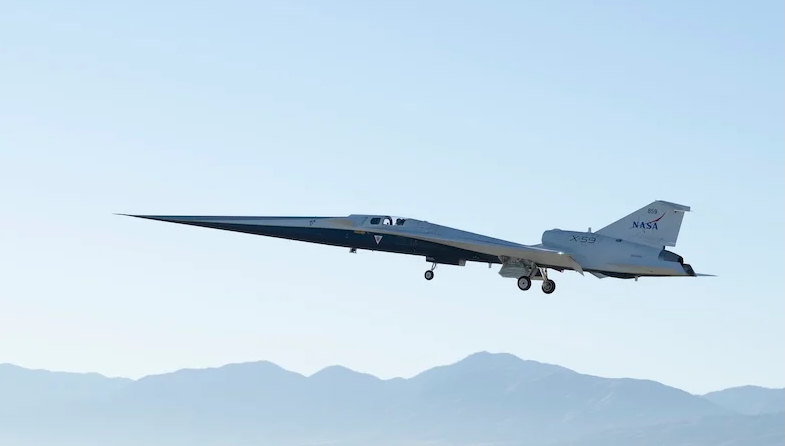
Civil supersonic aviation is edging closer to a potential comeback as NASA advances testing of its X-59 demonstrator and Boom Supersonic pushes forward with the Overture airliner and its next-generation engine. Together, the programs represent the most concentrated effort to revive faster-than-sound passenger travel since the retirement of Concorde in 2003. Yet despite renewed momentum, major technical, regulatory, and economic barriers remain.
NASA’s X-59, developed under the Quesst program, is designed to solve the fundamental issue that ended the first supersonic era: the sonic boom. Instead of the disruptive shockwave associated with Concorde, the X-59 aims to produce a much softer “thump,” potentially enabling overland supersonic flight. The aircraft is now progressing through flight-envelope expansion, gradually increasing speed, altitude, and maneuver complexity to validate performance. Beginning in 2026, NASA plans to collect acoustic data over populated areas, data that could ultimately influence regulators to revisit long-standing bans on supersonic flight over land.
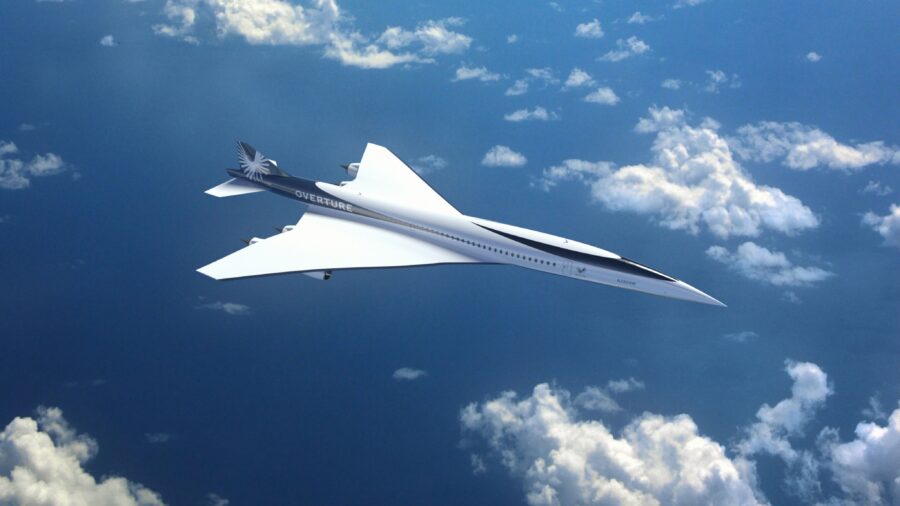
In parallel, Boom Supersonic is developing Overture, a Mach 1.7 commercial jet targeting premium transoceanic routes. The company has also introduced Symphony, a purpose-built supersonic turbofan engine being developed with partners including Florida Turbine Technologies and GE Additive. Early component testing is underway, while Boom continues construction of its production facility in North Carolina. The company has secured conditional orders and commitments from airlines such as United Airlines, American Airlines, and Japan Airlines, though these remain dependent on the aircraft meeting performance, cost, and certification targets.
Despite progress, the challenges facing both programs are substantial. Supersonic aircraft inherently consume more fuel than subsonic counterparts, raising concerns about operating costs and environmental impact. Noise regulations remain strict, and any new aircraft must comply with evolving global standards set by bodies such as the International Civil Aviation Organization. Engine development is another major hurdle, as no new civil supersonic engine has been certified in decades.
Crucially, NASA’s X-59 is a research platform, not a commercial aircraft, meaning its low-boom technology must still be translated into a scalable, economically viable product. Boom, meanwhile, faces the challenge of proving that its Symphony engine can deliver the required efficiency, durability, and regulatory compliance for airline service.
NASA X‑59: Key Specifications
Performance
- Target speed: Mach 1.4 (approx. 925 mph / 1,488 km/h)
- Cruise altitude: 55,000 ft
- Range: Research‑mission limited (not designed for long‑haul operations)
- Mission: Produce a “quiet” sonic thump of ~75 PLdB, compared to 100+ PLdB for a typical sonic boom
Dimensions
- Length: ~99.7 ft (30.4 m)
- Wingspan: ~29.5 ft (9 m)
- Height: ~14 ft (4.3 m)
- Takeoff weight: ~32,000 lb (14,500 kg)
Low‑Boom Design Features
- Extremely long, narrow nose to spread shockwaves
- Engine mounted on top of the fuselage to shield ground observers
- Highly swept wings and carefully shaped fuselage contours
- No forward cockpit window, replaced by an External Vision System (XVS) using cameras and displays
Propulsion
- Engine: General Electric F414‑GE‑100
- Same engine family used in the F/A‑18E/F Super Hornet
- Modified for single‑engine, high‑altitude supersonic cruise
Research Purpose
- Demonstrate that supersonic flight can be quiet enough for overland use
- Collect community noise‑response data across U.S. cities
- Provide data to regulators (FAA, ICAO) to inform potential changes to supersonic flight rules
The renewed activity signals a potential turning point for supersonic travel. If NASA’s noise data leads to regulatory change and Boom meets its development milestones, the 2030s could see the return of commercial supersonic passenger flights.
However, the timeline remains uncertain. Technology readiness, certification hurdles, and economic viability will ultimately determine whether supersonic travel becomes a mainstream reality or remains a niche premium offering.
Explore the sleek design, exclusive cabin and luxury of flying aboard the world’s first supersonic passenger airliner with JETLINER CABINS Evolution & Innovation: https://jetlinercabins.com/concorde/
Related News: https://airguide.info/?s=X-59, https://airguide.info/?s=NASA, https://airguide.info/?s=boom+supersonic, https://airguide.info/?s=supersonic
Sources: AirGuide Business airguide.info, bing.com