
Chinese Airlines Shift Toward Smaller Widebody Jets

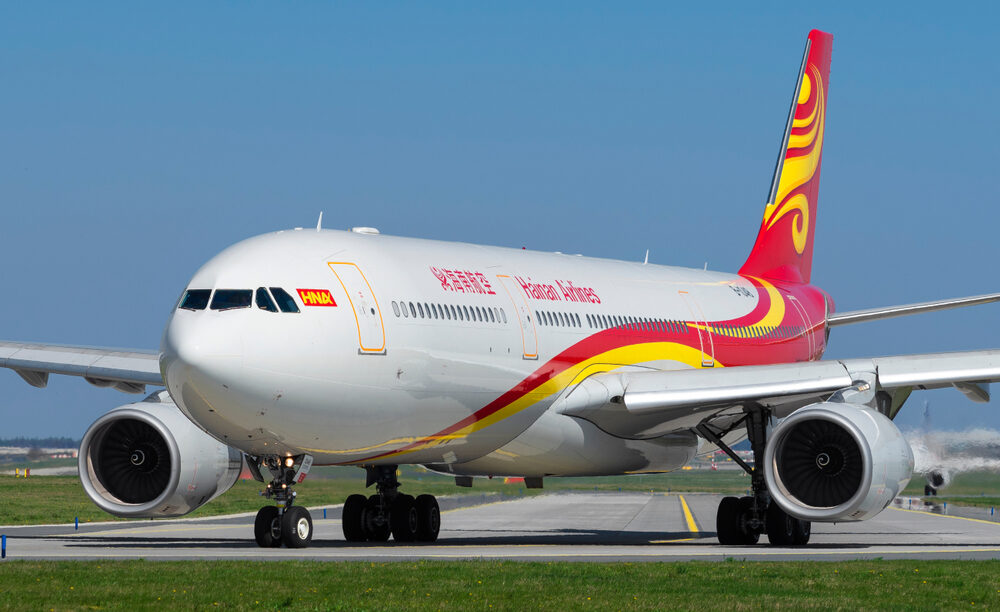
The intensive rollout highlights both the rising competition in China’s widebody aircraft market and the increasingly strategic approach airlines are adopting in their fleet planning. As of September 2025, Chinese carriers operated 197 Airbus A330-series aircraft, representing about 42 percent of the nation’s total widebody fleet—making the A330 family the most widely used widebody type in China.
On November 16, Hainan Airlines’ newly introduced Airbus A330neo completed its inaugural commercial flight as HU7382 on the Beijing–Haikou route, departing from Beijing Capital International Airport. The flight marked the first commercial deployment of the A330neo by a Chinese airline, an important milestone in the evolution of China’s widebody fleet.
Configured with a two-class cabin, Hainan’s A330-900 offers 301 seats, including 24 in Business Class and 277 in Economy Class. The cabin design and onboard amenities have been customized to align with the preferences and travel habits of Chinese passengers.
Hainan Airlines officially took delivery of the A330neo on October 29 in Toulouse, France, and launched an extensive nationwide showcase tour from November 11 to 15. The aircraft visited five major hubs—Shanghai Hongqiao, Guangzhou Baiyun, Shenzhen Bao’an, Chengdu Shuangliu, and Beijing Capital—demonstrating the airline’s commitment to fleet modernization and market visibility.
Overview of China’s Widebody Fleet (2025)
Across China’s major carriers, the following widebody types are actively flown:
Airbus Widebodies
- A330-200 / A330-300 (Air China, China Eastern, China Southern, HNA Aviation)
- A350-900 (Air China, China Eastern)
(These medium- and long-range twins form the backbone of many Chinese airlines’ international and regional widebody operations.)
Boeing Widebodies
- 777-300ER (Air China, China Southern)
- 787-9 / 787-10 (Air China, HNA Aviation)
- 747-400 and 747-8 (legacy freighter or limited operations) (Air China, HNA Aviation)
(China’s largest airlines maintain a mixed Boeing fleet for long-haul connectivity.)
Key Takeaways
- The Airbus A330 family remains one of the most numerous widebody types across China’s carriers.
- The A350-900 is increasingly common as airlines modernize long-haul fleets.
- Boeing 777-300ER and 787 Dreamliner jets are prevalent among the country’s largest carriers.
- Legacy types like Boeing 747s persist in limited numbers, primarily for cargo and specific routes.
The broader trend reflects a more pragmatic post-pandemic fleet strategy across Chinese airlines. In prior years, carriers leaned heavily toward large, long-range widebody aircraft, but many struggled with chronic overcapacity in daily operations. In contrast, the A330neo’s medium- to long-haul range and moderate seat count make it better suited to current demand patterns, which increasingly favor higher frequencies with smaller passenger loads, especially on international routes.
Related News: https://airguide.info/category/air-travel-business/aircraft-finance/, https://airguide.info/category/air-travel-business/airline-finance/
Sources: AirGuide Business airguide.info, bing.com