
Coulson Aviation Launches Boeing 767 VLAT Firefighting Program

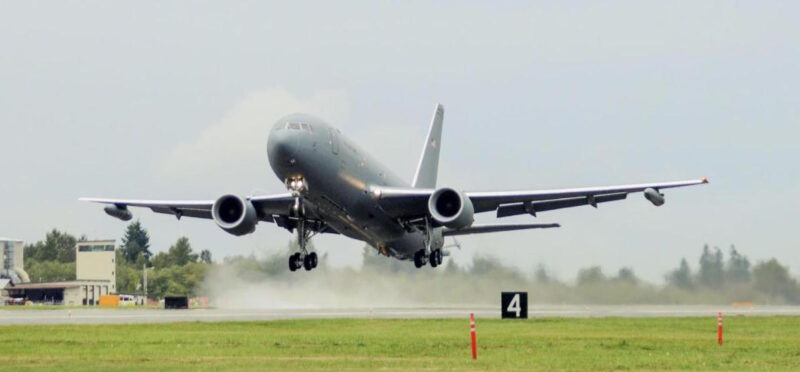
US-based aerial firefighting specialist Coulson Aviation has announced the launch of a new Boeing 767 Very Large Airtanker (VLAT) conversion programme, aimed at providing a long-term and sustainable replacement for ageing VLAT platforms that are approaching the end of their operational lives.
The initiative marks Coulson’s first move into the widebody 767 platform for aerial firefighting and reflects growing concern across the sector over the shrinking availability of large airtankers. Several legacy aircraft types, including the MD-11 and DC-10, have faced recent groundings or accelerated retirements, creating potential capacity gaps for wildfire response agencies worldwide.
According to Coulson, the converted B767 VLAT will be equipped with the company’s proprietary RADS (Retardant Aerial Delivery System), a next-generation tank and dispersal solution designed to deliver precise, high-volume drops while maintaining aircraft stability and safety. The platform is expected to offer significant payload capability, with Coulson noting capacity for more than 160 passengers when configured for transport missions, highlighting the aircraft’s flexibility beyond firefighting roles.
The new VLAT will complement Coulson’s existing fleet of large airtankers, which already includes the C-130H Hercules and the Boeing 737 Fireliner. By adding the 767 to its portfolio, Coulson is positioning itself to cover a broader spectrum of mission requirements, from rapid-response wildfire suppression to multi-role government and emergency operations.
While the company has not disclosed a firm timeline for the entry into service of the B767 VLAT, it stressed that the programme is being developed in response to increasing global wildfire intensity and longer fire seasons. Demand for higher-capacity, jet-powered airtankers has grown sharply as climate-driven events place greater strain on firefighting resources in North America, Australia, and parts of Europe.
The selection of the Boeing 767 platform offers several advantages, including strong global availability, proven reliability, and an established maintenance ecosystem. These factors are expected to support long-term operability and cost efficiency compared with older, increasingly scarce widebody conversions. The aircraft’s range and speed also make it well suited for rapid redeployment between regions during overlapping fire seasons.
Coulson indicated that the B767 VLAT could become a viable alternative as operators reassess the future of MD-11 and DC-10 airtankers, many of which currently form the backbone of very large aerial firefighting fleets. As those aircraft face regulatory, maintenance, and airworthiness challenges, the introduction of a modernised widebody solution could reshape the VLAT market over the coming decade.
With the new programme, Coulson Aviation reinforces its strategy of investing in advanced platforms and proprietary technology to meet evolving wildfire suppression needs, positioning the Boeing 767 as a potential next-generation cornerstone of global aerial firefighting operations.
Related News: https://airguide.info/category/air-travel-business/airline-finance/
Sources: AirGuide Business airguide.info, bing.com, ch-aviation.com