
Delta Air Lines Cuts Boeing 757 Flights by 26% as Fleet Retirement Accelerates

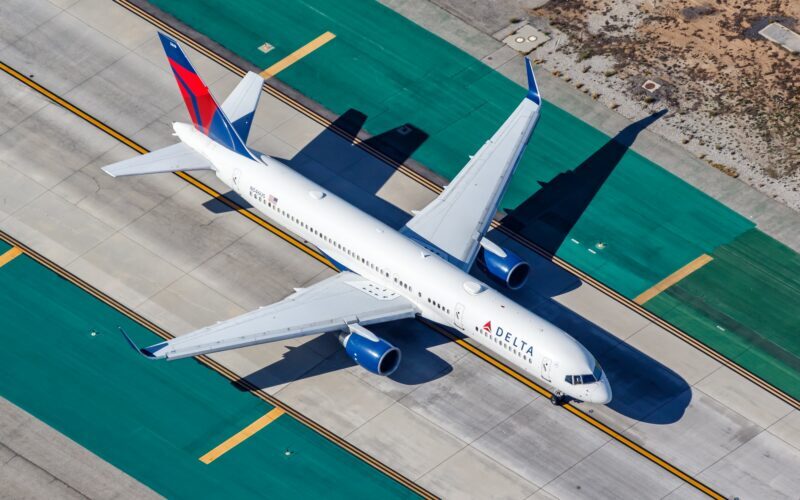
Delta Air Lines has sharply reduced its Boeing 757 operations, cutting daily flights by 26% compared with December 2024 as the airline accelerates the retirement of one of its most iconic fleet types. According to newly released industry data, the Atlanta-based carrier now operates an average of 250 daily round-trip Boeing 757 flights in December 2025—down from 338 flights during the same month last year. This represents a network-wide loss of 88 daily round-trip services and marks one of the steepest single-year reductions in 757 flying in Delta’s history.
The decline reflects Delta’s ongoing decision to streamline and modernize its fleet by phasing out aircraft that have long formed the backbone of its domestic and international operations. The Boeing 757, especially the 757-200 variant, has been a staple of Delta’s route structure for decades, prized for its powerful performance, range flexibility, and unique ability to serve airports with difficult operating conditions. But the aircraft’s age—many airframes are more than 25 years old—combined with rising maintenance demands has prompted a faster phase-out. Delta has already removed 23 757-200s from service in 2025, more than double the retirements recorded last year, according to ch-aviation.
Route Cuts Impact Domestic and International Markets
The sweeping capacity adjustment has resulted in the complete removal of 757 service from nine U.S. markets that previously relied on the aircraft. Cities losing scheduled 757 flights include Charleston, Chicago O’Hare, Cincinnati, Columbus, Indianapolis, Milwaukee, Pensacola, Raleigh/Durham, and Savannah. Delta has either downgauged these routes to smaller aircraft or reduced frequency where market demand or performance constraints allow.
International operations have seen an even more pronounced decline. Year-over-year, Delta’s non-U.S. 757 flying is down 40%, eliminating the aircraft from once-regular international routes such as Lima, Peru, and Punta Cana, Dominican Republic. The removal underscores the 757’s diminishing role in Delta’s global network as the airline shifts toward newer aircraft that provide better fuel burn and lower operating costs.
Delta’s primary hub in Atlanta has shown the most dramatic changes. In December 2025, the airline plans 182 daily round-trip 757 flights from ATL—nearly one-third fewer than last year. The drop is especially steep among the stretched 757-300 variant, where activity from Atlanta has fallen by 62%. The 757-300, known for its 234-seat capacity, poses a unique replacement challenge because no modern narrowbody aircraft currently matches its size in a multi-class configuration.
Modernization Pressures and Fleet Gaps
Delta remains the world’s largest operator of the Boeing 757, flying 92 total aircraft across both -200 and -300 models. Although the aircraft types are fully depreciated, making them inexpensive from an ownership perspective, analysts note that their operational economics have become increasingly unattractive. Rising fuel costs, parts shortages, and higher maintenance requirements are eroding the advantages once offered by the 757’s durability and performance.
The 757’s unmatched capabilities have long made it a favorite for transcontinental flights and airports with hot-and-high conditions or shorter runways. However, replacing the aircraft has become more urgent now that maintenance demands are outpacing cost benefits. Newer models offer better fuel efficiency, but none delivers the same combination of range, capacity, and runway performance.
What Comes Next for Delta’s Fleet
Delta plans to replace its aging Boeing 757 fleet—currently the world’s largest, with roughly 92 to 121 aircraft still in service across the 757-200 and 757-300 variants—with a mix of Airbus A321neo jets and the upcoming Boeing 737-10. Both next-generation models promise lower fuel burn and reduced emissions, supporting Delta’s long-term sustainability goals. However, the transition will take time, as neither aircraft fully replicates the 757’s unique mission profile, including its range, runway performance, and transcontinental capabilities.
The latest retirement occurred on November 25, when aircraft N545US—delivered to Northwest Airlines in 1996—flew its final passenger service from New Orleans to Atlanta before being ferried to long-term storage in Victorville, California.
Industry analysts say Delta’s strategic approach reflects the aircraft’s remaining value. The airline is likely to retain select 757s for key transcontinental routes and operationally challenging airports until replacements can fully meet performance needs.
The 26% reduction in 757 flights is part of Delta’s broader plan to simplify its fleet from 13 aircraft families to seven, reducing maintenance complexity and improving efficiency as the carrier positions itself for post-pandemic growth in an increasingly competitive U.S. aviation market.
Related News: https://airguide.info/?s=delta+air+lines, https://airguide.info/?s=boeing+757
Sources: AirGuide Business airguide.info, bing.com, yahoo.com