
FAA Makes Post-Crash DC Airspace Safety Rules Permanent

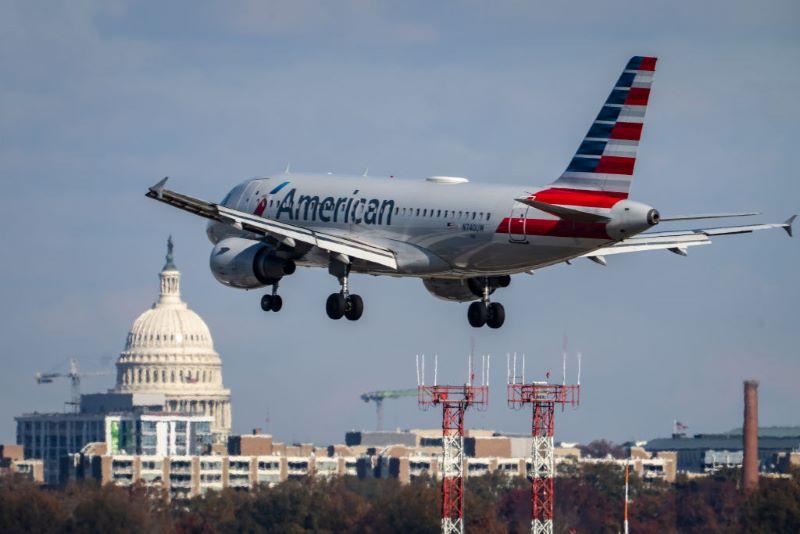
The U.S. Federal Aviation Administration is making permanent a set of airspace safety rules introduced after last year’s deadly collision between a commercial airliner and a U.S. Army helicopter near Washington, D.C., cementing major changes to how aircraft operate around the nation’s capital.
The measures were first imposed on an emergency basis following the January 29 collision near Reagan National Airport, in which an Army Black Hawk helicopter struck an American Airlines regional jet preparing to land, killing all 67 people aboard both aircraft. It was the deadliest aviation accident on U.S. soil since 2001.
Under the new final rule, announced Thursday by the Federal Aviation Administration, helicopters and fixed-wing aircraft will no longer share the same airspace corridors around Reagan National Airport. The rule also bans air traffic controllers from relying on visual separation in the area and requires all military aircraft to continuously broadcast their position using ADS-B Out technology.
“These changes are about eliminating known risks, not managing them,” Transportation Secretary Sean Duffy said. “After that horrific night in January, this administration made a promise to do whatever it takes to secure the skies over our nation’s capital and ensure such a tragedy never happens again.”
End of visual separation near Reagan
One of the most significant changes is the prohibition on visual separation within five miles (eight kilometers) of Reagan National Airport. Before the crash, controllers were sometimes permitted to rely on pilots to visually maintain separation—an approach now deemed unacceptable in one of the most complex and congested airspaces in the country.
The FAA is also mandating that military aircraft operate with ADS-B Out enabled at all times. Investigators found that military helicopters had routinely flown without broadcasting their precise location prior to the crash, limiting controllers’ situational awareness.
The permanent rule takes effect Friday Jan. 23.
Investigation findings and warnings ignored
The National Transportation Safety Board is scheduled to hold a public hearing next Tuesday, where it will outline the full chain of events that led to the collision and issue formal safety recommendations.
Preliminary findings show the Black Hawk helicopter was flying about 78 feet (24 meters) above the authorized altitude for its route and may have been using a faulty altimeter. However, the NTSB has emphasized that even if the helicopter had complied with altitude limits, the route design itself provided insufficient vertical separation to ensure safety.
The agency has also revealed that air traffic controllers had warned the FAA for years about the risks posed by the dense volume of military helicopter traffic over Washington, D.C. In the three years leading up to the crash, there were at least 85 documented near misses—an alarming pattern the FAA failed to act on.
Families demand accountability
Families of the victims say the rule change is an important step, but not the end of the process.
Matt Collins, whose younger brother Chris was killed in the crash, said he and other family members plan to continue pressing lawmakers until concrete changes are made.
“I hope we’re not just placated and this fades away until the next big news story,” Collins said. “We’ll keep coming back until real accountability happens.”
Many of the victims were young figure skaters, along with their parents and coaches, returning from a development camp in Wichita, Kansas, following the U.S. Figure Skating Championships.
Collins said he continues to fly frequently for work, but the tragedy has changed his family forever.
“I still believe flying is the safest way to travel,” he said. “But it could be a heck of a lot safer.”
Related News: https://airguide.info/?s=american+airlines, https://airguide.info/?s=FAA, https://airguide.info/category/air-travel-business/travel-health-security/
Sources: AirGuide Business airguide.info, bing.com, yahoo.com