
FAA Warning Cited Slackline Before Fatal Arizona Helicopter Crash

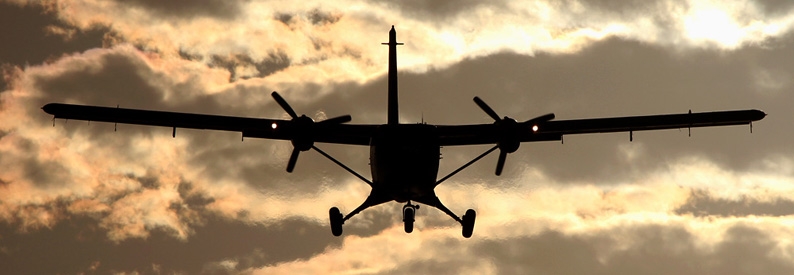
Federal aviation records show that pilots were warned about a temporary slackline stretched across a mountainous area of Arizona just days before a helicopter collided with the obstacle in a crash that killed four people, raising renewed concerns about wire-strike hazards and situational awareness in rotary-wing operations.
The Federal Aviation Administration issued a Notice to Airmen (NOTAM) on December 26 alerting pilots that a slackline—a high-tension rope similar to a tightrope—would be installed across Telegraph Canyon for several days. The notice advised that the line would be flagged and illuminated, warning flight crews to exercise caution when operating in the area.
Despite the warning, a helicopter struck the slackline and crashed into the canyon on January 2, killing the pilot and three family members on board. Authorities said a witness reported seeing the aircraft hit the line before plunging to the canyon floor. The crash occurred roughly 64 miles east of Phoenix, after the helicopter had departed from Queen Creek.
Investigators from the National Transportation Safety Board (NTSB) are now examining the wreckage to determine the precise sequence of events, including whether mechanical issues, visibility, flight planning, or other factors played a role. A final report could take months.
Aviation safety experts say the incident is unusual. While helicopter crashes involving power lines and unmarked cables occur every year, there are few, if any, documented cases involving slacklines. Tom Anthony, director of the Aviation Safety and Security Program at the University of Southern California, said wires and cables are among the most persistent hazards for helicopter pilots because they are notoriously difficult to see.
Anthony emphasized the importance of reviewing NOTAMs during flight planning. Under FAA guidance, pilots must check notices along their entire route—not just at departure and destination airports. The FAA further recommends reviewing notices within 25 nautical miles of the planned flight path, which may include warnings about temporary obstacles, construction, or restricted airspace.
Although reviewing NOTAMs can be time-consuming, Anthony said it is essential. “It can be a drudge, a chore, but you’ve got to do it,” he said.
The victims were identified as pilot David McCarty, 59, and his nieces Rachel McCarty, Faith McCarty, and Katelyn Heideman. McCarty founded Columbia Basin Helicopters in the 1990s, building the company into a major operator supporting firefighting, agricultural spraying, and seeding projects across nine western states.
According to the Aircraft Owners and Pilots Association Air Safety Institute, several helicopter crashes each year are attributed to wire strikes. Modern flight-planning tools and digital charts can highlight known obstacles, but safety advocates stress that situational awareness remains critical.
Hassan Shahidi, president and CEO of the Flight Safety Foundation, said many such accidents are preventable. “Safety revolves around situational awareness and understanding the airspace,” he said. “Unfortunately, we’re seeing too many of these incidents. It should not happen.”
The Arizona crash is now prompting broader discussion within the aviation community about temporary obstacles, notification effectiveness, and how pilots manage increasingly complex operating environments.
Related News: https://airguide.info/category/air-travel-business/travel-health-security/
Sources: AirGuide Business airguide.info, bing.com, abcnews.go.com