
Germany’s Rail Crisis: How Deutsche Bahn Lost Reliability

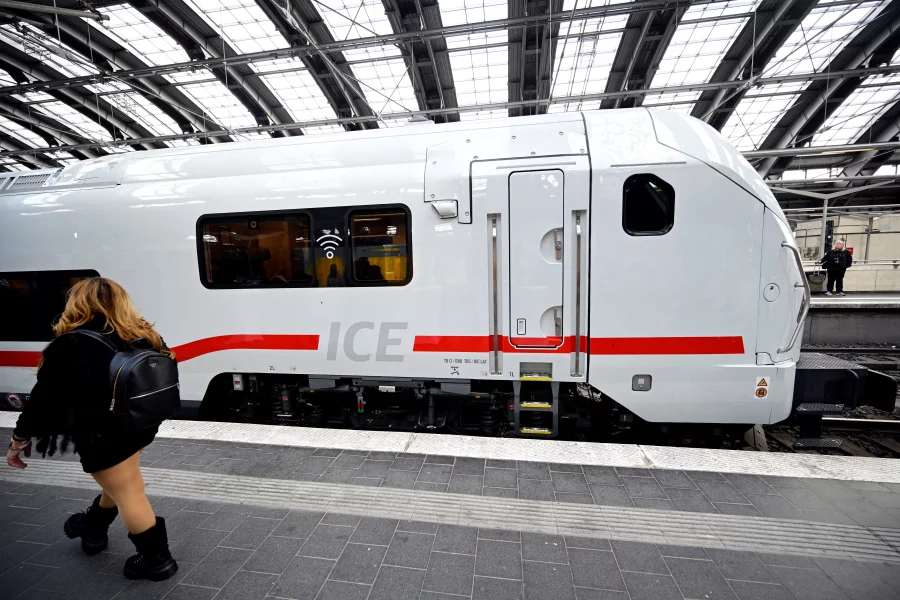
As the 12:06 p.m. Intercity Express train to Berlin departs the Swiss city of Bern and crosses into Germany, passengers reluctantly bid farewell to punctuality — a near-guarantee in Switzerland, where trains run with clockwork precision.
Fifty-seven-year-old Elisabeth Eisel regularly makes the seven-hour journey. “Trains in Switzerland are always on time, unless they’re arriving from Germany,” she says. “Harsh but true. It didn’t used to be this way.”
Chronic underinvestment has derailed one of Germany’s most enduring myths: Teutonic efficiency. Deutsche Bahn’s long-distance and high-speed services now rank among the least punctual in Europe. In October, the state-owned rail operator hit a new low, with only about half of its long-distance trains arriving on time.
Declining reliability is just one of many issues facing Deutsche Bahn, which continues to operate at a loss. Passengers frequently endure unreliable or nonexistent Wi-Fi, seat reservation errors, missing carriages, and vague “technical problems” announced over the intercom — a familiar catch-all explanation.
After decades of neglect, the German government has pledged €100 billion to overhaul rail infrastructure. But Lukas Iffländer, vice chair of passenger advocacy group Pro Bahn, says money alone won’t fix the system.
“We’re paying the price for years of neglect, basically since 1998,” Iffländer says. Beyond aging tracks and faulty signals, he points to an overly bureaucratic infrastructure operator. “Every process at Deutsche Bahn is incredibly complicated. It takes forever, and that frustrates the people who actually want to get things done.”
Iffländer adds that Deutsche Bahn is top-heavy, with too many managers and not enough train drivers and signal operators. German weekly Der Spiegel recently reported that management allegedly approved canceling long-distance trains to boost punctuality figures, since canceled services don’t count as delays.
Deutsche Bahn declined interview requests but denied manipulating data, stating that the Spiegel report was based on dispatcher chat messages rather than official statistics.
On another train — the 11:18 a.m. service from Munich to Berlin — passengers are crammed in at double capacity after a fully booked Intercity Express was canceled at the last minute. Despite standing for more than four hours, with limited access to restrooms, the mood remains surprisingly light.
Catherine Launay, 51, from France, manages to find a seat and is astonished by the lack of protest. “If this were a French train, there’d be an uproar,” she laughs. “French passengers would have revolted by now.”
To curb rising aggression toward staff, Deutsche Bahn has even launched a mockumentary series on TikTok, Instagram, and YouTube, depicting overwhelmed train crews in increasingly absurd situations. A techno dance routine featuring the line “zenk yoo for träveling wiz Deutsche Bahn” has proved popular — even if passengers can’t stream it onboard due to weak Wi-Fi.
As the train rattles along, the line between parody and reality blurs. The conductor wishes passengers a pleasant journey “as far as possible,” adding, “we should just about make it to Berlin,” prompting laughter from the carriage.
Federal Transport Minister Patrick Schnieder is less amused, recently warning that “many people equate the malfunctioning of the railways with the malfunctioning of our state.”
Hopes are now pinned on Deutsche Bahn’s new CEO, Evelyn Palla, whose reputation was built at Austrian Federal Railways. She has announced plans to streamline management and improve efficiency, while cautioning that restoring Germany’s rail network will take time.
As the train finally rolls into Berlin’s main station, passengers seem resigned. Whether it’s failing signals, strained humor, or broader state dysfunction, Germany’s once-proud rail system appears to have gone off the rails.
Related News: https://airguide.info/category/air-travel-business/airline-finance/