
Global Airlines Ban Power Bank Use as Fire Risks Prompt Tighter Rules

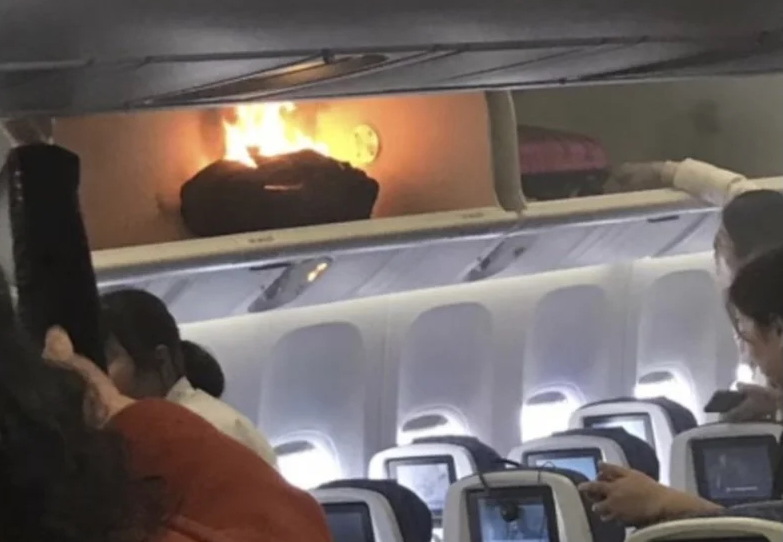
Airlines around the world are tightening restrictions on portable power banks as concerns grow over the fire risks posed by lithium-ion batteries in aircraft cabins. The latest move comes from the Lufthansa Group, which has introduced one of the strictest policies yet following a recent onboard fire incident in Asia.
Germany’s flag carrier Lufthansa confirmed that passengers are no longer permitted to use or charge power banks during flights across all six of its airlines: Lufthansa, SWISS, Austrian Airlines, Brussels Airlines, Eurowings, and ITA Airways. The policy change follows a fire that broke out in an overhead compartment on an Air Busan aircraft earlier this year, reportedly linked to a lithium battery device.
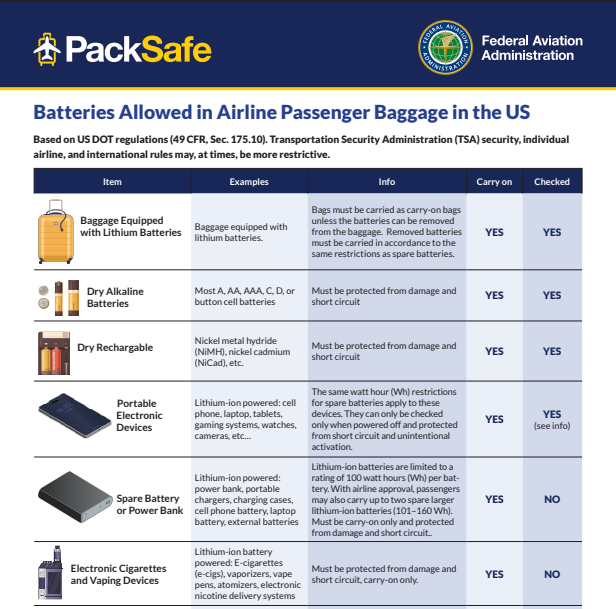
Under the new Lufthansa Group rules, passengers may carry a maximum of two power banks in their carry-on baggage, each with a capacity of up to 100 watt-hours (Wh). The devices must be kept on the passenger’s person, in a seat pocket, or under the seat. Storing power banks in overhead bins is prohibited, and they remain banned from checked luggage. Larger power banks rated between 100 Wh and 160 Wh are only permitted with prior airline approval. Charging power banks or using them to charge personal devices during the flight is no longer allowed, except in limited cases involving essential medical equipment.
Power banks—also known as portable chargers—are compact, battery-powered devices used to recharge smartphones, tablets, cameras, and headphones. They typically rely on lithium-ion or lithium-polymer batteries, the same technology used in laptops and mobile phones. While convenient, these batteries can overheat or ignite if damaged, short-circuited, or poorly manufactured. In the confined environment of an aircraft cabin, such fires can be difficult to extinguish and pose serious risks to passengers and crew.
Lufthansa’s decision reflects a broader global trend. Several major airlines already ban the use of power banks during flights, even if passengers are still allowed to carry them. Emirates introduced a similar policy in October last year, prohibiting passengers from using portable chargers onboard while allowing one device under 100 Wh to be carried in the cabin. Emirates also requires power banks to be stored under the seat or in seat pockets, not in overhead compartments.
Other carriers that restrict or ban the in-flight use of power banks include Singapore Airlines, Cathay Pacific, EVA Air, Thai Airways, and China Airlines. In most cases, the focus is not on banning possession outright, but on preventing charging, limiting capacity, and ensuring devices remain accessible in case of overheating or smoke.
In the United Kingdom, rules are set by the Civil Aviation Authority (CAA), but airlines retain discretion. The CAA allows passengers to carry spare lithium-ion batteries up to 100 Wh in hand luggage without approval, and up to two batteries between 100 Wh and 160 Wh with airline consent. All spare batteries must be individually protected against short circuits and are prohibited in checked baggage.
UK airlines including British Airways, easyJet, Ryanair, and Jet2 currently allow compliant power banks in carry-on bags, with use generally permitted unless cabin crew instruct otherwise. Virgin Atlantic allows power banks onboard but does not permit charging them using aircraft power outlets. Ryanair has said it has no plans to follow Lufthansa in tightening its rules.
Glenn Bradley, head of flight operations at the CAA, warned that lithium batteries are a growing safety concern. “If they become faulty or damaged, they can cause an intense fire that is difficult to extinguish—either in the cabin or the hold of an aircraft,” he said. “Correct handling reduces risk.”
The Lufthansa Group says its updated policy is designed to align with global aviation safety standards and reduce the likelihood of in-flight incidents linked to personal electronic devices. As passengers carry more battery-powered equipment than ever, airlines and regulators alike are signalling that stricter controls—rather than outright bans—are likely to become the new normal in air travel.
Related News: https://airguide.info/?s=power+banks, https://airguide.info/category/air-travel-business/travel-health-security/
Sources: AirGuide Business airguide.info, bing.com, uk.news.yahoo.com, travelandtourworld.com