
IATA Warns Jet Fuel Supply Recovery Could Take Months


The International Air Transport Association (IATA) has warned that global jet fuel supplies could take months to stabilize, even if the Strait of Hormuz reopens, as the Iran conflict continues to disrupt refining capacity across the Middle East. The concern stems not just from crude oil shortages, but from the complex refining process required to produce aviation fuel, where crude oil must be distilled into kerosene fractions, and further treated, blended, and purified before it meets jet fuel specifications.
Speaking on April 8, IATA Director General Willie Walsh said the current crisis differs from previous shocks, noting that while crude oil flows may resume quickly, refining disruptions will delay the recovery of jet fuel availability. “If it were to reopen and remain open, it will still take a period of months to get back to where supply needs to be,” Walsh said, pointing to damage and constraints in regional refining infrastructure. Jet fuel, typically the second-largest cost for airlines after labor, accounting for roughly 27% of operating expenses, has seen prices surge dramatically since the conflict began.
Fuel costs have more than doubled in some markets, significantly outpacing the rise in crude oil prices and placing additional financial strain on airlines worldwide.
The closure of the Strait of Hormuz, a critical chokepoint for global energy shipments, has restricted supply flows and forced airlines to adapt rapidly. Carriers are increasingly carrying extra fuel, adding refueling stops, and cutting less profitable routes to manage rising costs and limited availability. Despite the disruption, Walsh emphasized that the situation is not comparable to the COVID-19 crisis, when global aviation capacity fell by as much as 95%.
Crude Oil Refining Process
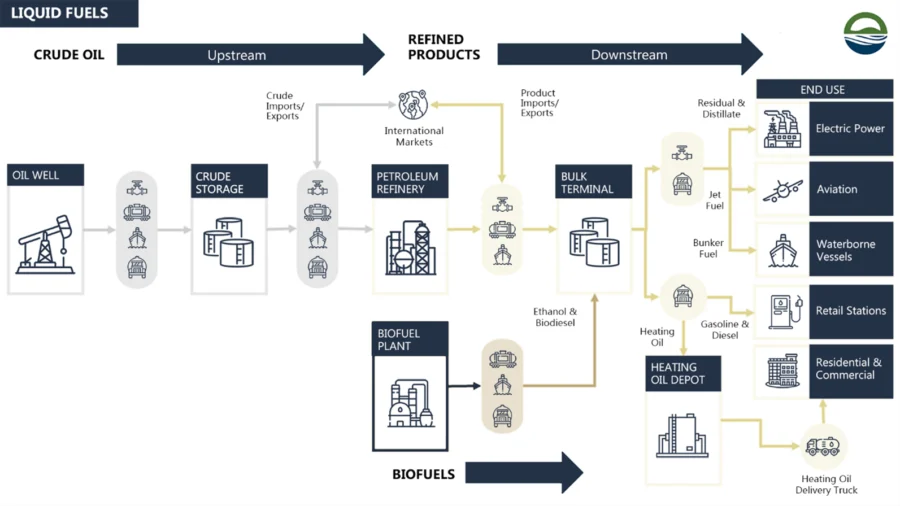
Instead, he likened the current environment to previous economic shocks, such as the post-9/11 period or the 2008–2009 financial crisis, where recovery timelines ranged from several months to a year. The impact on airline capacity is expected to be uneven. Gulf carriers, key players in global long-haul connectivity, have seen significant reductions, and while some capacity may be replaced by airlines outside the region, Walsh said it is unlikely to fully offset the loss.
At the same time, optimism around a potential ceasefire and the reopening of Hormuz has boosted airline stocks globally. Carriers in Asia and Europe have seen share prices rise sharply, reflecting expectations that easing fuel constraints could improve operating conditions.
Looking ahead, IATA expects that once crude oil flows normalize, refining capacity in other regions, including India and Nigeria, could help ease supply pressures. However, rebuilding jet fuel inventories and stabilizing prices will take time, particularly as refineries adjust output to meet shifting demand.
The warning underscores the fragile balance between geopolitics and global aviation, as airlines navigate a complex environment of constrained fuel supply, volatile pricing, and ongoing airspace disruptions.
Related News: https://airguide.info/?s=IATA, https://airguide.info/?s=iran+war
Sources: AirGuide Business airguide.info, bing.com, reuters.com