
Iran Strikes Near Dubai Airport and Ships as War Widens

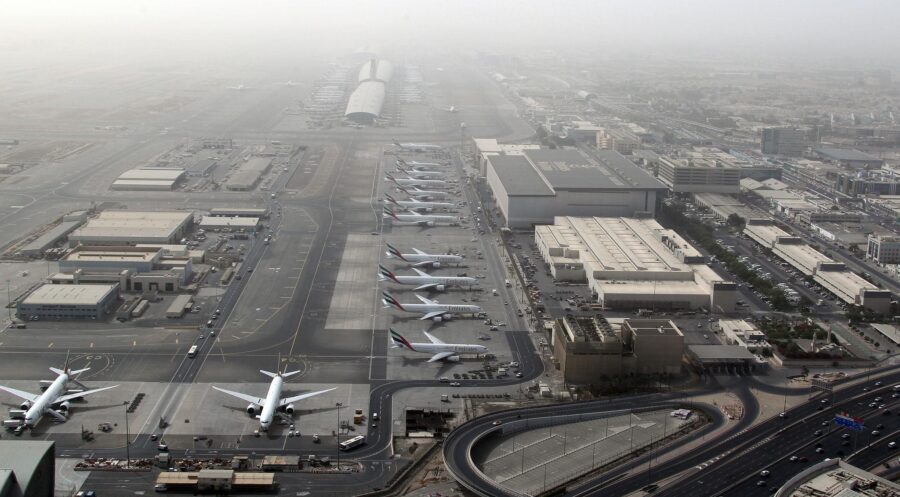
Tensions in the Middle East intensified Wednesday Mar. 11 as Iran launched attacks across the Persian Gulf, targeting commercial shipping and striking near Dubai International Airport while Israeli and U.S. airstrikes continued against Iranian targets.
Also, newly-appointed Supreme Leader Mojtaba Khamenei was lightly injured but is continuing to operate, an Iranian official told Reuters on Wednesday.
Two Iranian drones hit near Dubai International Airport, one of the world’s busiest hubs for international travel and home base of Emirates. Four people were reported wounded, but airport authorities said flights continued operating despite the incident. The strike marked a significant escalation, bringing the conflict closer to critical civilian infrastructure in the United Arab Emirates.
Iran’s joint military command also announced it would begin targeting banks and financial institutions across the Middle East. Such threats raise concerns for major financial centers including Dubai, as well as Saudi Arabia and Bahrain, which host numerous international banking institutions.

Earlier in the day, a projectile struck the Thai-flagged cargo vessel Mayuree Naree in the Strait of Hormuz off Oman’s coast, igniting a fire onboard. Thailand’s Marine Department said 20 crew members were rescued by the Omani navy, while three remain missing. The Strait of Hormuz is one of the world’s most critical maritime chokepoints, handling roughly 20% of global oil shipments, and any disruption there immediately heightens volatility in energy markets.
Maritime monitoring agencies later reported that at least three commercial vessels were attacked near the strait on Wednesday in what analysts described as some of the most intense strikes of the conflict so far. In addition to the Mayuree Naree, projectiles damaged the Japanese-flagged ONE Majesty and the Marshall Islands-registered Star Gwyneth in separate incidents in and around the shipping corridor. The coordinated attacks underscore escalating risks to international maritime traffic in the Persian Gulf and are further straining global energy and supply chains as the conflict widens.
Regional air defenses were activated across the Gulf. Kuwait reported intercepting eight Iranian drones, while Saudi Arabia said it downed five drones heading toward the Shaybah oil field. Iran has also targeted oil facilities in Gulf Arab nations, aiming to exert economic pressure as the conflict broadens.
The United Nations Security Council was scheduled to vote on a resolution sponsored by the Gulf Cooperation Council demanding Iran halt attacks on neighboring states.
Meanwhile, Israeli airstrikes continued in Tehran and southern Lebanon, where Israel said it was targeting sites linked to Iran-backed Hezbollah militants. Israeli intelligence sources, speaking anonymously, also claimed Iran’s new supreme leader, Mojtaba Khamenei, may have been wounded at the outset of the conflict, though no independent confirmation was provided.
With commercial aviation, maritime shipping and energy infrastructure now directly affected, the widening conflict is raising concerns about regional stability, global oil supply security and the safety of civilian travel and trade routes.
Related news: https://airguide.info/?s=Iran, https://airguide.info/category/air-travel-business/travel-health-security/
Sources: AirGuide Business airguide.info, bing.com, apnews.com, reuters.com