
Iran’s F-14 Fighter Jets Near Extinction After Airstrikes

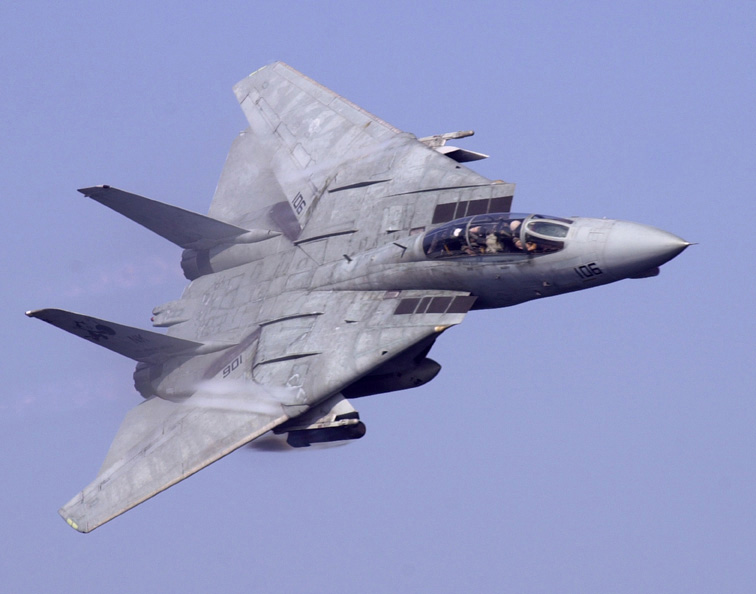
Iran’s fleet of aging F-14 Tomcat fighter jets, once among the most advanced aircraft in the world—may be nearing extinction following reported airstrikes during the ongoing conflict, marking a symbolic turning point in military aviation history.
According to defense analysts and satellite imagery reviewed in recent weeks, Israeli strikes may have targeted several Iranian F-14s on the ground. While the full extent of the damage remains unconfirmed, some experts believe the attacks could represent the final chapter for the last operational F-14s anywhere in the world.
The Grumman F‑14 Tomcat became one of the most iconic fighter aircraft of the Cold War era, entering U.S. Navy service in the early 1970s as a carrier‑based air‑superiority and fleet‑defense interceptor. Designed with variable‑sweep wings, powerful twin engines, and the advanced AWG‑9 radar paired with long‑range AIM‑54 Phoenix missiles, the Tomcat could track and engage multiple targets at distances unmatched by its contemporaries.
It proved its value in real‑world combat over the Gulf of Sidra and later during operations in the Middle East, while also becoming a cultural symbol thanks to its starring role in “Top Gun” motion picture. The F‑14 served for more than three decades before retiring in 2006, remembered as one of the most distinctive and capable naval fighters ever built.
Iran remains the only country to have operated the aircraft outside the United States, following a major arms deal in the early 1970s between Washington and the government of Shah Mohammad Reza Pahlavi.
After the 1979 Islamic Revolution, Iran retained the jets despite a complete breakdown in relations with the United States. Over the decades, Tehran kept the aircraft operational through a combination of stockpiled parts, reverse engineering, and illicit procurement networks, even as U.S. sanctions aimed to ground the fleet.
During the Iran-Iraq War in the 1980s, the F-14 proved highly effective, with Iranian pilots reportedly downing more than 160 enemy aircraft. However, maintaining the complex, swing-wing fighter became increasingly difficult over time, with many jets cannibalized for parts to keep a limited number airworthy.
It’s unclear if the story of the F-14s is completely over.
Earlier this month, Israel said it destroyed “several” F-14s on the ground. But not everyone agrees that they are gone. Tom Cooper, an Austrian military aviation analyst is skeptical. “Some of what the Israelis have shown us about the destruction of Iranian Tomcats is absolutely 100% wooden decoys,” he says. “If you know where to search for them, you can actually see them standing in the same place for two, three, four or five years.”
Experts estimate that only a small number, possibly around 10 aircraft, remained operational at the start of the current conflict. Even then, the aircraft faced significant limitations compared to modern fighters such as the F-35 or F/A-18, making them more symbolic than strategically decisive.
The potential loss of Iran’s F-14 fleet would close a unique chapter in aviation history. The aircraft was not only a technological milestone, featuring advanced radar systems and long-range missile capabilities, but also a relic of a brief period when the United States and Iran were close military allies.
While analysts caution that some reported strike footage may include decoys rather than active aircraft, the broader trend is clear: the era of the F-14 is drawing to a close.
If confirmed, the destruction of the remaining Tomcats would mark the end of more than five decades of service for one of the most iconic fighter jets ever built—bringing a historic aviation legacy to a final conclusion.