
Jin Air and Air Busan Launch Domestic Codeshare in South Korea

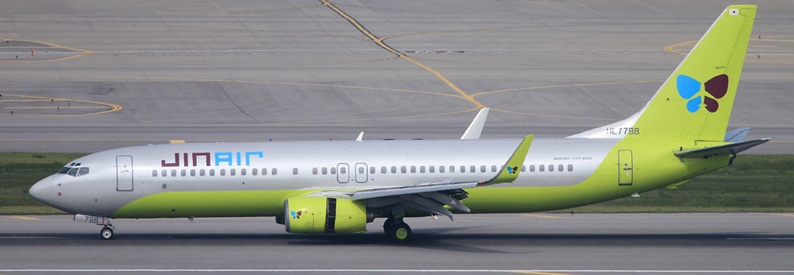
Jin Air and Air Busan have begun a domestic codeshare partnership in South Korea, marking an early step toward deeper cooperation ahead of a broader low-cost carrier consolidation. The agreement took effect on January 6, 2026, and initially covers three high-demand domestic routes.
The codeshare applies to services between Seoul Gimpo Airport and Busan, Jeju and Busan, and Jeju–Ulsan. Under the arrangement, Air Busan operates the flights, while Jin Air markets seats under its “LJ” flight code, allowing customers to book through Jin Air’s sales channels.
For passengers, the move is designed to improve schedule flexibility and booking convenience on some of the country’s busiest domestic corridors. The Gimpo–Busan route is one of South Korea’s most heavily traveled city pairs, while Jeju links remain critical for both leisure travel and regional connectivity. By sharing inventory, the two carriers aim to optimise capacity and offer more consistent options without adding new aircraft.
The codeshare comes as part of preparations for the planned consolidation of Jin Air, Air Busan, and Air Seoul, which is expected to be completed in early 2027. The merger is tied to the ongoing integration of Korean Air and Asiana Airlines, a landmark transaction that is reshaping South Korea’s airline landscape.
As subsidiaries of the two full-service giants—Jin Air under Korean Air and Air Busan under Asiana—the low-cost carriers are expected to be combined into a single LCC platform once regulatory approvals and group restructuring steps are finalised. The domestic codeshare is widely seen as a trial phase, allowing the airlines to align systems, sales processes, and operational coordination ahead of a full merger.
Industry analysts note that early cooperation could help smooth the transition by identifying overlaps in schedules and demand patterns, while also delivering near-term benefits through improved load factors and reduced duplication. For the parent groups, rationalising domestic LCC operations is viewed as essential to improving profitability in a market characterised by intense competition and thin margins.
While the current agreement is limited to three routes, observers expect the scope of cooperation to expand over time, potentially including additional domestic sectors and coordinated pricing strategies. International routes remain outside the codeshare for now, but could follow as integration plans progress.
For South Korea’s aviation market, the Jin Air–Air Busan codeshare signals a practical first step toward LCC consolidation, offering passengers incremental benefits today while laying the groundwork for a more streamlined low-cost operation in the years ahead.
Related News: https://airguide.info/category/air-travel-business/airline-finance/
Sources: AirGuide Business airguide.info, bing.com, ch-aviation.com