
Korean Air and Asiana Challenge $4.5M Merger Fine in Court

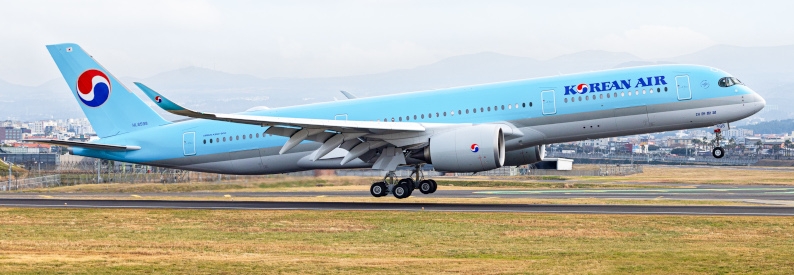
Korean Air and Asiana Airlines have filed separate administrative lawsuits with the Seoul High Court seeking to overturn enforcement fines totaling KRW 6.5 billion (USD 4.5 million). The legal action targets a decision issued in December 2025 by the Korea Fair Trade Commission, which found that the two carriers had breached merger-related conditions tied to international route capacity guarantees.
The fines stem from the airlines’ operations on the Seoul Incheon–Frankfurt route between December 2024 and March 2025. According to the regulator, combined seat capacity on the route was maintained at just 69.5% of 2019 levels during the period, falling well short of the mandated minimum of 90%. The capacity commitment was one of several conditions imposed by the KFTC as part of its approval framework for Korean Air’s acquisition of Asiana Airlines, aimed at preserving competition and preventing excessive capacity reductions on key international routes.
Under the enforcement decision, Korean Air was fined KRW 5.9 billion (USD 4.1 million), accounting for the majority of the penalty, while Asiana Airlines received a separate fine of KRW 580 million (USD 405,000). The regulator argued that the shortfall represented a clear violation of the merger remedies, regardless of broader market conditions or operational challenges faced by the airlines during the post-pandemic recovery period.
In their filings with the Seoul High Court, the carriers are reportedly disputing both the interpretation and application of the capacity requirement. Industry sources suggest the airlines may argue that fluctuating demand, aircraft availability constraints, and broader operational considerations made strict compliance with the 90% threshold impractical during the enforcement window. They are also expected to question whether the regulator adequately accounted for market realities when assessing compliance.
The case highlights the growing regulatory scrutiny surrounding large airline mergers, particularly in jurisdictions where authorities have imposed detailed behavioral remedies rather than structural divestments. For Korean Air, the acquisition of Asiana is seen as a transformational deal intended to stabilize South Korea’s aviation sector and create a stronger global competitor. However, the merger has also attracted close oversight from competition authorities at home and abroad, with strict conditions designed to safeguard consumer choice and fare competition.
The outcome of the lawsuits could have broader implications for how merger conditions are enforced in the aviation sector, especially as airlines continue to recalibrate networks in response to shifting demand patterns. A ruling in favor of the carriers could prompt regulators to revisit the flexibility of capacity-based remedies, while an upheld decision would reinforce the KFTC’s authority to impose and enforce strict operational commitments.
For now, the legal challenge adds another layer of complexity to Korean Air’s integration of Asiana, as the combined group balances regulatory compliance with commercial and operational realities across its international network.
Related News: https://airguide.info/category/air-travel-business/airline-finance/
Sources: AirGuide Business airguide.info, bing.com, ch-aviation.com