
Military Tensions Threaten Gulf Airspace Operations


Aircraft operators have been urged to prepare for potential airspace disruption across the Gulf region amid warnings that U.S.-led military action against Iran could be imminent.
Netherlands-based security consultancy Dyami Security Intelligence has advised airline clients to activate contingency measures as tensions escalate. In a security assessment issued Tuesday Feb. 17, Dyami said increased movements of combat and support aircraft in the Mediterranean and Gulf regions suggest the Pentagon may be shifting from a signaling posture to what it described as “executable readiness.”
The warning comes as indirect diplomatic talks between U.S. and Iranian officials continue in Geneva. Iran’s foreign minister, Abbas Araghchi, said this week that discussions focused primarily on Iran’s nuclear program had made some progress. However, Dyami analysts cautioned that military operations could begin with little warning.
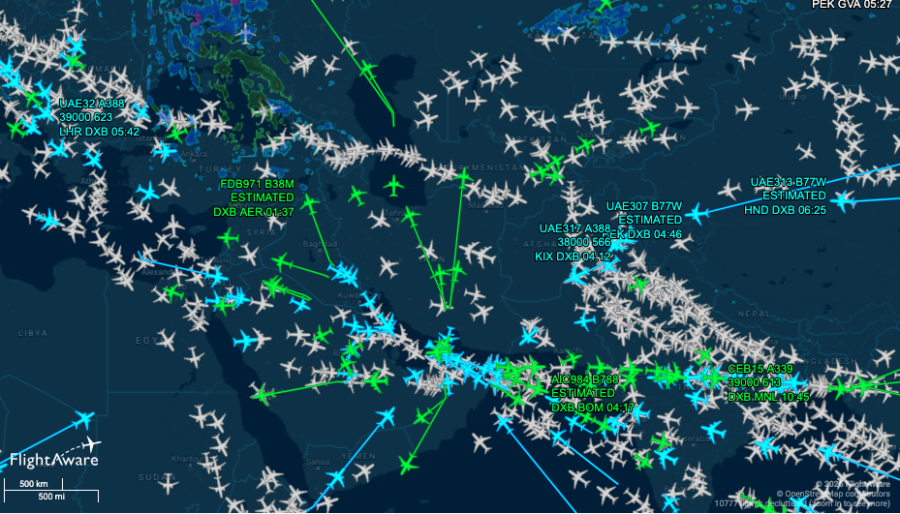
FlightAware Middle East Traffic Feb. 18, 2026
According to the advisory, commercial air operators in the Middle East should anticipate a rapidly evolving airspace environment if hostilities commence. Potential risks include short-notice airspace closures, expanded restricted zones, GPS interference, increased military air traffic, and possible missile or drone activity across Iraq, Lebanon, Jordan, Syria, western Iran and adjacent flight information regions.
Dyami’s report suggests any campaign could begin as early as the end of the week and potentially last several weeks. Analysts referenced the possibility of an initial wave of strikes aimed at degrading Iranian strategic capabilities, followed by operations targeting supporting infrastructure.
Previous regional escalations have led to direct impacts on aviation. During last year’s confrontation, Iran launched drone attacks on Al Udeid Air Base in Qatar. In recent days, the United States reportedly relocated RC-135V Rivet Joint reconnaissance aircraft from Qatar to a base on the Greek island of Crete, signaling heightened military positioning.
Dyami has advised airlines and business aircraft operators to review contingency routing, fuel planning, diversion alternatives and NOTAM monitoring procedures. Operators were also urged to prepare for immediate regulatory directives and air traffic flow restrictions.
Separately, aviation risk management firm Osprey Flight Solutions warned of ongoing security threats in northern Ethiopia, where armed conflict has disrupted airport operations and raised concerns about surface-to-air missile risks.
The advisories underscore the heightened volatility across key air corridors in the Gulf and parts of East Africa, prompting airlines to closely monitor developments and maintain flexible operational planning.
Related News: https://airguide.info/category/air-travel-business/travel-health-security/
Sources: AirGuide Business airguide.info, bing.com, ainonline.com