
NTSB Chair Criticizes House Aviation Bill After DC Crash

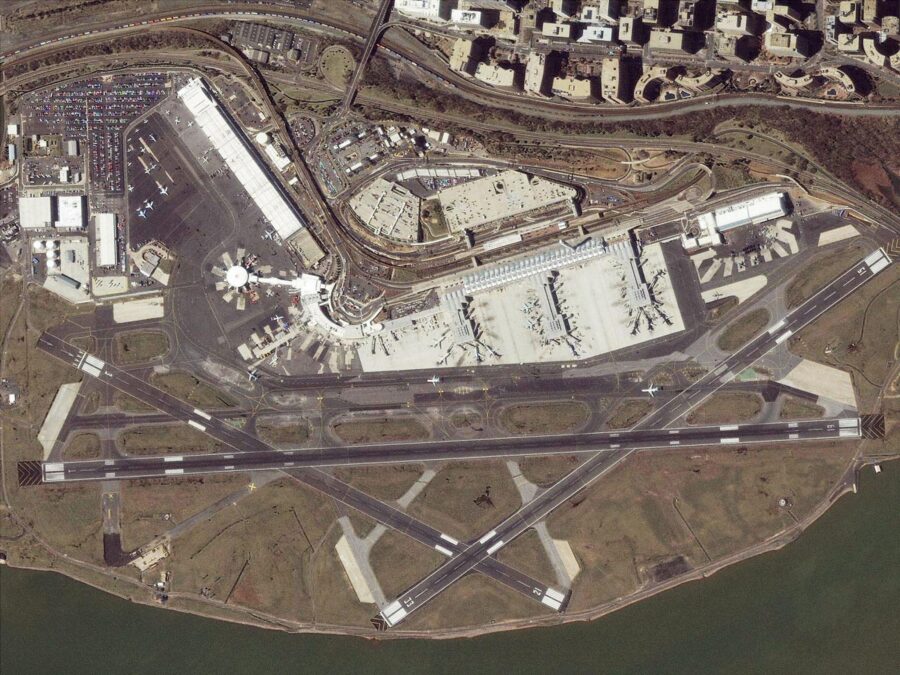
The head of the National Transportation Safety Board sharply criticized a House aviation safety bill Thursday, calling it “watered-down” and misleading after last year’s deadly midair collision near Washington, D.C., that killed 67 people.
NTSB Chair Jennifer Homendy said the House legislation does not fully implement the board’s January 2026 safety recommendations following the January 29, 2025, crash involving an American Airlines regional jet and a U.S. Army Black Hawk helicopter near Reagan National Airport. The NTSB later sent a formal letter to key House committees stating it cannot support the bill in its current form.
At the center of the dispute is whether Congress should mandate Automatic Dependent Surveillance-Broadcast In (ADS-B In) systems on all aircraft. While ADS-B Out systems — which broadcast an aircraft’s location — are already required in congested airspace, ADS-B In systems allow pilots to receive precise real-time data about nearby traffic. The NTSB has recommended broader adoption of ADS-B In since 2008.
Homendy said the House bill would merely direct the Federal Aviation Administration to draft future rules rather than immediately requiring ADS-B In technology. She also raised concerns that the legislation exempts certain business jets and smaller aircraft and does not sufficiently restrict when military aircraft can deactivate locator systems.
House Transportation and Infrastructure Committee leaders defended the ALERT Act, saying it addresses all 50 recommendations issued by the NTSB after completing its investigation. They pledged to continue working with the Senate and victims’ families.
Family members of those killed in the crash have aligned with the NTSB’s position. Several said the bill, as written, fails to mandate ADS-B In technology, a requirement they view as essential to preventing another collision.
The NTSB concluded that systemic weaknesses and ignored warnings contributed to the crash. Homendy has stated that if both aircraft had been equipped with and actively using ADS-B In, the collision likely would have been prevented. At the time, Army policy required certain helicopters to fly without broadcasting full location data, even though the flight in question was a training mission.
The Senate previously advanced a separate aviation safety bill that would have required ADS-B In, but it fell short of final passage in the House.
Homendy emphasized that partial measures would not be enough. “When we issue a recommendation, those recommendations are aimed at preventing a tragedy from happening again,” she said. “Half a loaf is not going to save lives.”
Related News: https://airguide.info/?s=NTSB, https://airguide.info/category/air-travel-business/travel-health-security/
Sources: AirGuide Business airguide.info, bing.com, wtop.com