
NTSB: Tracking System Failed in LaGuardia Crash

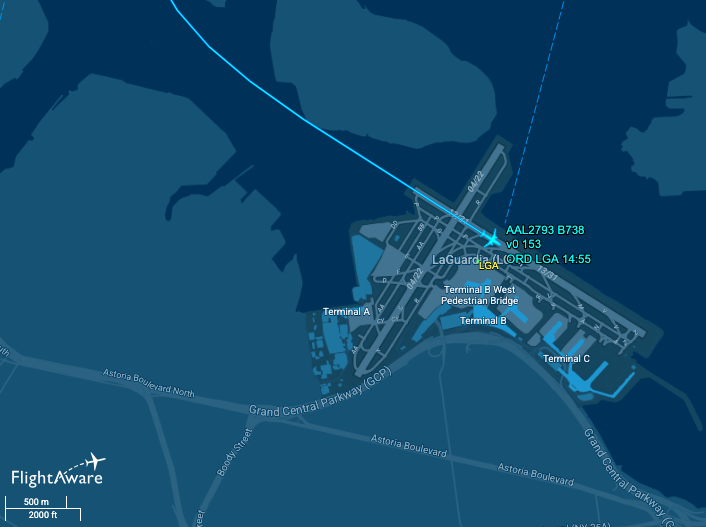
The National Transportation Safety Board (NTSB) has revealed that a key runway tracking system failed to generate an alert during the fatal collision at New York’s LaGuardia Airport, raising fresh concerns about airfield safety technology and ground-movement monitoring. The NTSB’s initial findings also highlighted staffing issues, with only two controllers managing multiple roles during the emergency.
The incident involved an Air Canada Express Bombardier CRJ-900, operated by Jazz Aviation, which collided with a fire truck while landing on a runway, killing two pilots and injuring dozens of passengers. The aircraft was carrying 72 passengers and four crew members at the time of the crash.
According to NTSB Chair Jennifer Homendy, the Airport Surface Detection Equipment, Model X (ASDE-X) system did not trigger a warning as the aircraft and vehicle converged on the runway. The system is designed to track aircraft and ground vehicles in real time and alert controllers to potential conflicts.
Homendy said the system failed to generate an alert due to the close proximity and movement of the aircraft and vehicle, which prevented it from establishing a “high-confidence” tracking solution. The rapid sequence of events meant that the system was unable to detect and flag the developing hazard in time.
The investigation also found that the fire truck involved in the collision was not equipped with a transponder, a device that would have allowed it to be more accurately tracked by surveillance systems. At some airports, ground vehicles are fitted with such equipment to enhance visibility to air traffic controllers, but this is not yet a universal requirement.
Investigators noted that it remains unclear whether additional technology alone could have prevented the incident, given how quickly the situation unfolded. However, the findings highlight critical gaps in surface surveillance coverage and the limitations of current systems in complex, high-traffic environments.
The NTSB confirmed that two air traffic controllers were working in the tower’s glass-enclosed cab at the time of the incident. The roles and coordination between controllers, as well as communication procedures, are expected to be key areas of focus as the investigation continues.
The ASDE-X system has been widely deployed at major U.S. airports as part of efforts to reduce runway incursions, one of the most persistent safety risks in aviation. The LaGuardia accident is now intensifying calls for expanded use of tracking technology, including mandatory transponders for all ground vehicles operating on active runways.
As investigators continue to analyze flight data, communications, and operational procedures, the findings could lead to new safety recommendations aimed at improving runway awareness and preventing similar incidents in the future.
Related News: https://airguide.info/?s=FAA, https://airguide.info/?s=NTSB, https://airguide.info/category/air-travel-business/travel-health-security/, Two Pilots Dead After CRJ-900 Runway Incident at LaGuardia, LaGuardia Crash Exposes Air Traffic Safety Failures, 34 California Airports Flagged for Runway Collision Risk
Sources: AirGuide Business airguide.info, bing.com, AirNavRadar.com