
Quantum Navigation Could Transform Aircraft Positioning

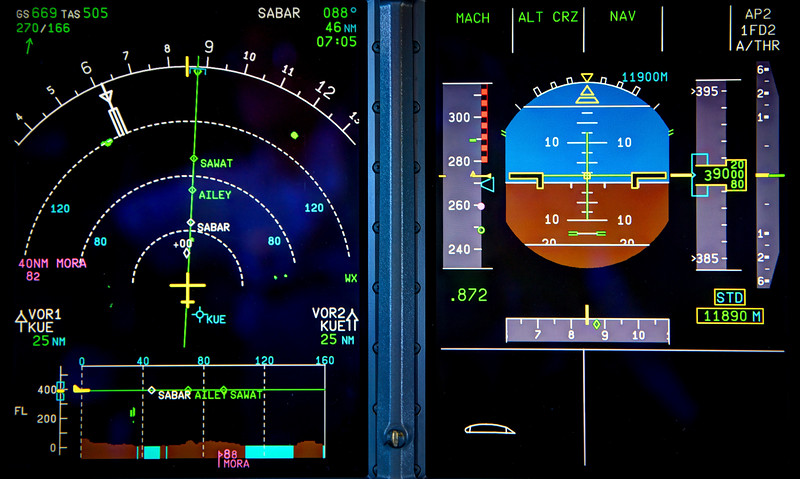
Global Positioning System (GPS) technology underpins modern aviation, enabling precise routing, tracking and time synchronization. But as concerns grow over GPS jamming and spoofing, a new alternative is gaining attention in aerospace: quantum navigation.
Unlike satellite-based GPS, quantum navigation relies on quantum mechanics, the physics governing atomic and subatomic particles, to determine location. Specifically, it uses quantum sensing to measure minute variations in the Earth’s magnetic field with extraordinary sensitivity.
The Earth’s magnetic field is shaped by the unique distribution of magnetised minerals in the planet’s crust. These variations create localized magnetic signatures that function like permanent geographic fingerprints. By detecting and matching these signatures to high-resolution magnetic maps, aircraft can determine their position without relying on satellites.
This approach is known as magnetic anomaly-based navigation, or MagNav. It requires highly advanced sensors and substantial computational power. Systems must filter out atmospheric interference, electromagnetic noise and even magnetic distortions generated by the aircraft itself. Once filtered, real-time magnetic readings are compared against a pre-existing magnetic database to calculate location.
The result is an independent, resilient navigation solution that can operate in GPS-denied environments. For aviation and maritime industries, which may operate in remote or contested regions, this provides a critical layer of redundancy.
One of the most compelling advantages of quantum navigation is its resistance to electronic interference. GPS jamming occurs when malicious actors transmit signals on the same frequency as GPS satellites, disrupting positioning data. Spoofing involves broadcasting counterfeit signals that mislead receivers into calculating false positions. Both threats are increasing in frequency due to geopolitical tensions.
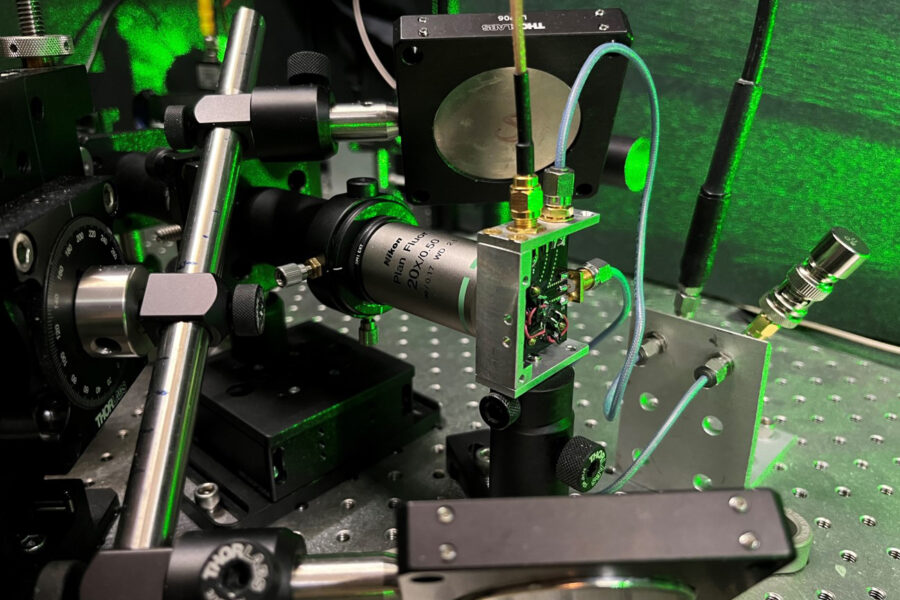
Quantum sensors, however, measure a natural physical phenomenon, the Earth’s magnetic field, which cannot be jammed or spoofed electronically. This makes quantum navigation particularly attractive for defense, commercial aviation and autonomous systems.
Airbus is actively testing quantum navigation technologies to assess their robustness for aerospace use. The company views the technology as a future complement to existing systems, enhancing redundancy and safety rather than replacing GPS outright.
Beyond navigation, Airbus is exploring broader quantum applications, including structural stress modeling for aircraft wings and advanced hydrogen fuel cell design. These simulations are currently conducted on specialized quantum computing platforms operated by select research laboratories.
As quantum computing scales and sensing technologies mature, quantum navigation could become a key pillar of resilient aircraft operations, offering unjammable, high-precision positioning that strengthens safety in an increasingly complex airspace environment.
Related News: https://airguide.info/?s=MIT, https://airguide.info/category/air-travel-business/travel-health-security/
Sources: AirGuide Business airguide.info, bing.com, airbus.com