
Report urges US Air Force to expand sixth-gen fleet

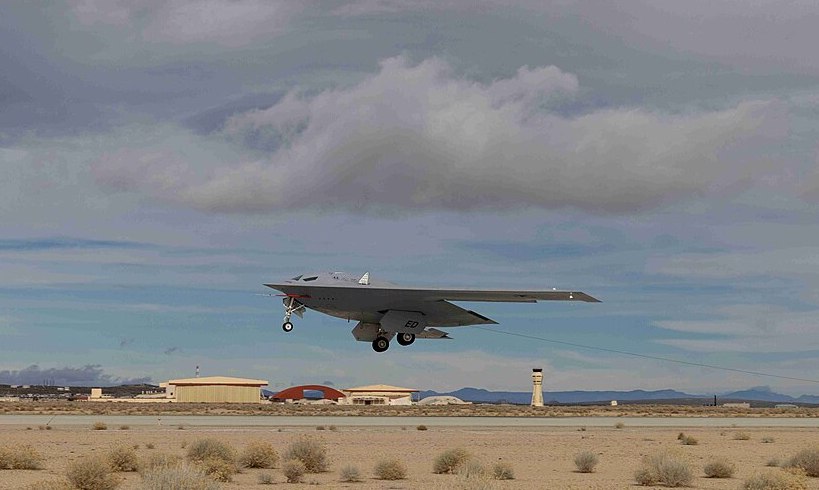
The US Air Force will need far more next-generation fighters and bombers than currently planned to prepare for a potential conflict with China, according to a new study by airpower experts.
The report, published by the Mitchell Institute for Aerospace Studies, argues that the service should significantly increase procurement of the forthcoming F-47 fighter and B-21 Raider bomber. Without a larger fleet, the authors warn, the Air Force could be forced to adopt more cautious tactics in a high-end fight, potentially conceding operational advantages to Beijing.
At present, the Air Force plans to acquire at least 185 F-47s, developed by Boeing, and a minimum of 100 B-21 Raiders built by Northrop Grumman. The report recommends expanding those numbers to at least 300 F-47s and 200 B-21s—roughly doubling the current targets.
Authors Heather Penney and retired Air Force Col. Mark Gunzinger argue that China’s anti-access and area-denial network, combined with its geography, creates heavily defended sanctuaries for air and missile forces. Neutralizing those areas would be critical in any conflict, but doing so would require large numbers of survivable, stealth aircraft capable of penetrating dense air defenses.
“The Air Force’s stealthy bombers and fighter inventories have the survivability needed to penetrate high-density threat areas but lack enough sortie capacity for a conflict with China,” the authors wrote.
The report also calls for increased procurement of the F-35 Lightning II and the F-15EX Eagle II to bolster near-term capacity.
Penney, a former F-16 pilot, said during a virtual event that past wars in Korea and Vietnam, as well as Russia’s ongoing war in Ukraine, demonstrate the risks of failing to eliminate enemy sanctuaries. Without sufficient aircraft reserves, she said, US commanders might have to limit risk exposure, reducing operational tempo and striking power.
The B-21 is currently in low-rate initial production, with only test aircraft delivered so far. Meanwhile, the F-47 remains in early development following a contract award last year. Neither platform is expected to enter service in substantial numbers for several years. Until then, the Air Force relies on legacy bombers such as the B-52 Stratofortress, B-1 Lancer and B-2 Spirit.
The study suggests annual budget increases of at least $40 billion to accelerate procurement and expand development of uncrewed Collaborative Combat Aircraft, or “loyal wingman” drones, designed to complement crewed jets.
Multiple assessments have found the Air Force’s fleet is the smallest and oldest it has been in decades, while operational demands remain high. A 2024 report from the US Government Accountability Office concluded that continuous deployments have strained readiness, personnel and equipment, even as modernization efforts continue.
Related News: https://airguide.info/?s=air+force, https://airguide.info/category/air-travel-business/defense-military/
Sources: AirGuide Business airguide.info, bing.com, yahoo.com