
The C-130 Hercules: The Longest-Running Military Aircraft Still in Service and Production

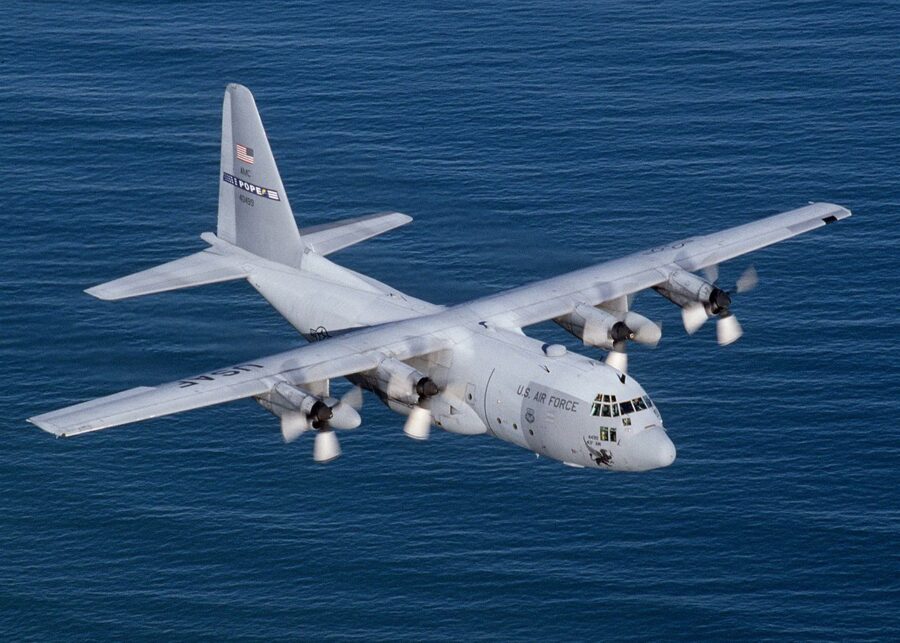
The U.S. military has flown countless aircraft over the past century, with new designs entering service every few years. Yet only a handful have achieved true longevity—and none more so than the legendary Lockheed C-130 Hercules. While the B-52 Stratofortress is technically the oldest aircraft still flying in U.S. service, production of that bomber ended in the early 1960s. The C-130, by contrast, has been continuously produced since 1956, making it the longest-running military aircraft in active service and ongoing production.
First introduced to the U.S. Air Force nearly 70 years ago, the C-130 Hercules remains a core component of American air power. Lockheed Martin continues to manufacture the aircraft at its Marietta, Georgia facility, supplying the latest C-130J Super Hercules to the Air Force and international customers. In January 2025, the Air Force received its newest specialized variant—the MC-130J Commando II—marking the delivery of the final special operations Hercules model.
Despite its age, the C-130 remains indispensable. Its continued production may seem surprising—after all, this four-engine turboprop transport entered service before color television became mainstream. But the Hercules endures for one reason: versatility. It can haul troops and equipment, perform airdrops, refuel helicopters and tilt-rotor aircraft in flight, conduct search-and-rescue missions, and operate from short or unprepared airfields. Few aircraft can match the Hercules’ ability to adapt across mission sets while remaining cost-effective and highly reliable.
A Global Workhorse With Unmatched Capability
Over 2,500 C-130s have been built, serving in 63 countries worldwide. The aircraft has supported combat operations, humanitarian missions, disaster relief, firefighting, medevac operations, and even civilian roles. Its rugged design and dependable performance have also earned it a unique distinction: the C-130 is the largest aircraft ever to land and take off from an aircraft carrier—a feat unmatched by any modern transport aircraft.
The C-130’s primary mission is tactical airlift, transporting troops, equipment, and supplies into and out of forward operating bases, austere airfields, and short, unprepared runways—places inaccessible to most other transport aircraft. It is also one of the world’s most capable airdrop platforms, performing cargo airdrops (pallets, containers, and heavy equipment), personnel airdrops (paratroopers and special forces), and low-altitude parachute extraction (LAPES-style operations). Although best known for carrying cargo, the C-130 frequently transports personnel, and its ability to operate from rough or damaged runways makes it a vital first responder during global crises—from combat evacuations to humanitarian relief operations.
The Hercules platform has also produced a wide range of mission-specific variants. The KC-130 adds a removable 3,600-gallon tank for aerial refueling. The HC-130 specializes in long-range search and rescue. Additional versions serve as gunships, electronic warfare platforms, weather reconnaissance aircraft, and even aerial firefighting tankers. Despite many airframes having flown for decades, modern C-130 fleets are continuously upgraded with advanced avionics, improved engines, and reinforced structures, ensuring the aircraft remains as capable today as when it first entered service nearly 70 years ago.
A Lifespan That Defies Expectations
Few aircraft have demonstrated the longevity of the C-130. In 2015, the Air Force retired “Iron Horse,” the oldest Hercules in its inventory at the time, after an extraordinary 27,533 flight hours and 52 years of continuous operation—longer than the expected service life of many naval ships. Its retirement underscored not only the durability of the airframe but also the rigorous maintenance and upgrade programs that keep the C-130 flying far beyond traditional service timelines.
Today, the Air Force has no plans to retire the Hercules. With ongoing production of the C-130J Super Hercules and continued global demand, the aircraft is poised to remain in service for decades to come. As long as militaries require a rugged, flexible, and dependable transport aircraft, the C-130 Hercules will continue its unprecedented run as one of the most enduring aviation platforms in history.
Related News: https://airguide.info/?s=c-130, https://airguide.info/category/air-travel-business/defense-military/
Sources: AirGuide Business airguide.info, bing.com, yahoo.com, lockheedmartin.com