
Travelers Shift to Europe and Asia as Alternatives to Middle East Transit Hubs

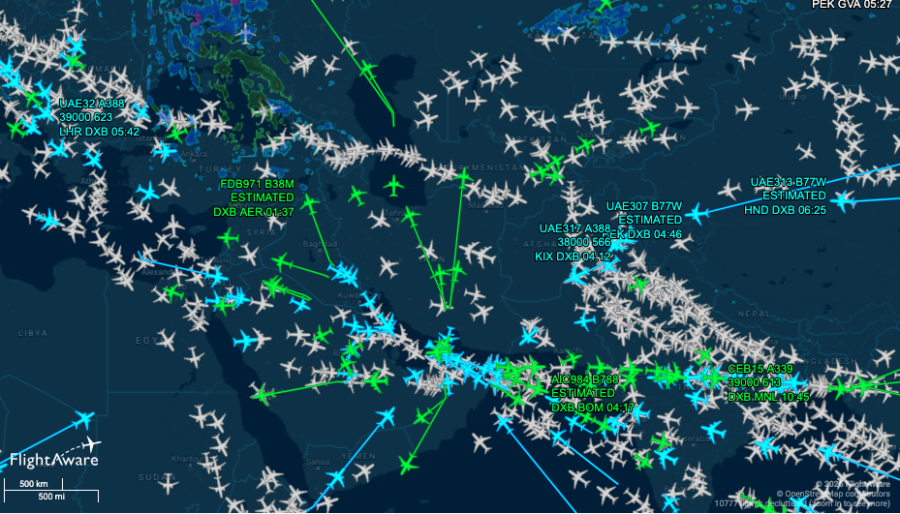
As ongoing disruptions linked to the Iran conflict impact major Middle Eastern hubs, international travelers are increasingly shifting to European and Asia-Pacific airports for long-haul connections, reshaping global travel patterns as airlines reroute passengers through more stable corridors.
According to aviation analyst Henry Harteveldt, president of Atmosphere Research Group, demand is moving rapidly away from Gulf transit points. “From the U.S., many travelers heading to Asia or India are now choosing routes across the Pacific or via Europe,” he said, highlighting a growing preference for safer and more predictable travel options.
European travelers are also adjusting their plans, with many opting to bypass the Middle East entirely, either flying directly to Asia or choosing to remain within Europe, further accelerating the shift away from traditional Gulf hub connections.
Europe and Asia Become the New Connection Hubs
For many travelers, Europe is now the most practical alternative. Airports such as London Heathrow, Frankfurt, Amsterdam Schiphol, and Paris Charles de Gaulle are absorbing a surge in connecting traffic between North America and Asia.
Asia‑Pacific hubs are also stepping in. Singapore Changi remains a top choice thanks to strong connectivity on Singapore Airlines and direct access from both U.S. coasts. Tokyo’s Haneda and Narita airports offer extensive links across Southeast Asia through Japan Airlines and ANA, while Seoul Incheon provides smooth onward travel to Bangkok, Singapore, Manila, and other major cities via Korean Air.
European Airports Become Key Connection Points
Several major European hubs are absorbing a surge in connecting traffic as travelers avoid the Middle East. The most popular alternatives include:
- London Heathrow (LHR)
- Frankfurt Airport (FRA)
- Amsterdam Schiphol (AMS)
- Paris Charles de Gaulle (CDG)
These airports offer extensive networks linking North America, Europe, and Asia, making them ideal substitutes for disrupted Gulf hubs.
Asia-Pacific Hubs Gain Momentum
Airlines are also routing passengers through Asia-Pacific megahubs, which provide strong onward connections to India, Southeast Asia, and Australia. Key hubs include:
- Singapore Changi (SIN)
- Tokyo Haneda (HND)
- Seoul Incheon (ICN)
These airports are known for operational reliability, efficient transfers, and broad route networks.
Ultra‑Long‑Haul Flights Offer a Nonstop Alternative
For some travelers, the best option is avoiding connections altogether. Ultra‑long‑haul routes are gaining popularity, including:
- New York – Singapore
- U.S. West Coast – Australia
- East Coast – Southeast Asia nonstop services
These flights bypass the Middle East entirely, though they remain limited and often come with higher fares.
Travelers “Go the Long Way Around”
In many cases, passengers are combining transatlantic and transpacific flights, effectively circling the globe to avoid Middle Eastern airspace. Although this can add several hours to total travel time, it offers a more predictable and stable journey during geopolitical uncertainty.
A Temporary Redrawing of Global Travel Routes
As airlines adjust schedules and redeploy aircraft to safer regions, European and Asian hubs are becoming essential pillars of global connectivity. This shift is temporarily reshaping traditional east–west travel flows and may continue as long as instability persists in the Middle East.
Live Tracker: Airport and Flight Delays Today
See live delay and cancellation status for airports worldwide; useful for spotting current delays that might be influenced by staffing, weather, or traffic volume.
Flights Cancelled Today: https://www.flightaware.com/live/cancelled/today
What to Know Before Booking Your Next Long-Haul Flight
If you’re planning a long-haul international trip, flexibility and timing are more important than ever. Travel experts advise booking early but monitoring fares closely, as prices can fluctuate significantly due to ongoing airspace disruptions and shifting airline capacity. In many cases, travelers can secure airline credit for cancellations—provided tickets are not basic economy—allowing them to rebook if fares drop later. However, booking too far in advance, particularly beyond six months, could mean paying a premium compared to waiting for more stable pricing.
Passengers are also encouraged to consider a wider range of airlines, including carriers they may not typically fly. Several Asian airlines have expanded capacity to capture displaced demand, offering competitive fares and additional routing options. Leveraging global airline alliances such as Oneworld, Star Alliance, and SkyTeam can also unlock better availability and pricing, as partner airlines often provide seamless connections across networks.
Another strategy gaining traction is booking separate tickets—one to a major international gateway and another for the long-haul segment. While this approach can reduce costs, it requires careful planning to account for baggage transfers, immigration procedures, and potential delays. Ultimately, travelers should remain flexible with routes, airlines, and itineraries, as adapting to the evolving global aviation landscape can lead to better options and savings.
Best Practices When Traveling Now
- Check your flight status before you leave — use airline apps or flight tracking sites.
- Arrive extra early — allow additional time for TSA screening if lines are longer than usual.
- Follow airport social media feeds for instant updates on checkpoint backups or service changes.
Related news: https://airguide.info/category/destinations/travel-tips/, https://airguide.info/category/magazineonline/airlines/, https://airguide.info/category/magazineonline/airports/